
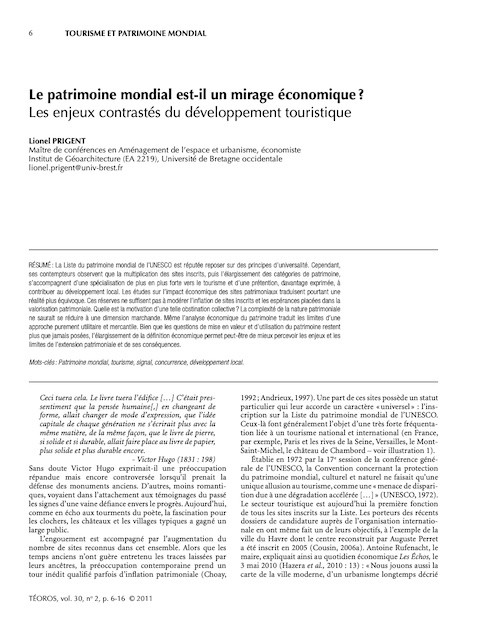
Is World Heritage an Economic Mirage? (Téoros; vol. 30, no. 2)
- المؤلف
- Lionel Prigent
- المؤلف المؤسسي
- Université du Québec à Montréal (UQAM)
- ISBN
- ISSN 0712-8657 (print); ISSN 1923-2705 (digital)
- الترتيب
- p. 6-16
- لغة المورد
- الفرنسية
- سنة النشر
- 2011
- أنواع الموارد
- الأوراق البحثية/ مقالات المجالات
- مستوى التعليم
- أخرى
- المناطق
- جميع دول العالم
- مكان النشر
- Montréal
The UNESCO World Heritage List is deemed to be based on principles of universality. However, its critics observe that the multiplication of listed sites, then the widening of heritage categories, is accompanied by an increasingly strong specialization towards tourism and a claim, more expressed, to contribute to local development. . Studies on the economic impact of heritage sites, however, reflect a more equivocal reality. These reserves are not enough to moderate the inflation of listed sites and the hopes placed in heritage enhancement. What is the motivation for such collective obstinacy? The complexity of the nature of heritage cannot be reduced to a commercial dimension. Even the economic analysis of heritage reflects the limits of a purely utilitarian and mercantile approach. Although the questions of enhancement and use of heritage remain more than ever raised, the broadening of the economic definition perhaps makes it possible to better understand the issues and the limits of the extension of heritage and its consequences.
موارد ذات صلة
-
 Addressing Violent Pasts through Education: A Policy Guide
 -
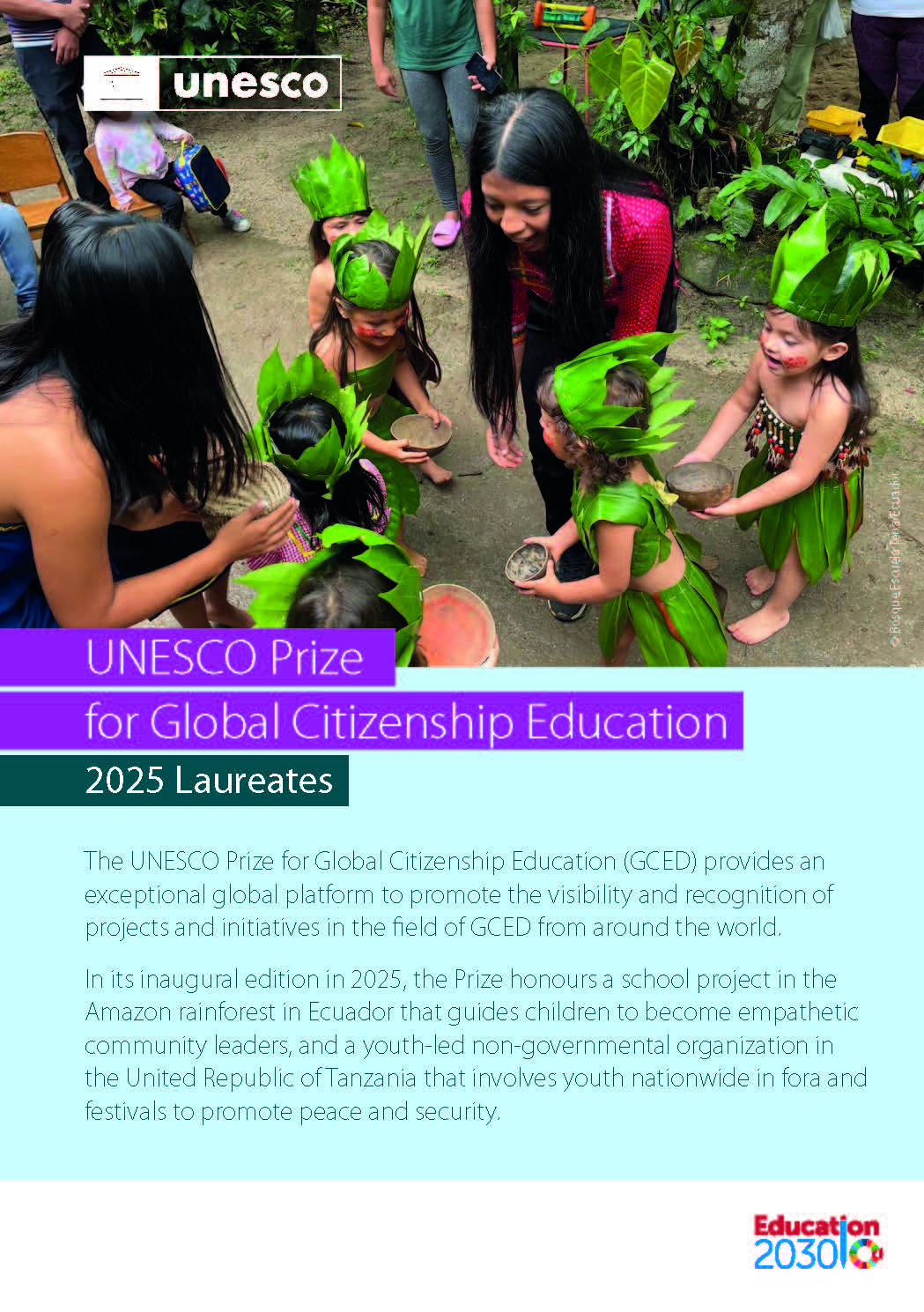 UNESCO Prize for Global Citizenship Education 2025 Laureates
 -
 Confronting Inequality through GCED: Toward Justice, Inclusion, and Transformation (SangSaeng; No.65, 2025)
 -
 ACER-APCEIU Global Citizenship Education Monitoring Toolkit: For Teachers, Schools and System Leaders