
An Unimagined Community? Examining Narratives of the Holocaust in Lithuanian Textbooks
- الموضوعات
- حقوق الإنسان
- أنواع الموارد
- الأوراق البحثية/ مقالات المجالات
- مستوى التعليم
- التعليم الابتدائيالتعليم الثانوي
2011 marked 20 years since the collapse of the Soviet Union. This represented a change not just in the content of education or ideologies, but in the relationships between individuals, institutions and systems. During this time, the post-Soviet Republic of Lithuania not only had to reimagine its national identity in a local context, but it also had to reimagine itself as a community within the political, economic, and historical imaginations of the North Atlantic Treaty Organization (NATO) and the European Union (EU). Therefore, in Lithuania, as in many other post-Soviet countries, debates over which events should or should not be included as part of the national identity, and thus represented in the school curriculum, are more than just discussions about educational content; they are debates over the moral legitimacy of certain narratives and the ability of sovereign states to define them. (By the publisher)
 Addressing Violent Pasts through Education: A Policy Guide
  The Representation of Jews, Judaism and Antisemitism in School Textbooks and Curricula in Europe
  Strategies to Counter Antisemitism: A Handbook for Educators
 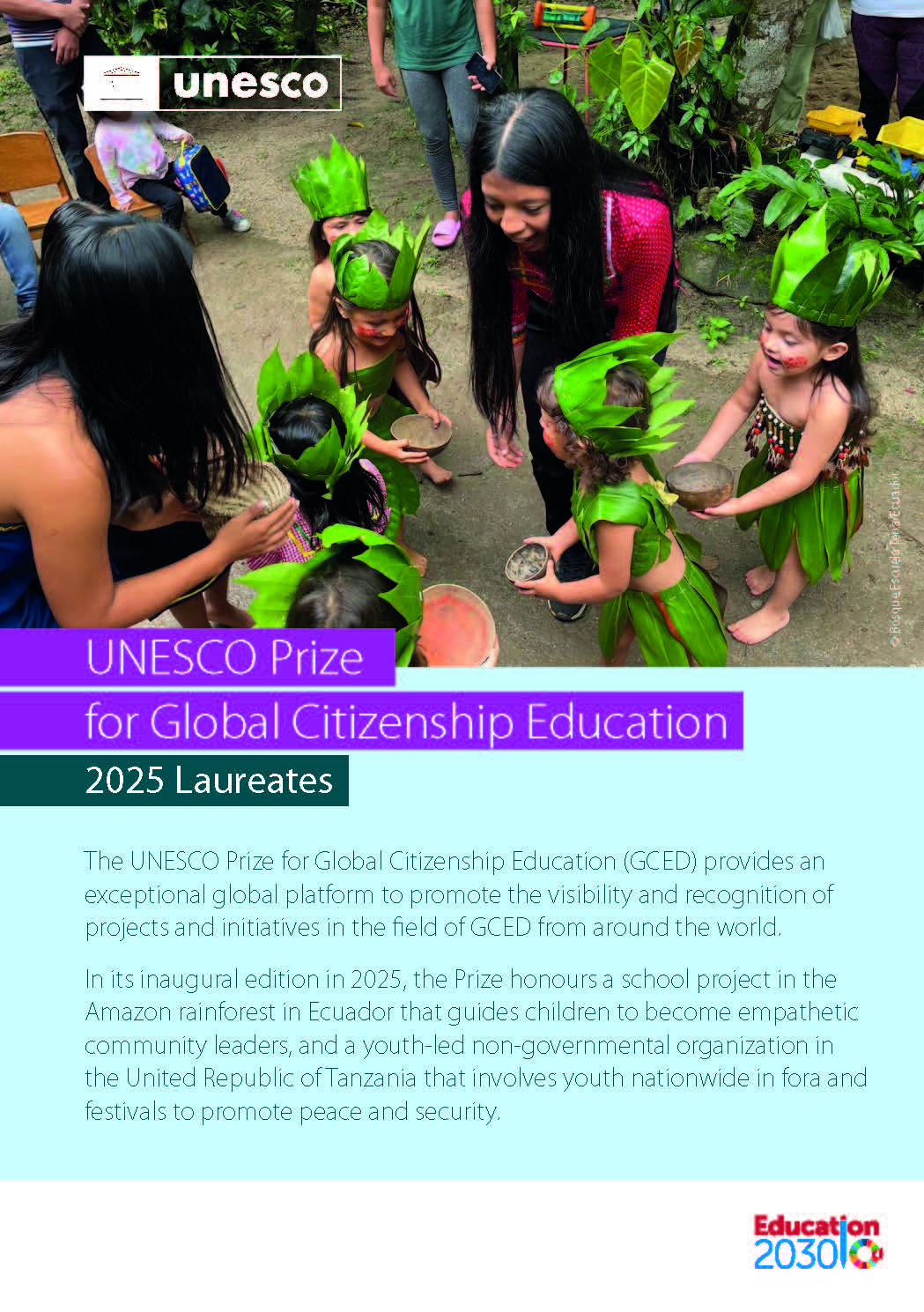 UNESCO Prize for Global Citizenship Education 2025 Laureates