
الموارد
استكشف مجموعة واسعة من الموارد القيمة حول تعليم المواطنة العالمية لتعميق فهمك وتعزيز البحث والمناصرة والتعليم والتعلم.
تم العثور على 948 نتيجة
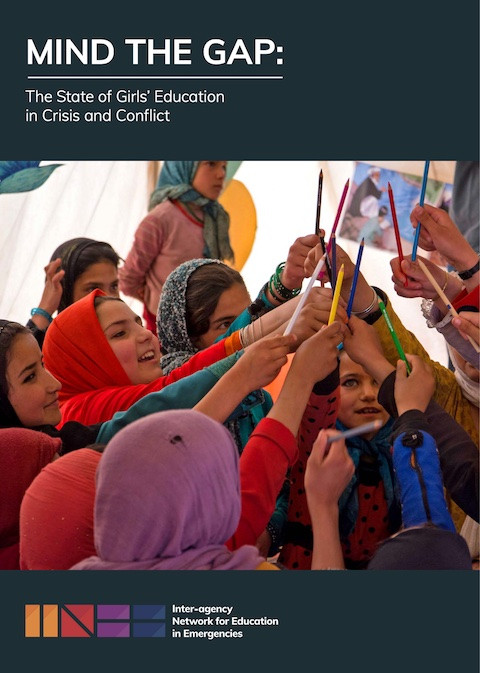 Mind the Gap: The State of Girls’ Education in Crisis and Conflict سنة النشر: 2021 المؤلف المؤسسي: Inter-agency Network for Education in Emergencies (INEE) This report summarizes progress, gaps, challenges and opportunities in improving education and training for girls and women affected by conflict and crisis. The report aims to support the Charlevoix Declaration on Quality Education’s commitment to enhance the evidence base and monitor progress toward gender-equitable education in crises. The report draws from data on 44 crisis-affected countries, from recent research, and from a set of case studies of interventions in a range of crisis-affected contexts.
  Understanding the Impact of Artificial Intelligence on Skills Development سنة النشر: 2021 المؤلف: Kelly Shiohira المؤلف المؤسسي: UNESCO International Centre for Technical and Vocational Education and Training (UNEVOC) The era of artificial intelligence is young in years but advanced in impact. Intermediate skill jobs as we know them are fast disappearing as their tasks are systematically automated, and individuals are increasingly likely to encounter AI technology in their everyday lives. In fact, fifty percent of organizations worldwide report using some form of AI in their operations.It is clear that AI has broad implications for the whole of humanity, and therefore on the education and training institutions that equip lifelong learners with the skills to navigate both work and society. A wide range of institutions and other stakeholders have risen to the challenge through research and innovative programmes, paving the way for a better understanding of AI’s potential – and its pitfalls.This paper synthesizes research on current trends, programmes, policies and uses of AI related to technical and vocational education and training across six continents, covering developing and developed contexts, as a resource for stakeholders invested in the future of intermediate-level workers and TVET. Lecturers, students, administrators, policymakers, programme implementers and lifelong learners are invited to examine current practices, opportunities and challenges raised by AI, and recommendations to build a future-ready education and training system.
  Secondary Education and Skills سنة النشر: 2020 المؤلف المؤسسي: Generation Unlimited | Global Initiative on Decent Jobs for Youth All young people need access to quality education and learning that would help them develop the skills, knowledge, attitudes and values they need to find and retain productive work, to make informed decisions, and to positively engage in their communities. However, millions of young people remain out of school or do not have access to quality learning opportunities. The COVID-19 pandemic and the resulting economic downturn have made the challenges facing young people even more pressing, as shrinking labour markets leave low-skilled young people with fewer choices, and render them more vulnerable to exploitation.There is a need for a radical re-think of what works, seeking a radical improvement in traditional curricula, the number of trained professional teachers, student–teacher ratios, and the teaching methods and strict school timetables that have become less relevant to the current needs of young people.The aim of this guide is to support the Generation Unlimited strategic priorities, and to inform policy makers and social partners, so as to guide action on investment, policy change and delivery, increasing the likelihood of successful outcomes and decent jobs for young people.
  Медийно-информационная грамотность в цифровом мире: Как научить Учителей سنة النشر: 2021 المؤلف المؤسسي: UNESCO Institute for Information Technologies in Education (IITE) В сборник вошли статьи, отражающие некоторые тренды развития цифровой медиасреды, подходы к формированию медийно-информационной грамотности (МИГ), описания отдельных практик, представляющих опыт реализации обучения МИГ педагогов и учащихся различных уровней и форм образования, а также рекомендации, направленные на интеграцию МИГ в педагогическое образование и повышение квалификации учителей и преподавателей.
  Positioning ICT in Education to Achieve the Education 2030 Agenda in Asia and the Pacific: Recommendations for a Regional Strategy سنة النشر: 2018 المؤلف: Hyojeong So | Kyungsim Yeon | Kyungsim Yeon | Jian Xi Teng المؤلف المؤسسي: UNESCO Bangkok This regional study is an important document for Asia-Pacific Member States as it consolidates data related to the effective use of ICT in education. One highlight of this study is the five priority areas for the use of ICT towards achieving SDG4 and Education 2030 that were identified based on a synthesis of the data:ICT for transforming and expanding TVET and higher education ICT for improving teacher qualityICT for improving access to and quality of secondary education ICT for enabling inclusive and equitable learningICT for monitoring and evaluation
  Gender-Responsive Education: Toolkit for Teachers, Teacher Educators, School Managers and Curriculum Developers in Africa سنة النشر: 2020 المؤلف: Dawit Mekonnen | Haregewoin Cherine المؤلف المؤسسي: UNESCO International Institute for Capacity-Building in Africa (IICBA) This GRE Toolkit is intended to address gender equality in education through intervention across the whole education sector. More specifically, the toolkit contributes to the enhancement of institutional capacities to develop gender responsive curricula, evaluate teaching-learning materials, organize/create gender responsive classroom interaction, eliminate stereotypes in teaching and learning materials, support improvement of the teaching methods and learning assessment techniques in schools and Teacher Training Institutes.The Toolkit is a guide for educators who plan to facilitate gender-responsive education. As such it consists of activities, tools and notes to the facilitators in addition to presenting conceptual discussions and relevant data.
 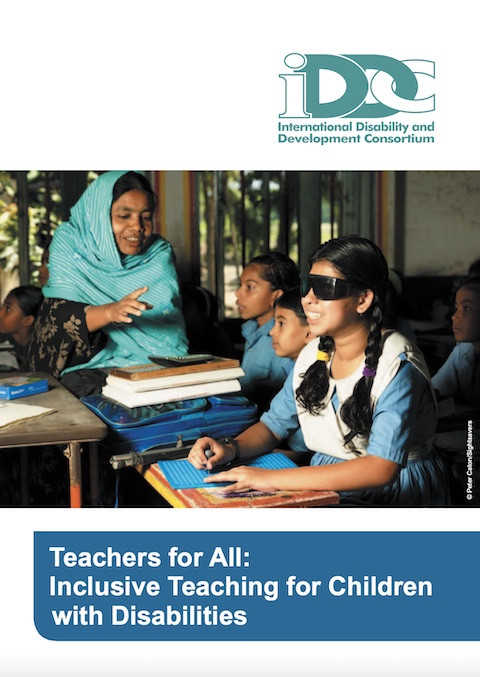 Teachers for All: Inclusive Teaching for Children With Disabilities سنة النشر: 2013 المؤلف: Ingrid Lewis | Sunit Bagree المؤلف المؤسسي: International Disability and Development Consortium (IDDC) Globally we need more well-trained and motivated teachers.Good teachers can help ensure that every child learns to their full potential from an early age and enters adult life well-equipped to be active citizens and support the development of their community and country. Many countries do not have enough teachers, let alone enough teachers who have received sufficiently high quality pre- and in-service training and access to continuing professional development. This paper first provides detail about the context and scale of the challenge. It then outlines five broad issues that need addressing if we are to prepare, recruit and support enough teachers, with appropriate skills, to educate every child – including those with disabilities. Media and Information Literacy in the Digital Age: How to Teach the Teachers سنة النشر: 2021 المؤلف المؤسسي: UNESCO Institute for Information Technologies in Education (IITE) This publication includes articles reflecting some trends in the development of the digital media environment, approaches to the formation of media and information literacy (MIL), practices describing the experience of implementing MIL training for teachers and students of various levels and forms of education. The publication also contains recommendations aimed to integrate MIL into teacher education and professional development.
  민주시민교육의 이해와 실천 سنة النشر: 2017 المؤلف: 주선미 | 이광식 | 신은영 | 강병덕 المؤلف المؤسسي: 중앙선거관리위원회 선거연수원 본 자료는 민주시민교육의 개념 및 방법에 대한 체계적인 지침과 안내를 목적으로 발간되었으며, 민주시민교육 강의에 필요한 기본 이론학습서이다. 민주시민교육의 의의 및 내용과 방법, 외국의 민주시민교육 사례, 민주시민교육의 현황과 과제 등을 주요 내용으로 담았다.본 저작물은 선거연수원에서 2017년 작성하여 공공누리 제 2유형으로 개방한 ‘민주시민교육의 이해와 실천’ 을 이용하였으며 해당 저작물은 선거연수원 (www.civicedu.go.kr)에서 무료로 다운받으실 수 있습니다.
  Manual for Reporting Violent Extremism and Terrorism سنة النشر: 2021 المؤلف المؤسسي: Albanian Media Institute Contemporary journalists and media are responsible for informing the public, but this is made challenging in the age of disinformation and when citizens are victims of “false” information, sometimes as a result of propaganda produced by extremist or terrorist groups.This new circumstance requires a new ethical and professional awareness. In this context, Albanian Media Institute convened a group of experts that created a set of guidelines that media can follow when covering violent extremism and terrorism. These are based in part on international texts, the UNESCO handbook for journalists Terrorism and the media and other professional guidelines, as well as on the experience of the Albanian media coverage of violent extremism. The guidelines review current legal regulation that affects media coverage; the basic principles of editorial work and reporting; particular nuances and features to consider when covering terrorism; the role of social media; and the challenge of hate speech that might incite violent extremism and terrorism. Ethical journalists are rightly wary of being told how to do their job so we recognize that the reality of reporting terrorism cannot be limited by a strict instruction manual. These suggestions are therefore offered as potential guidance, providing reporters and editors who cover these issues with thoughts and ideas that may help them deal with professional challenges they face in their everyday work.