
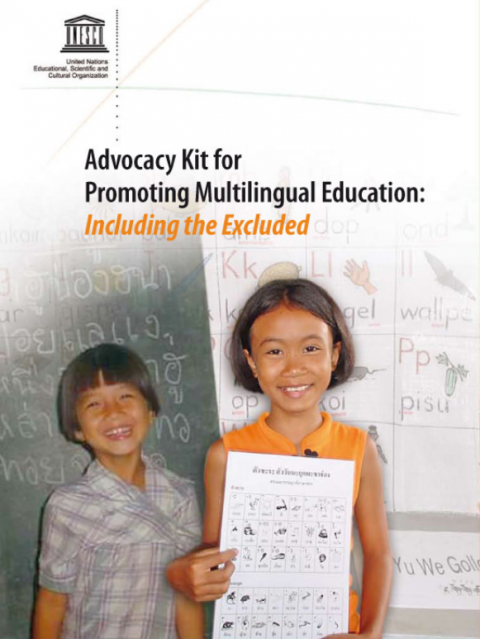
Advocacy kit for promoting multilingual education: including the excluded
- Corporate Author
- UNESCO Bangkok
- ISBN
- ISBN 92-9223-110-3 (eng)
- Collation
- 109 p.
- Resource Language
- EnglishAwadhiBengaliKhmerLaoNepaliTurkishVietnamese
- Year of publication
- 2007
- Resource Type
- International normative instruments / policy and advocacy documentsCurriculum, teaching-learning materials and guidesResearch papers / journal articles
- Region
- Asia and the Pacific
- Place of publication
- Bangkok
Who Can Use This Kit?
This kit was prepared for all of those who want to ensure that “Education for All” does, indeed, include everyone! The kit will be especially valuable for policy makers, education practitioners and specialists who want to improve access to and quality of education for those excluded by language. It will also be helpful for speakers of ethnic minority languages who want to improve the education situation in their own communities.
This kit is designed to raise awareness on the importance of mother tongue-based multilingual education (MLE). It presents key arguments and facts about MLE and provides important insights about the value and benefits of providing education in learners’ mother tongue. The kit also presents ideas, research findings and concrete examples that you can use to think about your own situation and suggests steps for taking actions to make your school system more responsive to linguistic diversity.
The kit is not a definitive textbook, and it will not have an answer for every problem that you might face. To help you as much as possible, at the end of each booklet we have included lists of references. In addition, each booklet contains a glossary of terms and, at the front of each booklet is a one-page summary of its contents.
How Can You Use This Kit?
This kit contains three main booklets. Each booklet has a designated audience: 1) policy makers, 2) education programme planners and practitioners and 3) community members. Please remember that developing MLE requires contributions from everyone at all levels. For that reason, we encourage you to use all three booklets along with other available resources as you work together to plan, implement and sustain your MLE programmes.
This kit can be used in many different ways. For those who are already involved in MLE programmes, you might use these ideas to help you to promote mother tongue instruction and strengthen your programme. Those who are not familiar with multilingual education but want to improve educational access for minority language students might use these booklets to identify specific points that they can investigate and discuss in their own contexts.
Related Resources
-
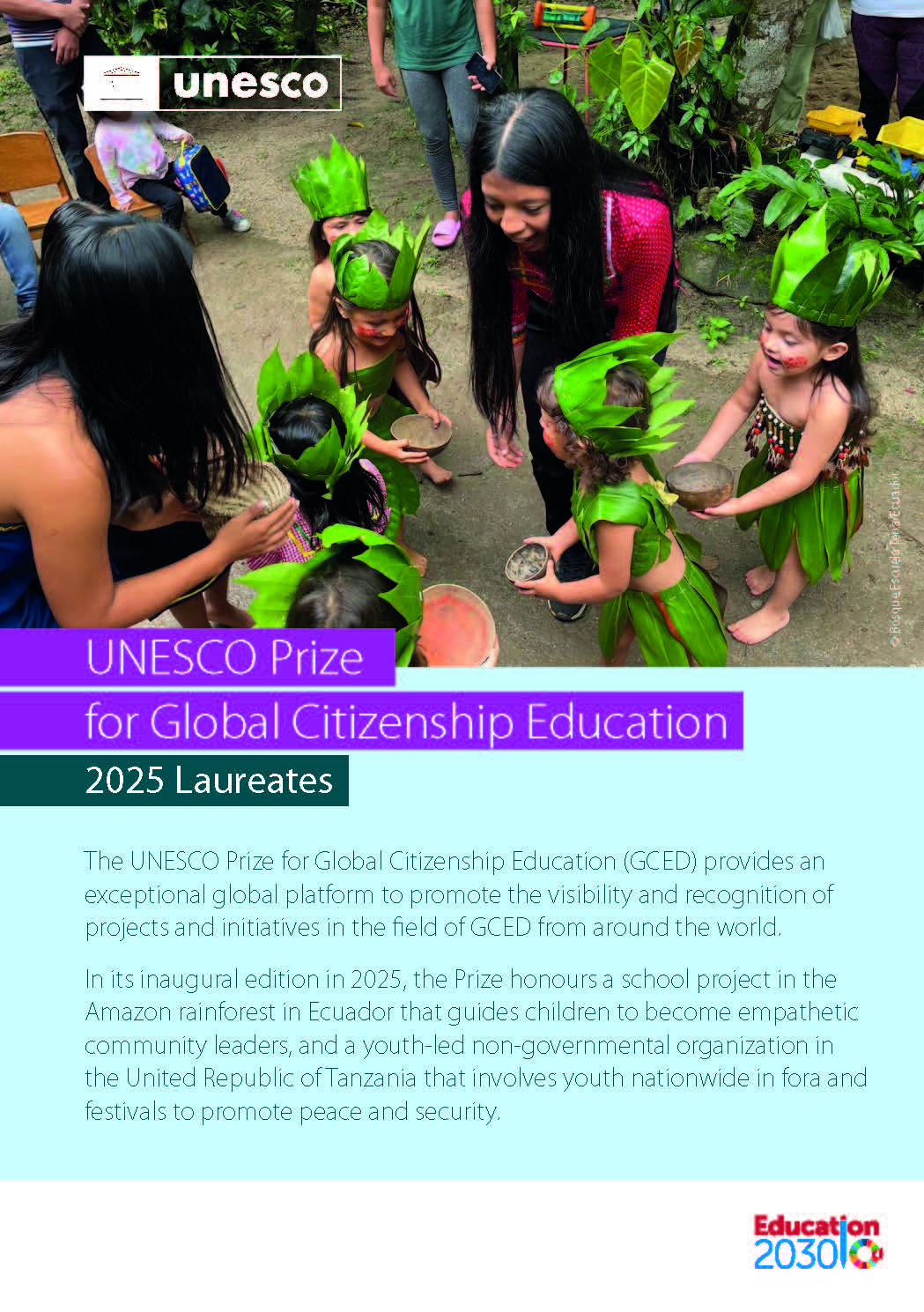 UNESCO Prize for Global Citizenship Education 2025 Laureates
 -
 Confronting Inequality through GCED: Toward Justice, Inclusion, and Transformation (SangSaeng; No.65, 2025)
 -
 Recommendation on Education for Peace, Human Rights and Sustainable Development: An Implementation Guide
 -
 Dialogue for Social Cohesion