
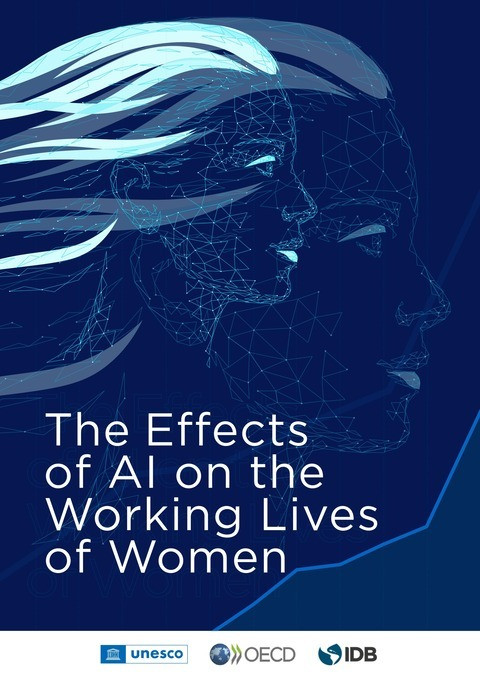
The Effects of AI on the Working Lives of Women
- Corporate Author
- UNESCOInter-American Development BankOrganisation for Economic Co-operation and Development (OECD)
- ISBN
- ISBN 978-92-3-100513-8 (eng); ISBN 978-92-3-200254-9 (fre); ISBN 978-92-3-300179-4 (spa)
- Collation
- 81 p.
- Resource Language
- EnglishFrenchSpanishPortuguese
- Year of publication
- 2022
- Keyword
- Artificial intelligenceEthics of technologyHuman rightsIntelligence artificielleEthique de la technologieDroits de l'hommeInteligencia artificialÉtica de la tecnología
- Topic
- Human rightsGlobalisation and social justice / International understandingMedia and information literacy / Digital citizenship
- Resource Type
- Research papers / journal articles
- Level of education
- Early childhood care and educationPrimary educationSecondary educationHigher educationLifelong learningTechnical and vocational education and trainingNon-formal education
- Place of publication
- París; Washington, D.C.
The use of AI technologies will affect women’s opportunities for work, and their position, status and treatment in the workplace. Around the globe, women in the labour force earn less than men, spend more time undertaking unpaid child- and elder-care jobs, hold fewer senior positions, participate less in science, technology, engineering and mathematics (STEM) fields, and tend to hold more precarious jobs overall. In harnessing AI, governments, institutions and companies must narrow gender gaps rather than perpetuate or exacerbate them.
This report, by the IDB, OECD and UNESCO, outlines current knowledge of the impact that AI systems have on women’s opportunities for work, and their position, treatment and status in the workforce. It does so by exploring how AI is used within and outside the workplace, and how it could be used in the future. It looks at the potential impact of new and emerging AI technologies on the skills that employers will require, on how women look for and are hired for jobs, and on how jobs are structured through automated monitoring and oversight. The report maps the opportunities and challenges that AI presents for the working lives of women and highlights the complexities that varying national and regional contexts present for understanding the impact of AI on the work of women. The report also notes that current research does not offer a complete or definite picture of how AI impacts the working lives of women and calls for further research and analysis in this area.
Related Resources
-
 Digital Empowerment for Lifelong Learning and Transformative Andragogy (DELTA) for Adult Educators: Introduction to the DELTA Framework and Resources
 -
 Bridging the Grey Digital Divide: Enhancing ICT Learning for Older Adults; Research Report
 -
 Addressing Violent Pasts through Education: A Policy Guide
 -
 The Representation of Jews, Judaism and Antisemitism in School Textbooks and Curricula in Europe