
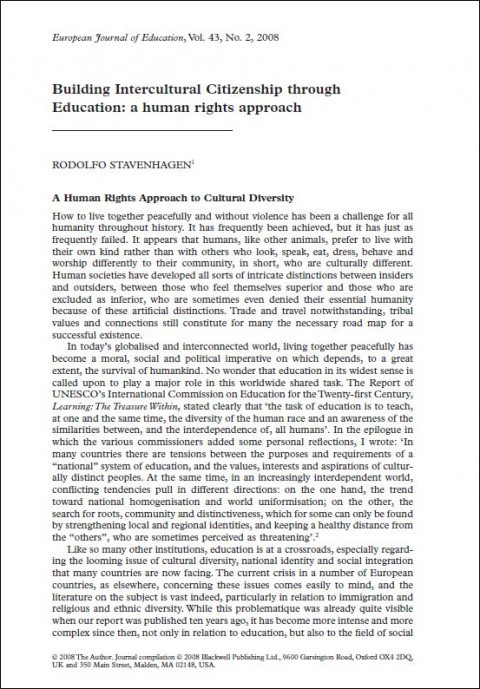
Building Intercultural Citizenship through Education: A Human Rights Approach
- Author
- Rodolfo Stavenhagen
- ISBN
- ISSN 1465-3435
- Collation
- pp. 161-179
- Resource Language
- English
- Year of publication
- 2008
- Keyword
- Intercultural educationBilingual educationCultural diversityHuman rightsHuman rights educationViolenceLinguistic diversity
- Resource Type
- Research papers / journal articles
- Level of education
- Primary educationSecondary educationHigher education
- Region
- Global
- Place of publication
- New Jersey
This article analyses the challenges posed by traditional ethnic and linguistic minorities in multicultural states and more specifically the problems faced by indigenous peoples and communities. Their educational and cultural needs and demands are increasingly being framed in the language of human rights, based on the expanding international legal and institutional human rights system. The United Nations World Conference on Human Rights, held in Vienna in 1993, endorsed a rights-based approach to development, human rights education is a growing field in educational practice, respect for cultural diversity is now enshrined in international and domestic laws, and the right of every person to education and to culture has become a mainstay of international human rights principles to which a majority of the world's states has subscribed.
Related Resources
-
 Youth Lens on the Silk Roads: Best Photos from the International Silk Roads Photo Contest; 6th Edition
 -
 Addressing Violent Pasts through Education: A Policy Guide
 -
 UNESCO Framework for Culture and Arts Education: Implementation Guidance
 -
 The Representation of Jews, Judaism and Antisemitism in School Textbooks and Curricula in Europe