
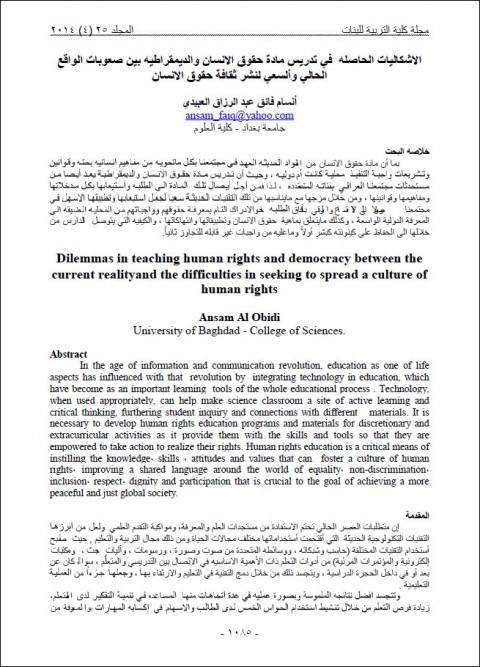
Dilemmas in Teaching Human Rights and Democracy between the Current Reality and the Difficulties in Seeking to Spread a Culture of Human Rights
- Corporate Author
- University of Baghdad
- Collation
- p. 1085-1093
- Resource Language
- Arabic
- Year of publication
- 2014
- Level of education
- Primary educationSecondary education
- Region
- Arab StatesGlobal
- Place of publication
- بغداد
In the age of information and communication revolution, education as one of life aspects has influenced with that revolution by integrating technology in education, which have become as an important learning tools of the whole educational process . Technology, when used appropriately, can help make science classroom a site of active learning and critical thinking, furthering student inquiry and connections with different materials. It is necessary to develop human rights education programs and materials for discretionary and extracurricular activities as it provide them with the skills and tools so that they are empowered to take action to realize their rights. Human rights education is a critical means of instilling the knowledge skills, attitudes and values that can foster a culture of human rights, improving a shared language around the world of equality, non-discrimination, inclusion respect, dignity and participation that is crucial to the goal of achieving a more peaceful and just global society.
Related Resources
-
 Study on the Historical Impact of the 1974 Recommendation concerning Education for International Understanding, Cooperation and Peace and Education relating to Human Rights and Fundamental Freedoms
 -
 IIEP-UNESCO 12th Medium-Term Strategy: 2026–2029
 -
 More than Welcome: Intercultural Integration of Migrants in and Through Higher Education
 -
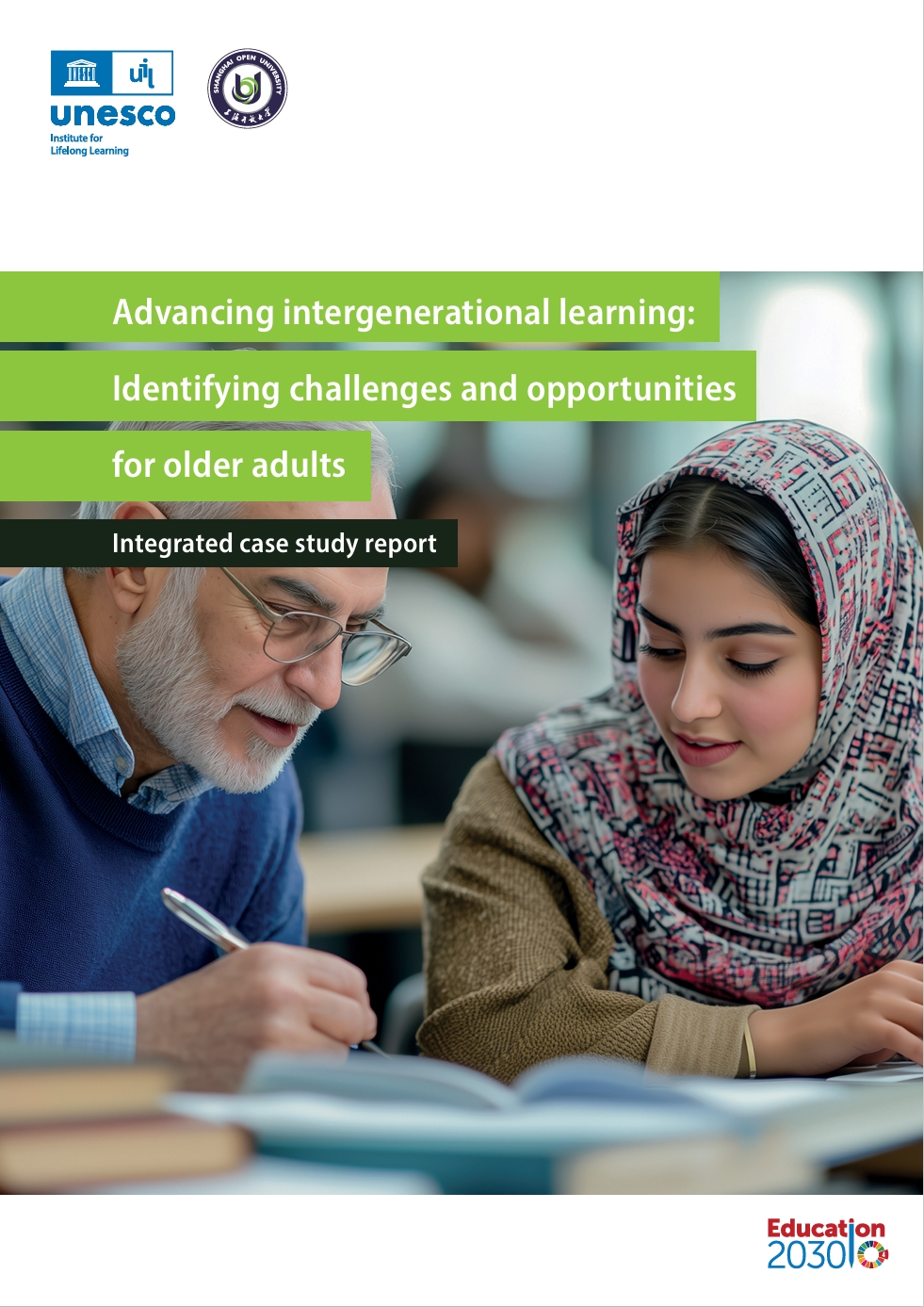 Advancing Intergenerational Learning: Identifying Challenges and Opportunities for Older Adults; Integrated Case Study Report