
The Influence of education on conflict and peace building
- Author
- Alan Smith
- Corporate Author
- UNESCO
- Collation
- 30p
- Resource Language
- English
- Year of publication
- 2010
- Topic
- Human rightsGlobalisation and social justice / International understandingPeace / Culture of peace
- Resource Type
- Research papers / journal articles
- Region
- Global
- Place of publication
- Paris
The purpose of this paper is to identify aspects of education that may have a positive influence on the dynamics of conflict or make a contribution to peacebuilding. The UN Secretary-General’s (2009) report on peacebuilding identifies a number of recurring priorities in conflict-affected situations, ‘establishing security, building confidence in a political process, delivering initial peace dividends and expanding core national capacity’. These priorities include ‘the provision of basic services, such as water and sanitation, health and primary education’. However, in conflict-affected situations education is also about more than service delivery because it is a means of socialization and identity development through the transmission of knowledge, skills, values and attitudes across generations. Education may therefore be a driver of conflict (fuelling grievances, stereotypes, xenophobia and other antagonisms), but can also be a way of contributing to ‘conflict transformation’ and ‘peacebuilding’.
Related Resources
-
 Addressing Violent Pasts Through Education: A Policy Guide
 -
 Where Learners Meet History: Reaffirming the Role of History Education in the 21st Century
 -
 Voices Against Violence: Middle Years
 -
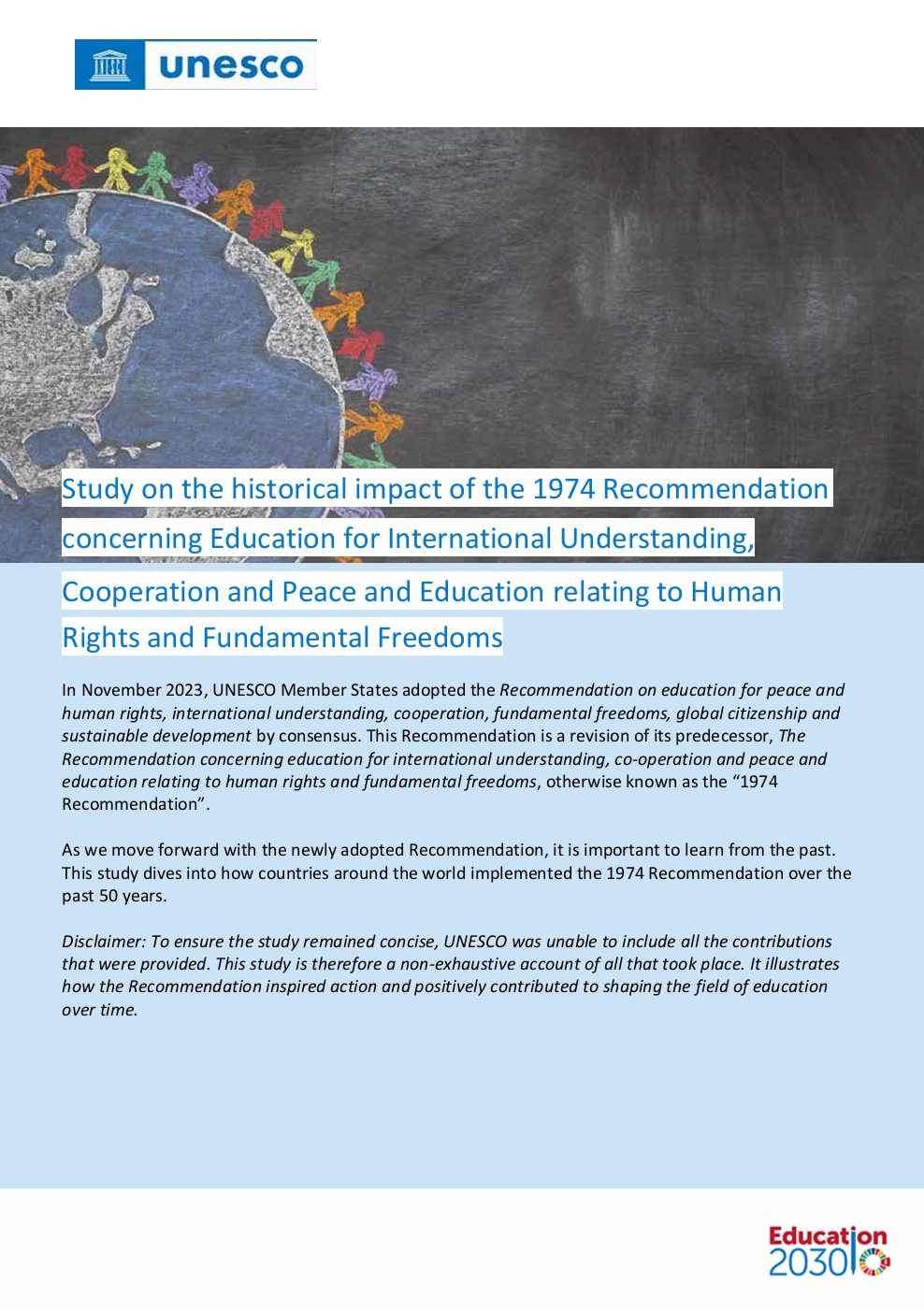 Study on the Historical Impact of the 1974 Recommendation concerning Education for International Understanding, Cooperation and Peace and Education relating to Human Rights and Fundamental Freedoms