
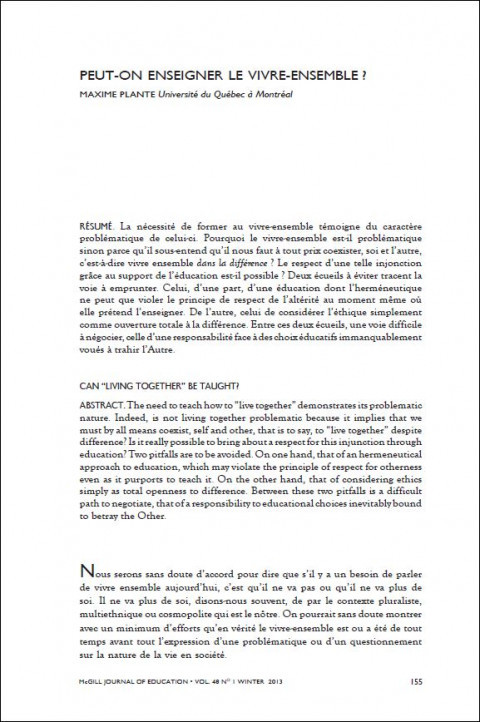
Can “Living Together” Be Taught?
- Author
- Maxime Plante
- Corporate Author
- McGill University. Faculty of Education
- ISBN
- ISSN 1916-0666 (numérique)
- Collation
- p. 155–164
- Resource Language
- French
- Year of publication
- 2013
- Topic
- Civic / Citizenship / DemocracyDiversity / Cultural literacy / InclusivenessPeace / Culture of peace
- Resource Type
- International normative instruments / policy and advocacy documentsResearch papers / journal articles
- Level of education
- Non-formal education
- Region
- Global
- Place of publication
- Québec
The need to teach how to “live together” demonstrates its problematic nature. Indeed, is not living together problematic because it implies that we must by all means coexist, self and other, that is to say, to “live together” despite difference? Is it really possible to bring about a respect for this injunction through education? Two pitfalls are to be avoided. On one hand, that of an hermeneutical approach to education, which may violate the principle of respect for otherness even as it purports to teach it. On the other hand, that of considering ethics simply as total openness to difference. Between these two pitfalls is a difficult path to negotiate, that of a responsibility to educational choices inevitably bound to betray the Other.
Related Resources
-
 Addressing Violent Pasts Through Education: A Policy Guide
 -
 Where Learners Meet History: Reaffirming the Role of History Education in the 21st Century
 -
 Voices Against Violence: Middle Years
 -
 Study on the Historical Impact of the 1974 Recommendation concerning Education for International Understanding, Cooperation and Peace and Education relating to Human Rights and Fundamental Freedoms