
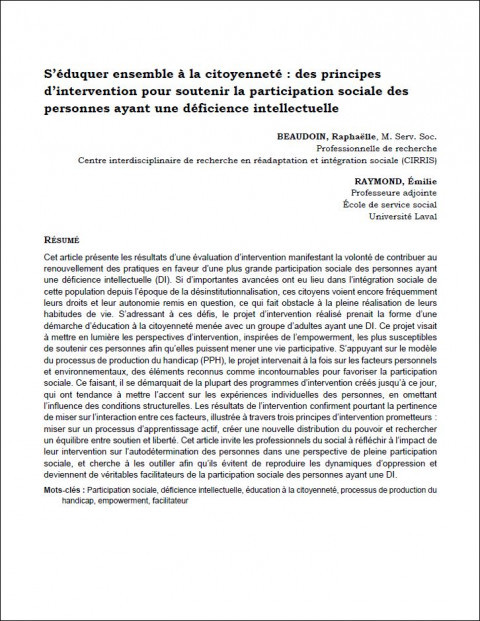
Together in Citizenship Education: Intervention Principles to Support the Social Participation of People with Intellectual Disabilities
- Corporate Author
- Service social
- ISBN
- ISSN 1708-1734 (numérique)
- Collation
- p. 15–32
- Resource Language
- French
- Year of publication
- 2016
- Resource Type
- International normative instruments / policy and advocacy documentsResearch papers / journal articles
- Level of education
- Higher education
- Region
- Global
- Place of publication
- Québec
This article presents the outcomes of an intervention’s evaluation that was intended to contribute to the renewal of practices in favour of greater social participation of people with intellectual disabilities (ID). Although much has been achieved for the social integration of this population since deinstitutionalization, these citizens still frequently see their rights and their independence questioned, presenting obstacles to the full achievement of life habits. To address these challenges, this intervention project took the form of a citizenship education group led by adults with ID. This intervention project aimed to highlight the prospects of intervention, inspired by an empowerment approach, the most likely to support these people to lead a participatory and self-determined life. Based on the Disability Creation Process model (DCP), this project involved both personal and environmental factors, which are recognized as key elements for social participation. In doing so, it stands out from most intervention programs created to date, which tend to focus on the individual experiences of people, omitting the influence of structural conditions. Yet, the results of this intervention support the relevance of focusing on the interaction between these factors, illustrated through three promising intervention principles: to build on an active learning process, to create a new distribution of power and to seek a balance between support and freedom. This approach asks social professionals to consider the impact of their intervention on self-determination in attaining social participation. It also aims to better equip these professionals to avoid reproducing the dynamics of oppression and to become true facilitators of the social participation of people with ID.
Related Resources
-
 IIEP-UNESCO 12th Medium-Term Strategy: 2026–2029
 -
 Advancing Intergenerational Learning: Identifying Challenges and Opportunities for Older Adults; Integrated Case Study Report
 -
 Digital Empowerment for Lifelong Learning and Transformative Andragogy (DELTA) for Adult Educators: Introduction to the DELTA Framework and Resources
 -
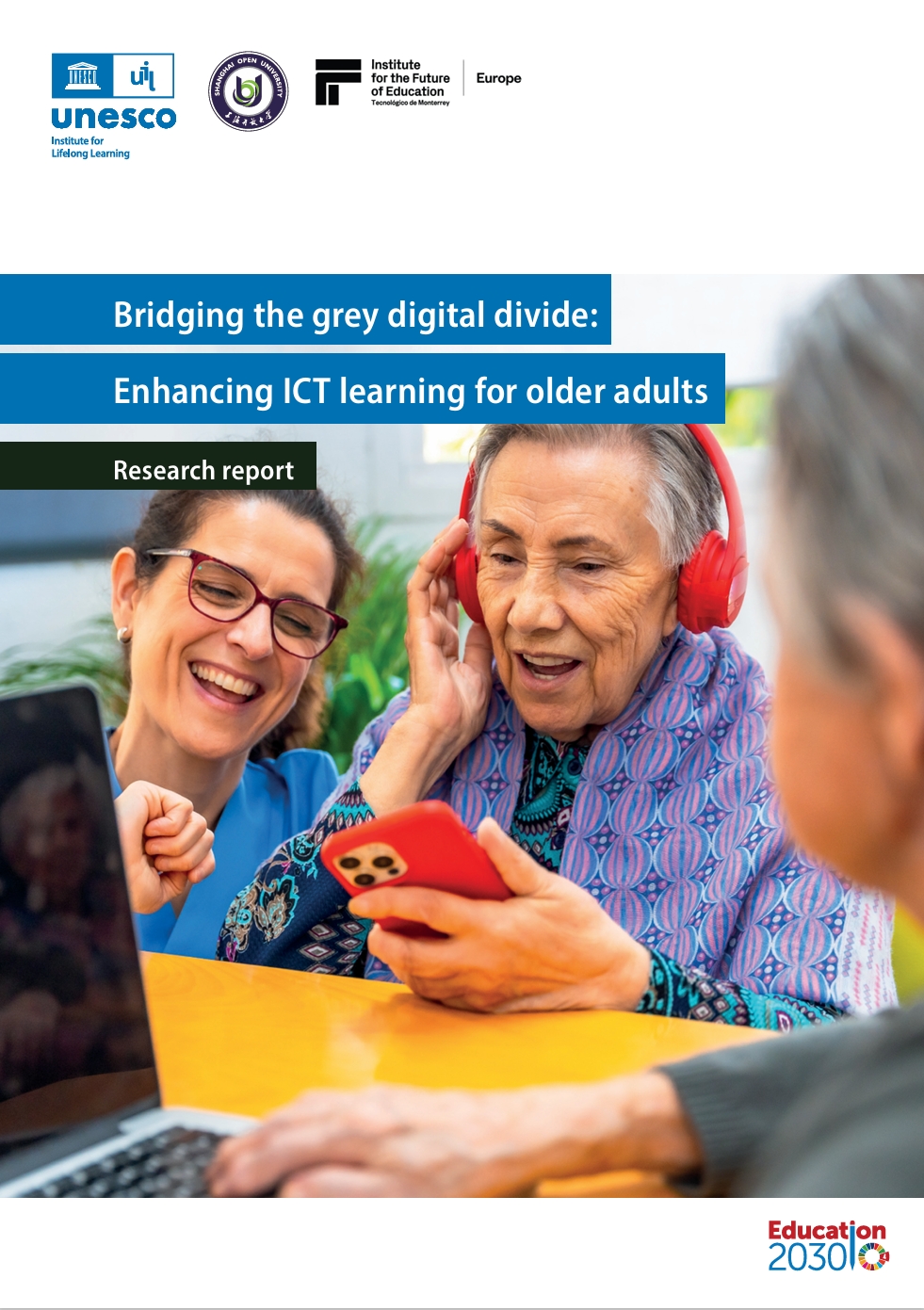 Bridging the Grey Digital Divide: Enhancing ICT Learning for Older Adults; Research Report