
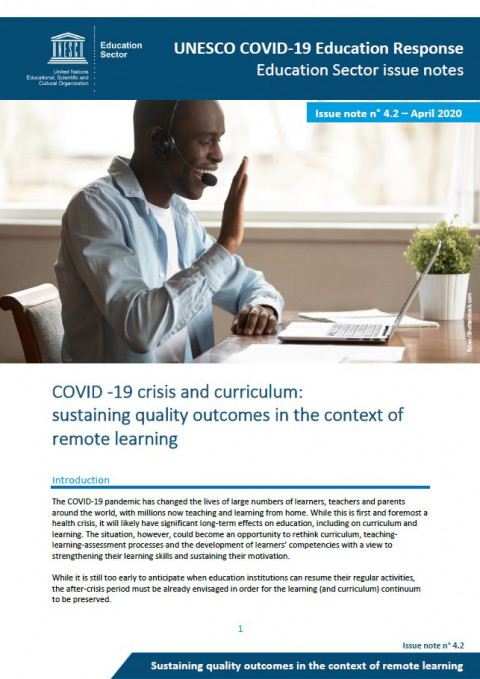
COVID-19 Crisis and Curriculum: Sustaining Quality Outcomes in the Context of Remote Learning (Issue Note no. 4.2 – April 2020)
- Corporate Author
- UNESCO
- Collation
- 7 p.
- Resource Language
- EnglishSpanish
- Year of publication
- 2020
- Topic
- Sustainable development / SustainabilityTransformative initiatives / Transformative pedagogies
- Level of education
- Early childhood care and educationPrimary educationSecondary education
- Region
- Global
- Place of publication
- Paris
The COVID-19 pandemic has changed the lives of large numbers of learners, teachers and parents around the world, with millions now teaching and learning from home. While this is first and foremost a health crisis, it will likely have significant long-term effects on education, including on curriculum and learning. The situation, however, could become an opportunity to rethink curriculum, teaching-learning-assessment processes and the development of learners’ competencies with a view to strengthening their learning skills and sustaining their motivation.
This crisis will likely provide an opportunity for schools to strengthen their ties with families, and for teachers to communicate and cooperate better with parents in the interest of learners. In the same vein, the crisis means teachers and parents may become more involved in decisions regarding curriculum appropriateness. This can support the development of a learner-centred, participative and inclusive learning paradigm that takes into account the interests of learners, as well as their environments and aspirations.
Related Resources
-
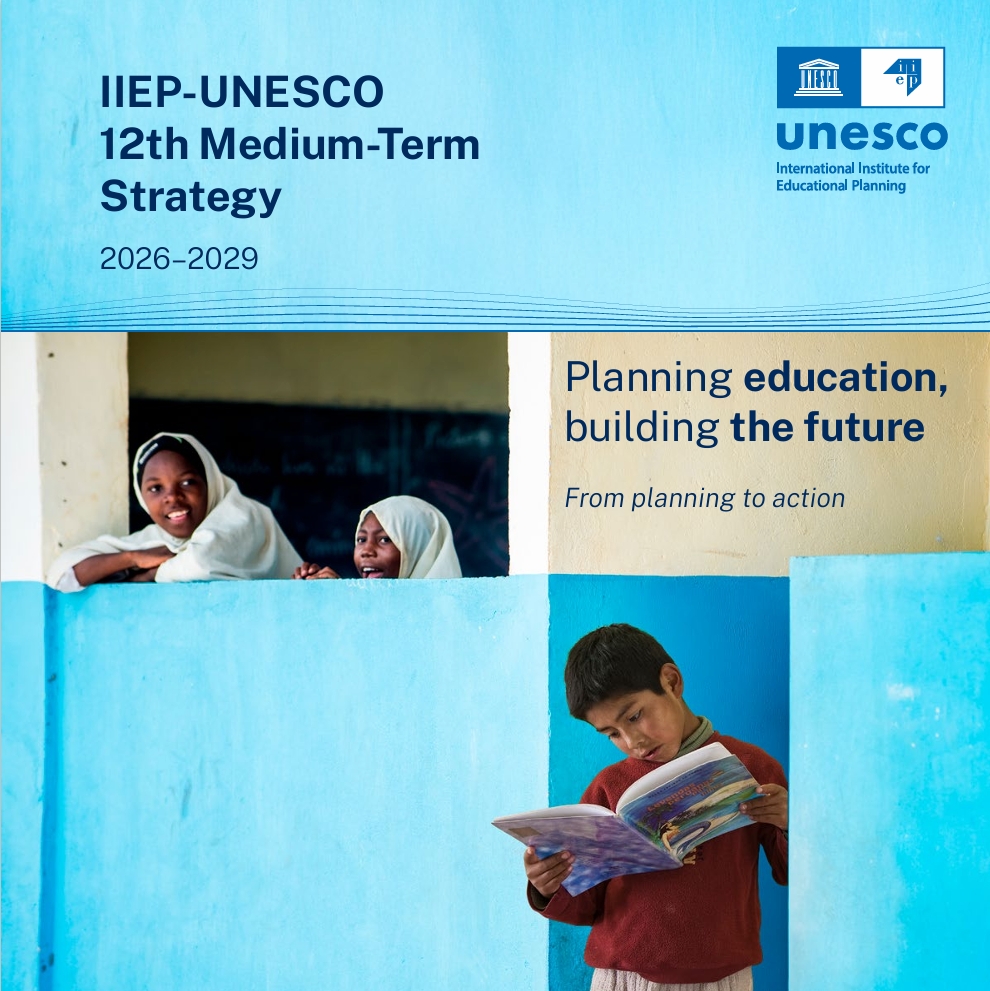 IIEP-UNESCO 12th Medium-Term Strategy: 2026–2029
 -
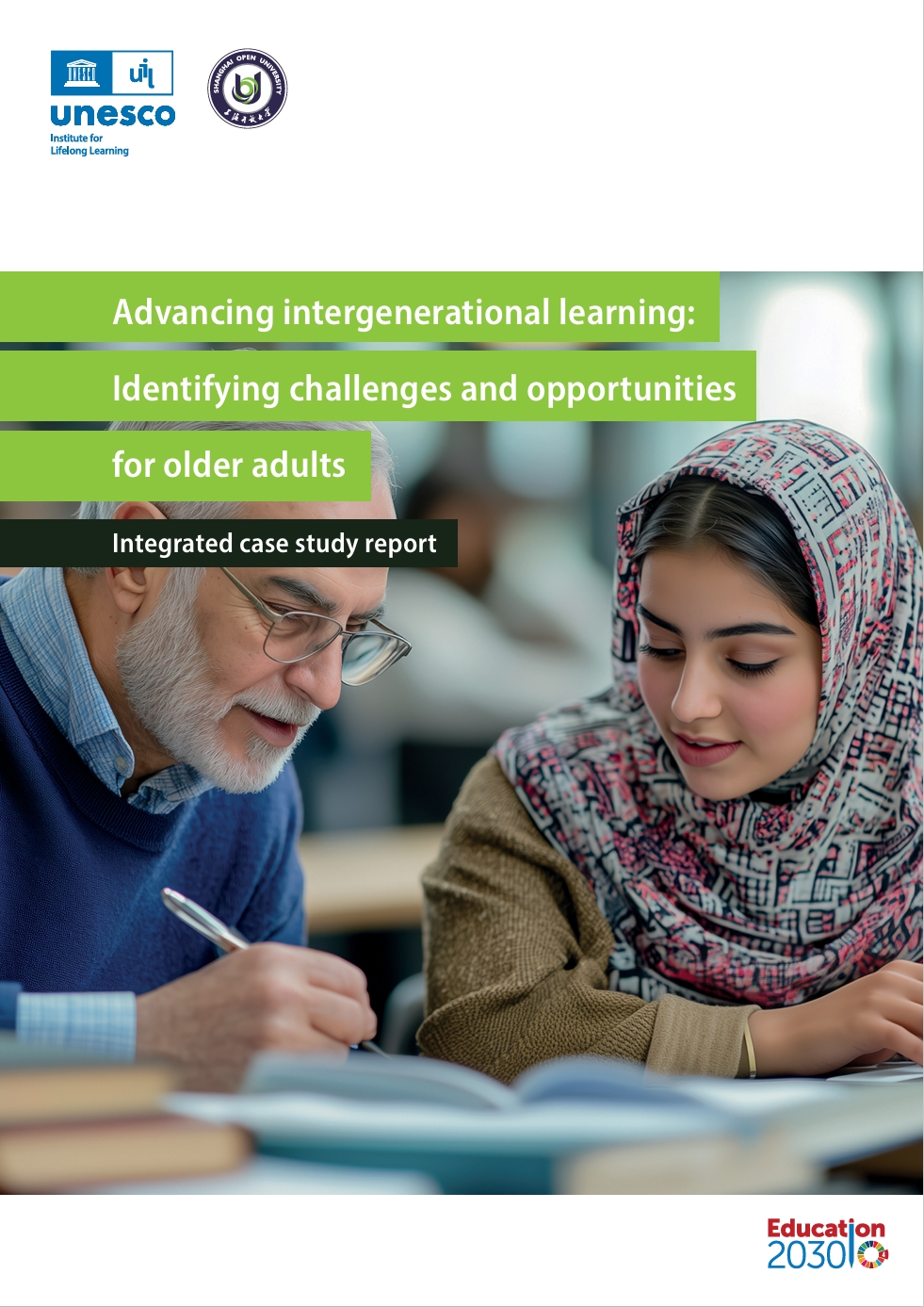 Advancing Intergenerational Learning: Identifying Challenges and Opportunities for Older Adults; Integrated Case Study Report
 -
 Digital Empowerment for Lifelong Learning and Transformative Andragogy (DELTA) for Adult Educators: Introduction to the DELTA Framework and Resources
 -
 Bridging the Grey Digital Divide: Enhancing ICT Learning for Older Adults; Research Report