
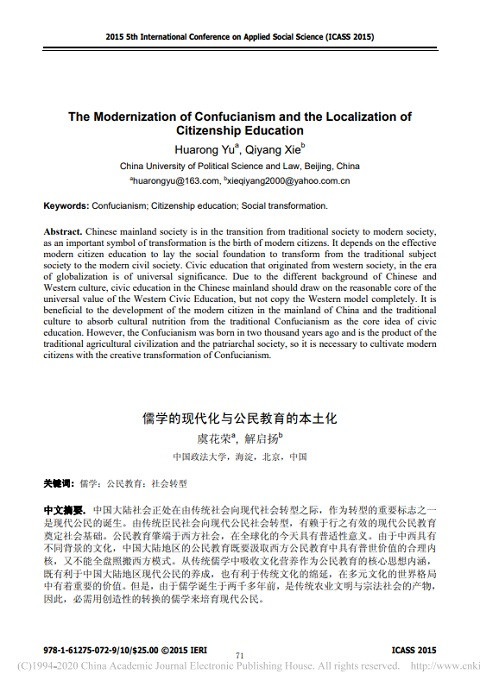
The Modernization of Confucianism and the Localization of Citizenship Education (Proceedings of 2015 5th International Conference on Applied Social Science)
- Author
- Huarong YuaQiyang Xie
- Corporate Author
- International Conference on Applied Social Science
- Collation
- p. 71-76
- Resource Language
- Chinese
- Year of publication
- 2015
- Resource Type
- Conference and programme reports
- Level of education
- Primary educationSecondary educationHigher education
- Region
- Asia and the Pacific
- Place of publication
- Limassol
Chinese mainland society is in the transition from traditional society to modern society, as an important symbol of transformation is the birth of modern citizens. It depends on the effective modern citizen education to lay the social foundation to transform from the traditional subject society to the modern civil society. Civic education that originated from western society, in the era of globalization is of universal significance. Due to the different background of Chinese and Western culture, civic education in the Chinese mainland should draw on the reasonable core of the universal value of the Western Civic Education, but not copy the Western model completely. It is beneficial to the development of the modern citizen in the mainland of China and the traditional culture to absorb cultural nutrition from the traditional Confucianism as the core idea of civic education. However, the Confucianism was born in two thousand years ago and is the product of the traditional agricultural civilization and the patriarchal society, so it is necessary to cultivate modern citizens with the creative transformation of Confucianism.
Related Resources
-
 IIEP-UNESCO 12th Medium-Term Strategy: 2026–2029
 -
 Advancing Intergenerational Learning: Identifying Challenges and Opportunities for Older Adults; Integrated Case Study Report
 -
 Digital Empowerment for Lifelong Learning and Transformative Andragogy (DELTA) for Adult Educators: Introduction to the DELTA Framework and Resources
 -
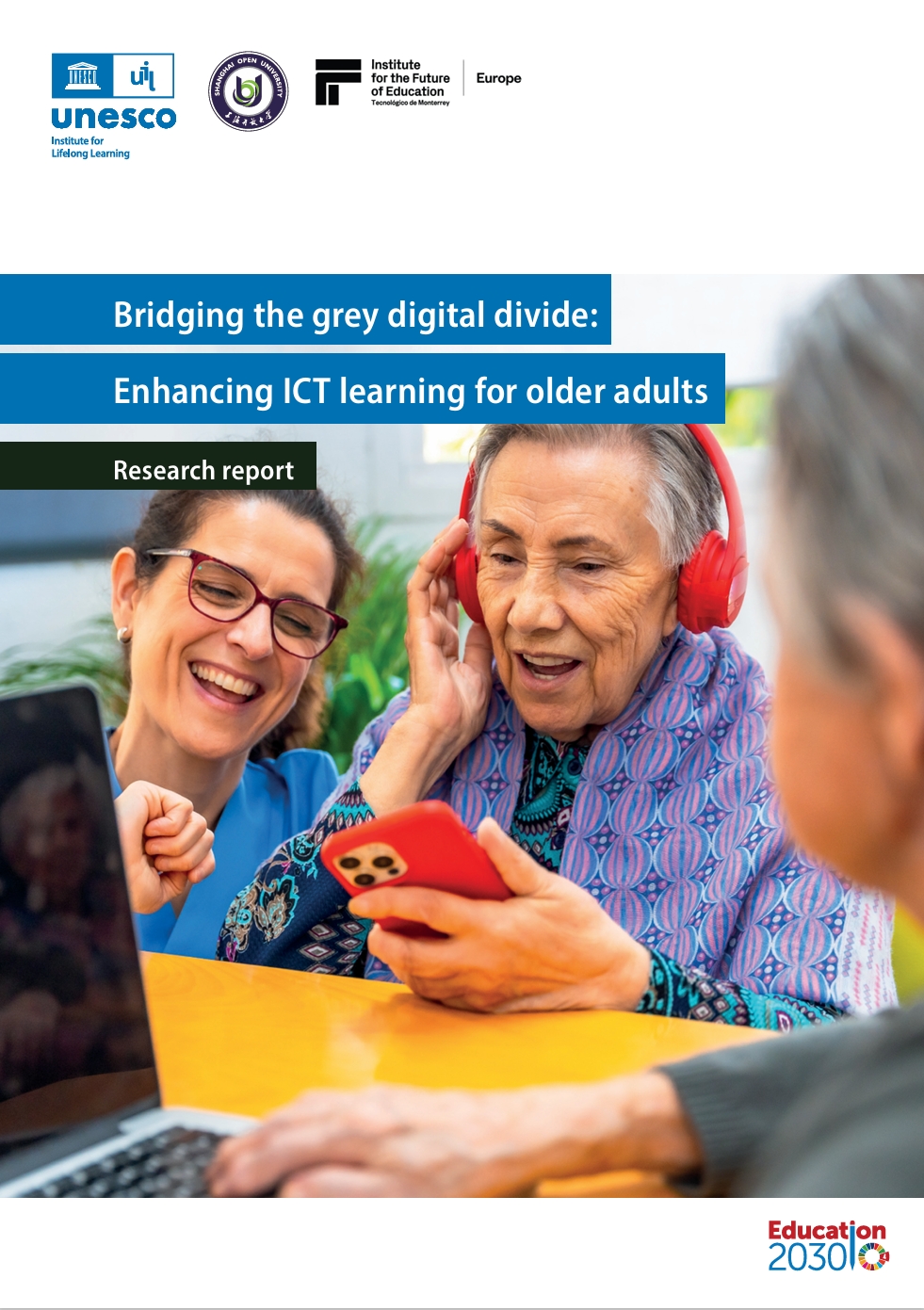 Bridging the Grey Digital Divide: Enhancing ICT Learning for Older Adults; Research Report