
Resources
Explore a wide range of valuable resources on GCED to deepen your understanding and enhance your research, advocacy, teaching, and learning.
2,162 Results found
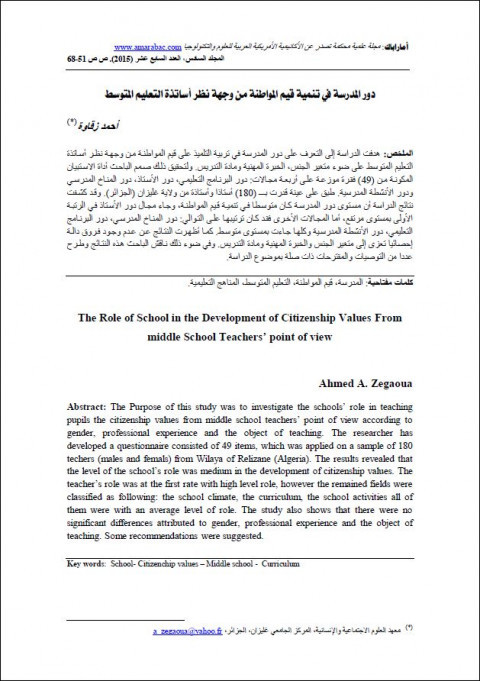 The Role of School in the Development of Citizenship Values from Middle School Teachers’ Point of View Year of publication: 2015 Author: Ahmed A. Zegaoua Corporate author: American Arabic Academy of Science and Technology The purpose of this study was to investigate the schools’ role in teaching pupils the citizenship values from the middle school teachers’ point of view, according to gender, professional experience and the object of teaching. The researcher developed a questionnaire of 49 items which was applied on a sample of 180 teachers (males and females) from the Relizane Wilaya (Algeria). The results revealed that the level of the school’s role in the development of citizenship values was medium. The teacher’s role was came first playing a high level role; however the remaining fields were classified in the following following order: the school climate, the curriculum, and the school activities, all of which were considered to play an average level role. The study also shows that there were no significant differences attributed to gender, professional or the teaching material. The researcher discussed those results and presented a number of relevant suggestions.
 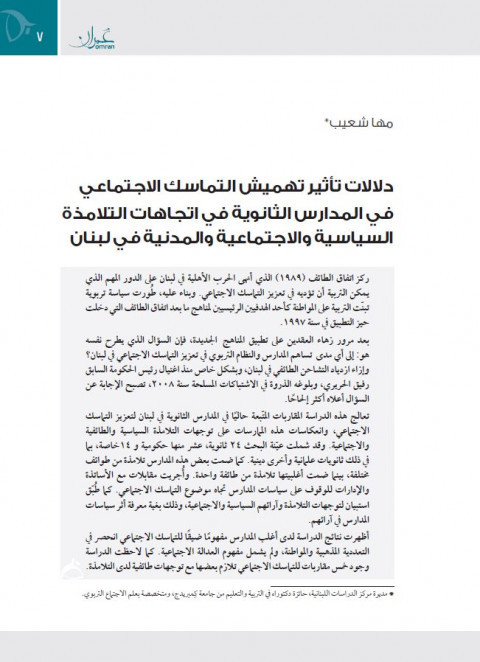 دلالات تأثير تهميش التماسك الاجتماعي في المدارس الثانوية في اتجاهات التلامذة السياسية والاجتماعية والمدنية في لبنان Year of publication: 2014 Author: شعيب، مهى Corporate author: Arab Center for Research and Policy Studies ركز اتفاق الطائف (1989) الذي أنهى الحرب الأهلية في لبنان على الدور المهم الذي يمكن التربية أن تؤديه في تعزيز التماسك الاجتماعي . وبناء عليه، طُورت سياسة تربوية تبنّت التربية على المواطنة كأحد الهدفين الرئيسيين لمناهج ما بعد اتفاق الطائف التي دخلت حيز التطبيق في سنة 1997. بعد مرور زهاء العقدين على تطبيق المناهج الجديدة، فإن السؤال الذي يطرح نفسه هو: إلى أي مدى تساهم المدارس والنظام التربوي في تعزيز التماسك الاجتماعي في لبنان؟ وإزاء ازدياد التشاحن الطائفي في لبنان، وبشكل خاص منذ اغتيال رئيس الحكومة السابق رفيق الحريري، وبلوغه الذروة في الاشتباكات المسلحة سنة 2008، تصبح الإجابة عن السؤال أعلاه أكثر إلحاحًا. تعالج هذه الدراسة المقاربات المتّبعة حاليًا في المدارس الثانوية في لبنان لتعزيز التماسك الاجتماعي، وانعكاسات هذه الممارسات على توجهات التلامذة السياسية والطائفية والاجتماعية. وقد شملت عيّنة البحث ٢٤ ثانوية، عشر منها حكومية وتسع خاص، بما في ذلك ثانويات علمانية وأخرى دينية. كما ضمت بعض هذه المدارس طلابًا من طوائف مختلفة، بينما ضمت أغلبيتها طلابًا من طائفة واحدة. وأُجريت مقابلات مع الأساتذة والإدارات للوقوف على سياسات المدارس تجاه موضوع التماسك الاجتماعي. كما طُبّق استبيان لتوجهات الطلاب وآرائهم السياسية والاجتماعية ،وذلك بغية معرفة أثر سياسات المدارس في آرائهم. أظهرت نتائج الدراسة لدى أغلب المدارس مفهومًا ضٌيقًا للتماسك الاجتماعي انحصر في التعددية المذهبية والمواطنة، ولم يشمل مفهوم العدالة الاجتماعية. كما لاحظت الدراسة وجود خمس مقاربات للتماسك الاجتماعي تلازم بعضها مع توجهات طائفية لدى التلامذة. The Implications of the Impact of the Marginalization of Social Cohesion on the Political, Social and Civic Attitudes of in Secondary Schools in Lebanon Year of publication: 2014 Author: شعيب، مهى Corporate author: Arab Center for Research and Policy Studies The Taef Agreement (1989) which put an end to the civil war in Lebanon focused on the role that education could play in consolidating social cohesion. Thus, following the Taef Agreement, the education policy developed adopted education on citizenship as one of the two main objectives of the curricula and which entered into implementation in 1997. Nearly two decades later today, the question is: to what extend do schools and the education system contribute to social cohesion in Lebanon? Considering the escalation in sectarian agitation, especially since the assassination of prime minister Rafiq Hariri, which peaked in the armed clashes in 2008, the answer to this question becomes even more urgent.This study examines the approaches currently practiced in the secondary schools in Lebanon to promote social cohesion and their reflections on the students’ political, sectarian and social attitudes. The sample consisted of 24 secondary schools, 10 public and 14 private, both secular and religious. Some of the schools had students from different sects whereas most of them included student majorities from one and the same sect. Interviews were done with teachers and administrations in order to explore the school policies regarding social cohesion. In addition, a questionnaire was used to explore the of students, their political and social views and to identify the impact of school policies on informing them. The results showed that most schools had a narrow concept of social cohesion that is limited sectarian pluralism and citizenship while social justice was not included. The study also identified five approaches to social cohesion some of which were coupled with sectarian attitudes of students.
 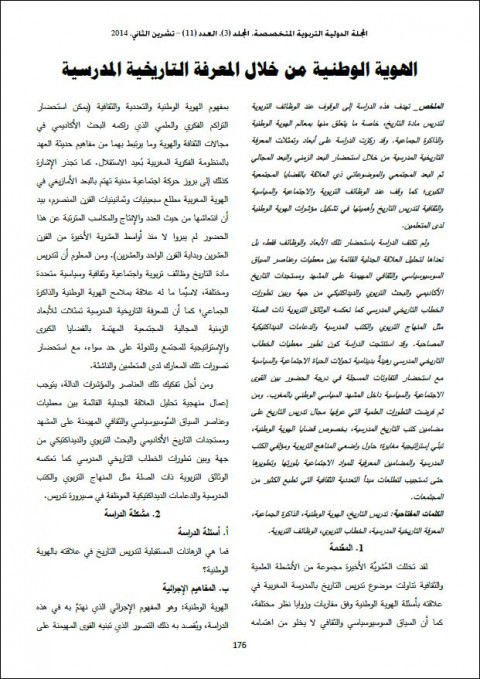 الهوية الوطنية من خلال المعرفة التاريخية المدرسية Year of publication: 2014 Author: وريف، علي Corporate author: International Group for Consulting and Training (IGCT) تهدف هذه الدراسة إلى الوقوف عند الوظائف التربوية لتدريس مادة التاريخ، خاصة ما يتعلق منها بمعالم الهوية الوطنية والذاكرة الجماعية. وقد ركزت الدراسة على أبعاد وتمثلات المعرفة التاريخية المدرسية من خلال استحضار البعد الزمني والبعد المجالي ثم البعد المجتمعي والموضوعاتي ذي العلاقة بالقضايا المجتمعية الكبرى؛ كما وقفت عند الوظائف التربوية والاجتماعية والسياسية والثقافية لتدريس التاريخ وأهميتها في تشكيل مؤشرات الهوية الوطنية لدى المتعلمين. لم تكتف الدراسة باستحضار تلك الأبعاد والوظائف فقط، بل تعداها لتحليل العلاقة الجدلية القائمة بين معطيات وعناصر السياق السوسيوسياسي والثقافي المهيمنة على المشهد ومستجدات التاريخ الأكاديمي والبحث التربوي والديداكتيكي من جهة وبين تطورات الخطاب التاريخي المدرسي كما تعكسه الوثائق التربوية ذات الصلة مثل المنهاج التربوي والكتب المدرسية والدعامات الديداكتيكية المصاحبة. وقد استنتجت الدراسة كون تطور معطيات الخطاب التاريخي المدرسي رهينةٌ بدينامية تحوالت الحياة االجتماعية والسياسية مع استحضار التفاوتات المسجلة في درجة الحضور بين القوى الاجتماعية والسياسية داخل المشهد السياسي الوطني بالمغرب. ومن ثم فرضت التطورات العلمية التي عرفها مجال تدريس التاريخ على مضامين كتب التاريخ المدرسية، بخصوص قضايا الهوية الوطنية، أي إستراتيجية مغايرة؛ حاول واضعو المناهج التربوية ومؤلفو الكتب المدرسية والمضامين المعرفية للمواد الاجتماعية بلورتها وتطويرها حتى تستجيب لتطلعات مبدأ التعددية الثقافية التي تطبع الكثير من المجتمعات. National Identity through Historical Knowledge of School Year of publication: 2014 Author: وريف، علي Corporate author: International Group for Consulting and Training (IGCT) The aim of this article is to shed light on educational functions of teaching history, especially with regard to the features of national identity and collective memory. The article focuses on the dimensions and representations of historical knowledge related to history presented in school. It makes use of time and space dimensions. It continues to cover dimensions of community and issues related to its main questions. It also tackles the educational, social, poltitical and cultural functions of teaching history and its importance in constructing learners indicators of national identity. The article tries also to analyse the dialectical relationship between two main aspects: the first one is the elements of sociopolitical and cultural context that dominate the scene, and the developments in academic history and educational and didactic research. The second one is the developments in the speech of school history declared in the educational documents, such as educational curriculum, textbooks and didactic supports. The study concluded that the school's historic speech data hostage dynamic transformations of social and political view with evoke disparities recorded in the degree of attendance between the social and political forces within the national political scene in Morocco. The scientific developments that the teaching of history field has known impose on the contents of history textbook, specifically the national identity issues, to adopt a different strategy; the curriculum makers, the textbook and cognitive contents writers of social materials have tried to elaborate and develop it to respond to the aspirations of the principle of cultural pluralism, which is printed a lot of communities.
 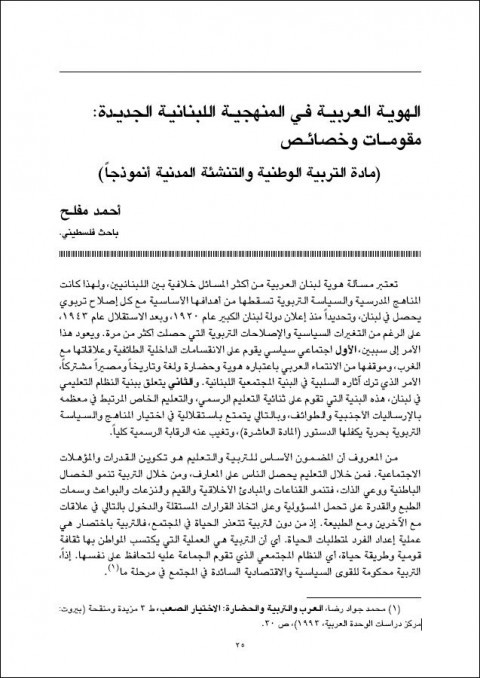 الهوية العربية في المنهجية اللبنانية الجديدة: مقومات وخصائص: مادة التربية الوطنية والتنشئة المدنية أنموذجا Year of publication: 2007 Author: مفلح، أحمد Corporate author: Centre for Arab Unity Studies هدف هذه الدراسة إلى الاهتمام بقضية الهوية العربية في المنهجية الجديدة اللبنانية من خلال توحيد مادة التربية الوطنية والتنشئة المدنية. وقد تم الكشف عن كيفية تقديم هذه المادة مفهوم الهوية العربية وكيفية بلورة مفهوم الانتماء العربي بالإضافة إلى التطرق للمجالات التي من خلالها يتم توصيل هذه المفاهيم والموضوعات التي تبرز فيها فكرة الانتماء والهوية. مع الكشف عما هو موجود في هذه المادة وقابليته للحياة والاستمرار في ضوء التغيرات التي حصلت في لبنان بعد وثيقة الوفاق الوطني (الطائف 1989)، وقدرتها على الصمود في وجه المؤثرات الأخرى في تربية النشء، مثل الأسرة والإعلام والبيئة والصحة وغيرها. وقد تبين من خلال التحليل أنه على الرغم مما حملته المنهجية التربوية الجديدة من التفاف حول حقيقة هوية لبنان العربية، وأنها قدمتها بشكلها الظاهري والنفعي والعاطفي أحيانا بما ينسجم مع التغيرات السياسية التي حلّت بلبنان بعد اتفاق الطائف، تبقى هذه المتغيرات في المنهاج الجديد متطورة جدا، مقابل التجاهل الكلي وحتى محاربة هذه الهوية في المنهاج القديم. Arab Identity in the New Lebanese Curriculum: Determinants and Characteristics of the National and Civic Education as an Example Year of publication: 2007 Author: مفلح، أحمد Corporate author: Centre for Arab Unity Studies This study deals with Lebanon’s Arab Identity issue in the new Lebanese curriculum through the unification of the contents of the National and Civic education subject. The study researched how this subject is presented and how to crystallize the concept of Arab Belonging, in addition to dealing with the aspects of communicating the concepts and subjects of identity and belonging. The study reveals the contents of this subject and its ability to be sustained and utilized given the changes in Lebanon following the Taef Agreement and the National Conciliation Document of 1989, and it tests the ability of this subject to withstand the other factors in bringing up the new generation - such as the effects of the family, media, environment, health and others. The analysis showed that despite that the new education curriculum calls for rallying around the fact of Lebanon’s Arab identity and that this identity is sometimes presented in a conspicuous, emotional and self-interest way, in harmony with the political changes following Taef, nevertheless, the changes in the new contents remain very advanced compared to how the identity and belonging were ignored and even fought in the old curriculum.
  ثقافة قبول الآخر لدى الطالبة/ المعلمة بكلية رياض الأطفال - جامعة القاهرة: دراسة ميدانية Year of publication: 2016 Author: علي، زينب علي محمد Corporate author: Kuwait Society for the Advancement of Arab Children (KSAAC) هدفت الدراسة إلى تعرف واقع ثقافة قبول الاًخر لدي الطالبة/ المعلمة بكلية رياض الأطفال - جامعة القاهرة. استخدمت الدراسة المنهج الوصفي، وتمثل مجتمع الدراسة في جميع طالبات كلية رياض الأطفال جامعة القاهرة، والبالغ عددهن (1113) طالبة. تم اختيار عينة الدراسة بالطريقة الطبقية العشوائية، واستخدمت الدراسة استبانةً مكونة من جزأين: الأول، شمل البيانات الأساسية كالاسم (اختياري)، الفرقة الدراسية، والمشاركة في الأنشطة الجامعية. والثاني، شمل عبارات الاستبانة التي تم توجيهها لعينة الدراسة حول واقع ثقافة قبول الآخر لدى الطالبة/ المعلمة بكلية رياض الأطفال. توصلت الدراسة إلى أن محاور) بدرجة كبير. كما جاء محور التسامح في المرتبة الأولى فيما يتعلق بترتيب محاور أداة الدراسة من وجهة نظر أفراد عينة الدراس. في حين جاء محور الحقوق والواجبات في المرتبة الثانية بالنسبة لترتيب محاور الدراسة من وجهة نظر أفراد العينة. وفي المرتبة الأخيرة جاء محور تحمل المسؤولية، وذلك من وجهة نظر العينة. Culture of Accepting Others among Student Teacher in the Faculty of Kindergarten, Cairo University: Pilot Study Year of publication: 2016 Author: علي، زينب علي محمد Corporate author: Kuwait Society for the Advancement of Arab Children (KSAAC) The study aimed at knowing in the actual reality of accepting the others’ culture by the students/ teachers of the Kindergarten Faculty at Cairo University. This study is descriptive and includes all students (1113) of the Kindergarten Faculty. The study used selected stratified random sampling. A questionnaire composed of two parts was employed to include the essential data. The results showed a moderate level of 'discussion and teamwork', a high level of 'rights and duties, tolerance and responsibility'. Concerning the study’s tools, tolerance came first, while rights and duties came second, and responsibility came last.
  درجة تطبيق المدرسة لقيمة العدل كما يراها طلاب المرحلة الثانوية بمكة المكرمة Year of publication: 2016 Author: حمد، حياة عبد العزيز محمد نياز Corporate author: International Group for Consulting and Training (IGCT) هدفت الدراسة إلى توضيح مكانة قيمة العدل في التربية الإسلامية والكشف عن درجة تطبيق كل من مدير المدرسة، والمعلم والمرشد الطالبي قيمة العدل من وجهة نظر طالب المدرسة الثانوية بمجتمع مدينة مكة المكرمة. استخدمت الدراسة المنهج الوصفي التحليلي، واستبانة اشتملت على 42 عبارة موزعة على ثلاثة محاور هي: مدير المدرسة، المعلم، المرشد الطالبي. وشملت عينة الدراسة 395 طالباً وطالبةً اختيروا بطريقة عشوائية طبقية. أظهرت نتائج الدراسة أن درجة تطبيق المعلم لقيمة العدل ككل جاءت في المرتبة الأولى تليها درجة تطبيق المدير ثم درجة تطبيق المرشد في المرتبة الثالثة. وقد أظهرت النتائج المتعمقة بفرضيات الدراسة وجود فروق ذات دلالة إحصائية تعزى إلى متغير الجنس (ذكور، إناث) حيث جاءت الفروق لصالح الذكور بالنسبة لمحوري عدل كل من مدير المدرسة والمعلم. أما فيما يتعلق بمحور عدل المرشد الطالبي فلا تظهرفروق ذات دلالة إحصائية تعزى لمتغير الجنس، كما وجدت فروق ذات دلالة إحصائية تعزى لمتغير التخصص الدراسي (أدبي، علمي)، لصالح طلبة التخصص الأدبي بالإضافة إلى عدم وجود فروق ذات دلالة إحصائية تعزى لمتغير المستوى التعليمي.