
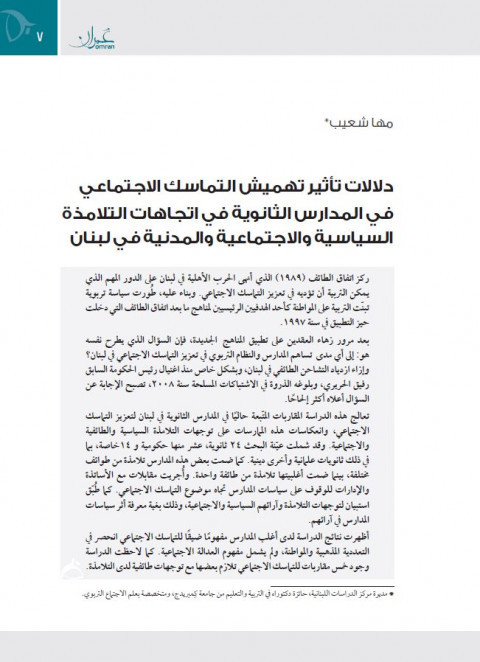
The Implications of the Impact of the Marginalization of Social Cohesion on the Political, Social and Civic Attitudes of in Secondary Schools in Lebanon
- Author
- شعيب، مهى
- Corporate Author
- Arab Center for Research and Policy Studies
- Collation
- p. 7-24
- Resource Language
- Arabic
- Year of publication
- 2014
- Level of education
- Secondary educationNon-formal education
- Region
- Arab States
- Place of publication
- الدوحة
The Taef Agreement (1989) which put an end to the civil war in Lebanon focused on the role that education could play in consolidating social cohesion. Thus, following the Taef Agreement, the education policy developed adopted education on citizenship as one of the two main objectives of the curricula and which entered into implementation in 1997. Nearly two decades later today, the question is: to what extend do schools and the education system contribute to social cohesion in Lebanon? Considering the escalation in sectarian agitation, especially since the assassination of prime minister Rafiq Hariri, which peaked in the armed clashes in 2008, the answer to this question becomes even more urgent.
This study examines the approaches currently practiced in the secondary schools in Lebanon to promote social cohesion and their reflections on the students’ political, sectarian and social attitudes. The sample consisted of 24 secondary schools, 10 public and 14 private, both secular and religious. Some of the schools had students from different sects whereas most of them included student majorities from one and the same sect. Interviews were done with teachers and administrations in order to explore the school policies regarding social cohesion. In addition, a questionnaire was used to explore the of students, their political and social views and to identify the impact of school policies on informing them. The results showed that most schools had a narrow concept of social cohesion that is limited sectarian pluralism and citizenship while social justice was not included. The study also identified five approaches to social cohesion some of which were coupled with sectarian attitudes of students.
Related Resources
-
 IIEP-UNESCO 12th Medium-Term Strategy: 2026–2029
 -
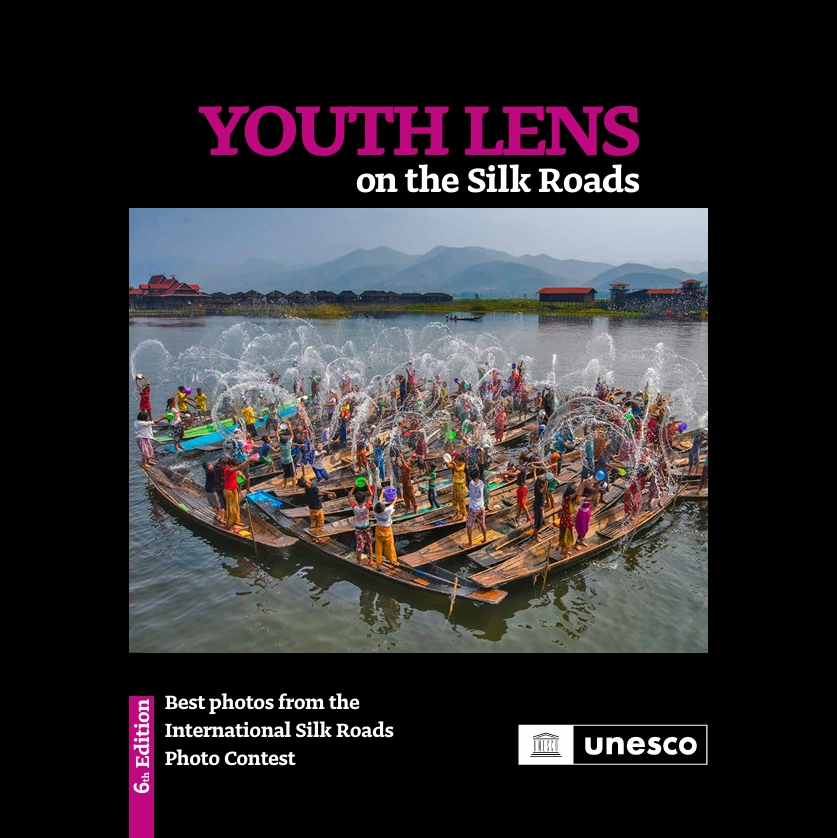 Youth Lens on the Silk Roads: Best Photos from the International Silk Roads Photo Contest; 6th Edition
 -
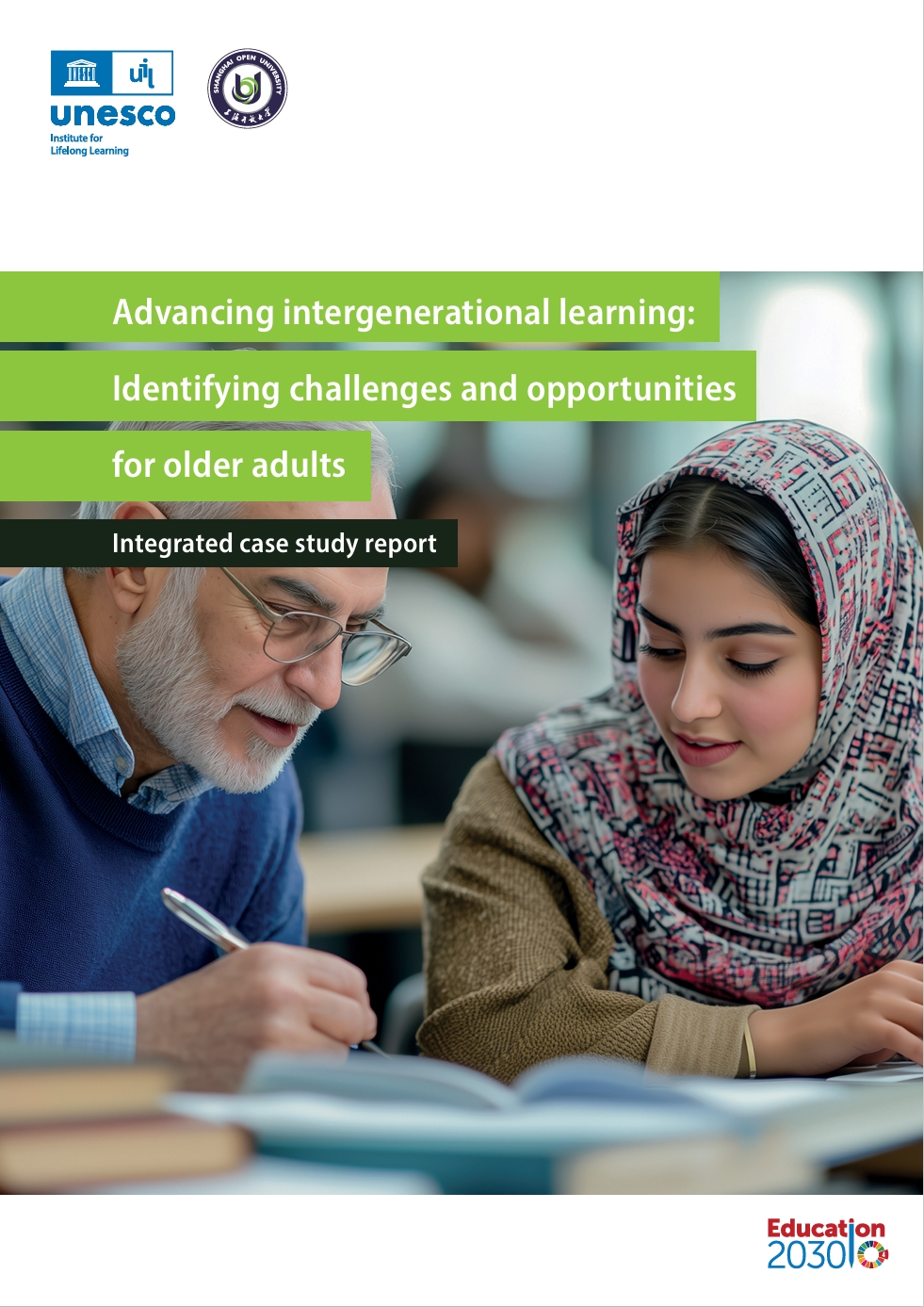 Advancing Intergenerational Learning: Identifying Challenges and Opportunities for Older Adults; Integrated Case Study Report
 -
 Digital Empowerment for Lifelong Learning and Transformative Andragogy (DELTA) for Adult Educators: Introduction to the DELTA Framework and Resources