
Resources
Explore a wide range of valuable resources on GCED to deepen your understanding and enhance your research, advocacy, teaching, and learning.
3,229 Results found
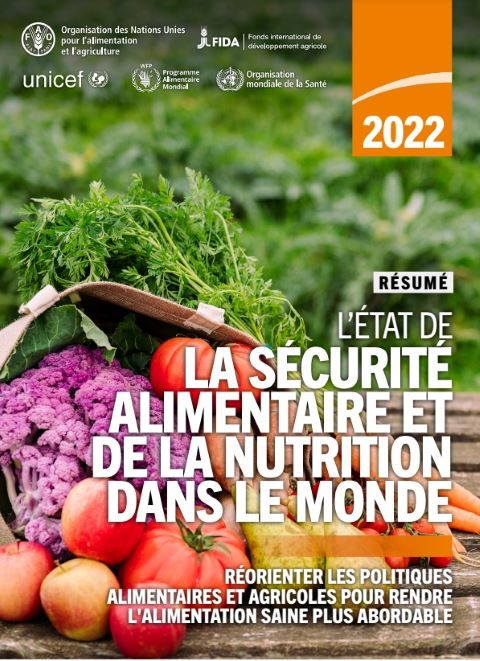 Security, Food and Nutrition in the World Year of publication: 2022 Corporate author: Food and Agriculture Organization of the United Nations (FAO) This report repeatedly highlights the intensification of the main factors of food insecurity and malnutrition: conflicts, climatic phenomena extremes, and economic shocks, the effects of which combine with those of the increase in some inequalities. The issue is not whether more trials are to come or not; it's about rather taking matters into their own hands with more courage and building resilience in the face of future shocks.
  Strengthening Social and Emotional Learning in Hybrid Modes of Education: Building Support for Students, Teachers, Schools and Families Year of publication: 2024 Corporate author: UNESCO International Bureau of Education (IBE) This Discussion Paper focuses on the essential role of social and emotional learning (SEL) in the global movement to transform education and amplify its social, economic, environmental and personal impacts in a rapidly changing world. It explores how the mainstreaming of SEL into educational policies and practices can contribute to realizing future visions of education that are flexible, reflective, innovative, and impactful. Specifically, the Paper focuses on six topics that, as a whole, reflect global experiences in integrating and implementing SEL in its various forms both during and in the wake of the COVID-19 pandemic. Its main objective is to animate discussion on how to integrate a SEL dimension in hybrid modes of teaching and learning. This introductory overview presents the overall purpose and scope of the Paper, defines its underlying concepts and introduces the topics brought to this forum through the lenses of a diverse group of educators from Africa, the Arab States, Asia, Europe, and Latin America.
 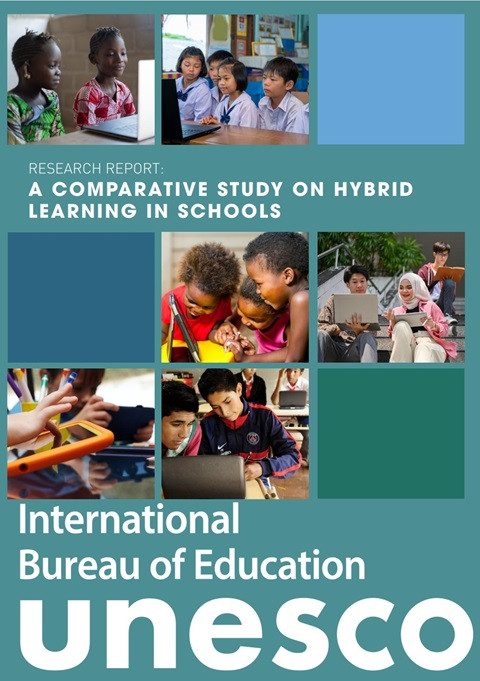 Research Report: A Comparative Study on Hybrid Learning in Schools Year of publication: 2024 Corporate author: UNESCO International Bureau of Education (IBE) During the COVID-19 lockdown, policymakers and educators faced an unprecedented challenge disrupting all levels of education. The initial optimism about replacing physical classes with virtual lessons diminished as complex interconnected issues emerged. To address the need for continuous and sustainable learning, school systems implemented variations of hybrid learning during the pandemic, seeking to integrate physical and virtual classes. These approaches prompted this comparative study led by UNESCO-IBE. The initial phase of this study involved collecting and analysing data on hybrid strategies from six countries. The research aimed to examine factors influencing hybrid learning implementation during the lockdown, with a subsequent focus on developing and validating a practical Hybrid Learning Framework for Schools. The cross-case analysis was designed not to rank or compare, but to understand and connect different scenarios and contexts. Phase I focuses on current hybrid learning practices and influencing factors, while Phases II and III will concentrate on using the information gathered to create and validate a Hybrid Learning Framework for Schools. Aligned with UNESCO-IBE’s overarching vision of a comprehensive, personalized, and democratized curriculum accessible to all, hybrid learning facilitates inclusive education across diverse regions, overcoming geographical and temporal limitations. The approach aims to unlock the unique potential of every learner, fostering a more flexible educational environment.
 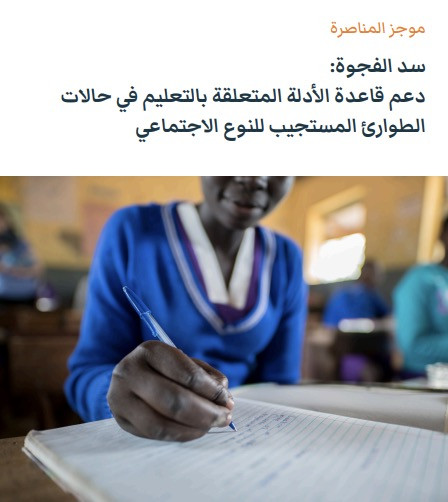 سد الفجوة: دعم قاعدة الأدلة المتعلقة بالتعليم في حالات الطوارئ المستجيب للنوع الاجتماعي Year of publication: 2022 Author: Lauren Gerken | Sumbal Bashir Corporate author: The Inter-agency Network for Education in Emergencies (INEE) يسلّط هذا الملخص الضوء على الثغرات الرئيسية في قاعدة الأدلة حول النوع الاجتماعي والتعليم في حالات الطوارئ، ويقدم التوجيه الاستراتيجي والمحتوى المواضيعي لمبادرات الأبحاث الجديدة. يتضمن توصيات لإجراء أبحاث تعليمية مستجيبة للنوع الاجتماعي والمناصرة للعمل التعاوني وتبادل المعرفة بين النوع الاجتماعي والجهات الفاعلة الرئيسية في مجال التعليم في حالات الطوارئ. يمكن استخدام الملخص لتحديد المجالات ذات الأولوية للبحث وأسئلة البحث للمضي قدمًا، وفرص التعاون، ومجالات البحث ذات الأولوية للتمويل. Bridging the Gap: Strengthening the Evidence Base for Gender Responsive Education in Emergencies Year of publication: 2022 Author: Lauren Gerken | Sumbal Bashir Corporate author: The Inter-agency Network for Education in Emergencies (INEE) This brief was developed by the INEE Gender Task Team in response to global calls for more and better data and evidence on gender-responsive EiE. The brief draws from findings of the 2021 and 2022 editions of the INEE Mind the Gap report on the state of girls’ education in emergencies, and from consultations with gender and education experts.
 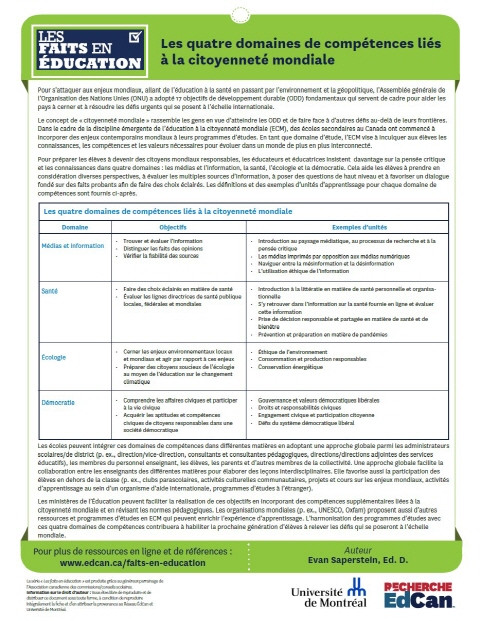 The Four Areas of Competence Linked to Global Citizenship Year of publication: 2023 Author: Evan Saperstein Corporate author: Université de Montréal | Association Canadienne d'Education Ce document présente les quatre domaines de compétences liées à la citoyenneté, et comment les intégrer à l'éducation des élèves. Pour préparer les élèves à devenir des citoyens mondiaux responsables, les éducateurs et éducatrices insistent davantage sur la pensée critique et les connaissances dans quatre domaines : les médias et l’information, la santé, l’écologie et la démocratie. This document presents the four areas of competency linked to citizenship, and how to integrate them into pupils' education. To prepare students to become responsible global citizens, educators are placing greater emphasis on critical thinking and knowledge in four areas: media and information, health, ecology and democracy. Les quatre domaines de compétences liés à la citoyenneté mondiale Year of publication: 2023 Author: Evan Saperstein Corporate author: Université de Montréal | Association Canadienne d'Education Ce document présente les quatre domaines de compétences liées à la citoyenneté, et comment les intégrer à l'éducation des élèves. Pour préparer les élèves à devenir des citoyens mondiaux responsables, les éducateurs et éducatrices insistent davantage sur la pensée critique et les connaissances dans quatre domaines : les médias et l’information, la santé, l’écologie et la démocratie. This document presents the four areas of competency linked to citizenship, and how to integrate them into pupils' education. To prepare students to become responsible global citizens, educators are placing greater emphasis on critical thinking and knowledge in four areas: media and information, health, ecology and democracy.
  Supporting Schools’ and Teachers’ Use of Assessment to Inform Learning of All Students (Using Assessment Data in Education Policy and Practice: Examples from the Asia-Pacific issue 5, December 2023) Year of publication: 2023 Author: Ursula Schwantner | Soumaya Maghnouj Corporate author: UNESCO Bangkok | Australian Council for Educational Research (ACER) In more than half of Asia-Pacific countries, a majority of learners in primary and secondary education do not have the required foundational skills. The fifth issue of the topical case studies series 'Using Assessment Data in Education Policy And Practice: Examples From The Asia-Pacific' under the Network for Education Quality Monitoring in Asia-Pacific (NEQMAP), documents four promising practices from countries in the Asia-Pacific region on how education systems can better support teachers and schools in effectively integrating assessment practices in the teaching and learning process. The goal of this support is to identify and meaningfully address every learner’s needs, so that every learner can learn successfully. The case studies look at a variety of levers that promote a better use of assessment for learning such as how to develop teachers’ assessment literacy and capacity to design, implement and use assessment to inform their classroom teaching and learning; how to improve the use of standardized assessment data to inform teaching and learning and how to rethink the organization of instruction to address the needs of all learners.
 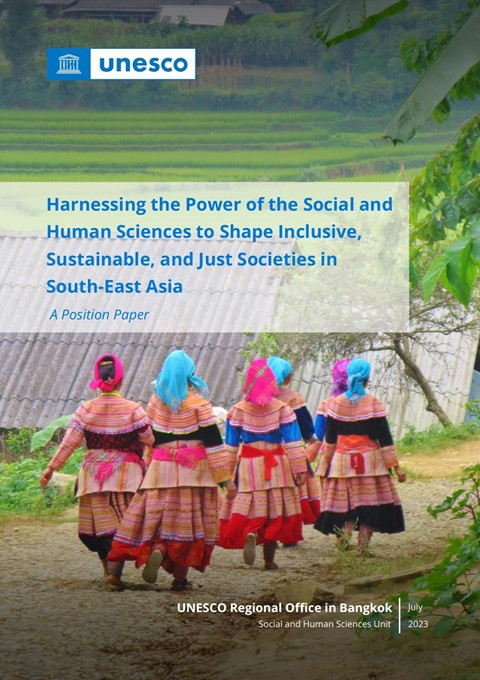 Harnessing the Power of the Social and Human Sciences to Shape Inclusive, Sustainable, and Just Societies in South-East Asia: A Position Paper Year of publication: 2023 Author: Phinith Chanthalangsy Corporate author: UNESCO Bangkok This paper provides an overview of the Social and HumanSciences (SHS) Unit, UNESCO Regional Office in Bangkok holisticapproach to building a more just and fair society for all in theSouth-East Asian region toward 2030 and beyond. The paperprovides two sections focused on thechallengesidentified in theregion and some potentialpathways for the future, from thepoint of view of UNESCO’s Social and Human Sciences Sector. The content of this paper has been discussed with aregionalexpert consultative group that gathered in Bangkok during aMOST regional Conference on 22–23 June 2023. The paper offersgrounds forstrategic orientations and partnershipsin keydomains where UNESCO's expertise in the social and humansciences can make a difference in South-East Asia
  2022 대한민국 SDG4 이행현황 보고서 Year of publication: 2023 Corporate author: SDG4-교육2030협의체 | 유네스코한국위원회 SDG4-교육20230 협의체가 공동집필한 보고서로서, 2022년도 SDG4(교육분야 지속가능발전목표) 관련 국내외 동향을 소개하고 SDG4 세부목표별 국내 이행현황 및 과제를 분석하고 있다.