
Currículos escolares y sus orientaciones sobre historia, sociedad y política: significados para la cohesión social en Latinoamérica
- Autor Corporativo
- Uqbar EditoresElsevier
- Idioma del recurso
- español
- Año de publicación
- 2009
- Palabra Clave
- CurriculumEvaluationSocial integration
- Tipo de Recurso
- Planes de estudios, material didáctico y guías
- Región
- América Latina y el Caribe
The purpose of this work is to analyse the results of the curricula reform that took place from 1999 to 2000 in regards to the role of schools in providing a model for social integration or cohesion among all groups and social strata. The analysis and critical reflection is based on the assessment done on the curricula for citizenship formation in primary and secondary education in seven countries: Argentina, Brazil, Colombia, Chile, Guatemala, Mexico, and Peru. The main question being answered whether the patterns observed in the different curricula contribute to social cohesion.
Recursos Relacionados
-
 Envisioning the Future of Assessment in Transformative Education: A Synthesis Report of the Expert Meeting on Evaluation and Assessment for Transformative Education: Towards and Beyond 2030
 -
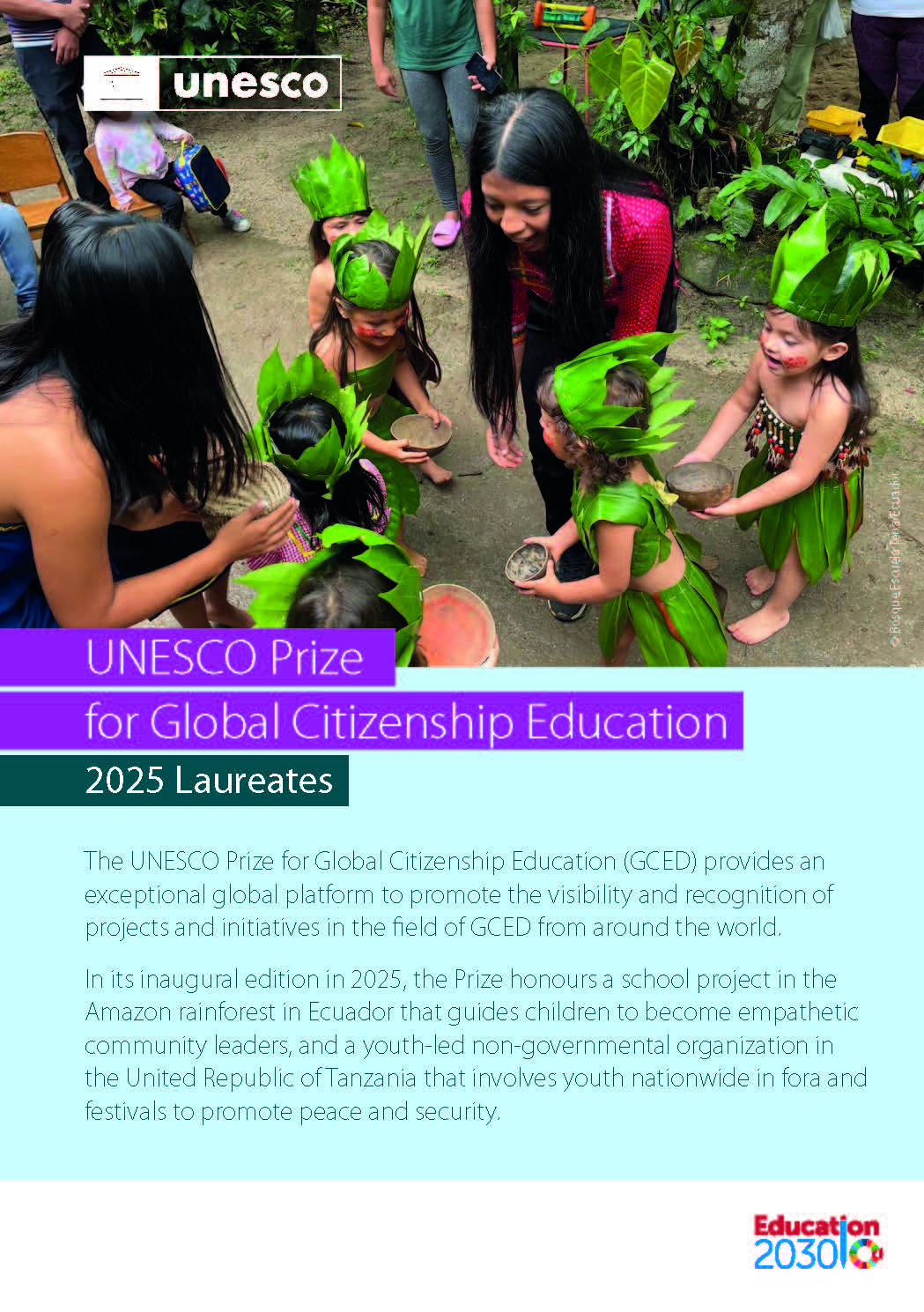 UNESCO Prize for Global Citizenship Education 2025 Laureates
 -
 Confronting Inequality through GCED: Toward Justice, Inclusion, and Transformation (SangSaeng; No.65, 2025)
 -
 Educator's Guide to Global Citizenship Education: From Asia-Pacific Perspectives