
Ressources
Explorez une large gamme de ressources sur le GCED afin d’approfondir votre compréhension et de renforcer vos activités de recherche, de plaidoyer, d’enseignement et d’apprentissage.
792 résultats trouvés
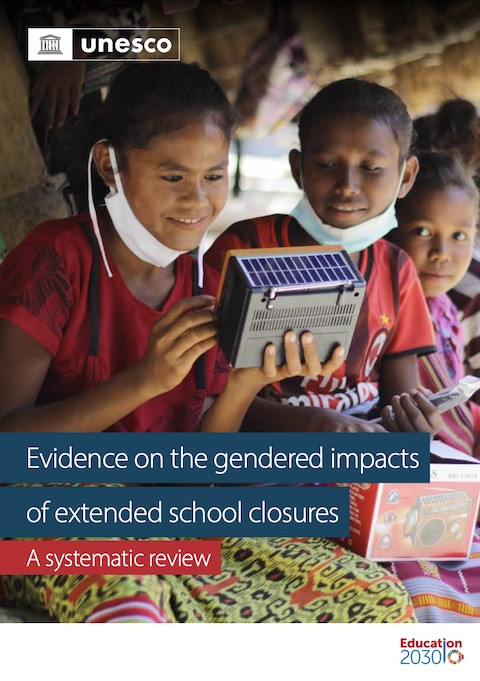 Evidence on the Gendered Impacts of Extended School Closures: A Systematic Review Année de publication: 2022 Auteur institutionnel: UNESCO School closures to mitigate the spread of COVID-19 have affected nearly 1.6 billion learners across the globe. While the scale of these closures is unprecedented, in recent decades children in many contexts have been out of school for long periods due to other pandemics, disruptions and disasters such as floods, earthquake and conflicts – with marked gender effects.Building on the findings of 154 studies from every region of the world, this study investigates the evidence on the gendered impacts of extended school closures and periods out of school. Through a systematic review of the evidence, it highlights how these can deepen gendered exclusions and vulnerabilities – with the poorest children being the most affected.Undertaken by a team of leading academic experts on gender equality and education, Evidence on the gendered impacts of extended school closures: A systematic review aims to prevent and mitigate adverse outcomes arising from extended periods of time out of school, by ensuring that responses to current and future crises are informed by a solid understanding of their effects on children’s education, health, well-being and protection.
  Transforming Education Summit 2022: Futures of Education Briefing Notes Année de publication: 2022 Auteur institutionnel: UNESCO National consultations that aim at developing a shared vision, commitment, and alignment of action across constituencies are one of the key TES workstreams. The Reimagining our futures together report is proposed as a framework for examining how education systems need to change to better serve learners and societies into the future.A series of briefing notes have been prepared in alignment with the summit's five action tracks:o Inclusive, equitable, safe and healthy schoolso Learning and skills for life, work and sustainable developmento Teachers, teaching and the teaching professiono Digital learning and transformationo Financing of education
  [Summary] First Meeting of UNESCO Chairs Relating to Global Citizenship Education Année de publication: 2022 Auteur institutionnel: 联合国教科文组织 (UNESCO) | 亚太地区促进国际理解教育中心 (APCEIU) This report shares the overview of the First Meeting of UNESCO Chairs Relating to Global Citizenship Education held on Friday, 30 September 2022. The event was co-organized by UNESCO and APCEIU with the main objective of gathering UNESCO Chairs from GCED-related fields to discuss the need for a platform for information sharing and knowledge exchanges and share ideas of how UNESCO Chairs could collaborate through joint projects.As UNESCO is in the process of revising the 1974 UNESCO Recommendation concerning Education for International Understanding, Co-operation and Peace and Education relating to Human Rights and Fundamental Freedoms, the report also shared the summary of the discussion over the meeting regarding the current status of the revision process and UNESCO Chairs' thoughts and suggestions on the revised Recommendation.
  Berlin Declaration on Education for Sustainable Development; Learn for Our Planet: Act for Sustainability Année de publication: 2022 Auteur institutionnel: UNESCO From 17 May to 19 May 2021 around 2800 people – politicians, business people, youth leaders, scientists, Non-governmental organizations, and many more - from 160 countries came together virtually at the UNESCO World Conference on Education for Sustainable Development (ESD) 2021. During the conference, they expressed their commitment to use the transformative power of education in order to address the global challenges we face. The Berlin Declaration was the main result of the conference.The Berlin Declaration on Education for Sustainable Development is an important document that emphasizes the significance of ESD for each and every one of us. It identifies concrete challenges the global community is facing and calls for changes that are urgently needed in order to fully integrate and strengthen ESD in all educational contexts.
 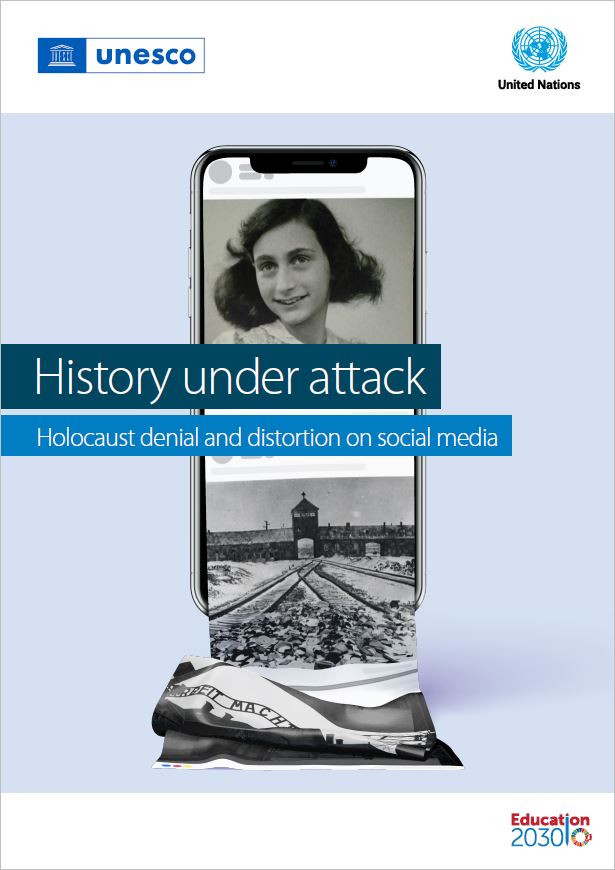 History Under Attack: Holocaust Denial and Distortion on Social Media Année de publication: 2022 Auteur institutionnel: 联合国教科文组织 (UNESCO) | United Nations (UN) A new United Nations and UNESCO study together with the support of the World Jewish Congress investigates Holocaust denial and distortion on social media, measuring their extent and nature on Facebook, Instagram, Telegram, Twitter and TikTok, at a time when the memory and fundamental facts of the Holocaust are under threat from lies, smears and the spread of violent ideologies. It provides recommendations that governments, online platforms, educators and researchers can implement to counter denial and distortion, prevent antisemitism and uphold human rights.This report aims to provide a wide-ranging assessment of the extent to which Holocaust-related content on social media and online platforms denies its factual basis or distorts the Holocaust by minimizing or misrepresenting its history. The report seeks to identify content that has evaded content moderation (on platforms that seek to remove content which denies and distorts the Holocaust). Perhaps more importantly, it also aims to provide an understanding of how denial and distortion about the Holocaust are communicated by people on online platforms.
 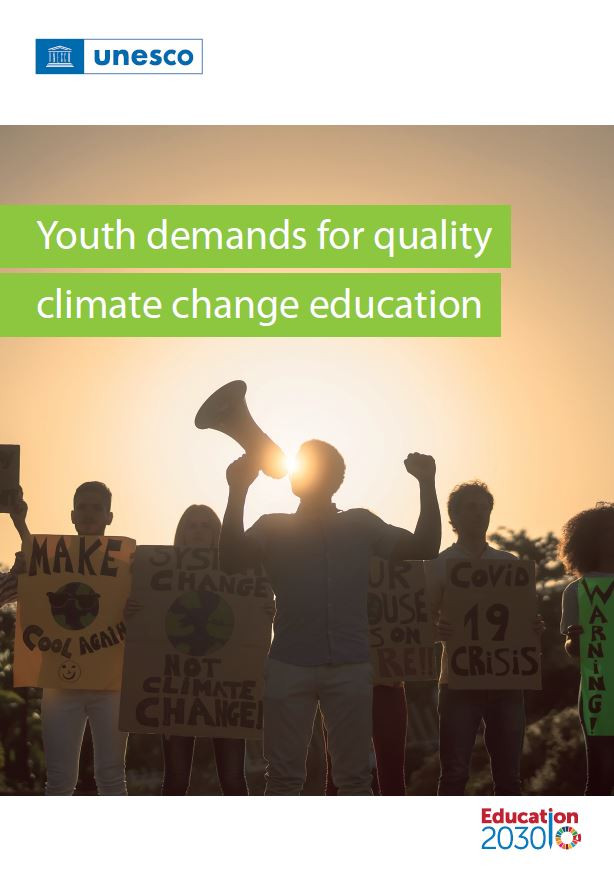 Youth Demands for Quality Climate Change Education Année de publication: 2022 Auteur institutionnel: Organización de las Naciones Unidas para la Educación, la Ciencia y la Cultura (UNESCO) This document summarizes the findings of a global survey and focus group discussions on young people’s learning experiences and demands on quality climate change education, based on responses from about 17,500 young people across 166 countries. The findings shed light on how young people are currently experiencing climate change education and what they want to see differently in the future around five key aspects: learning content, ways of teaching and learning, the learning environment, school management and learning partnerships.
 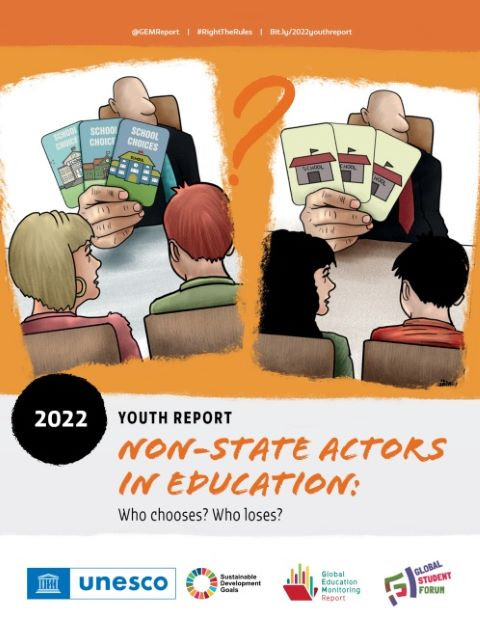 Youth Report 2022: Non-state Actors in Education; Who Chooses? Who Loses? Année de publication: 2022 Auteur institutionnel: UNESCO This report is written in partnership with the Global Student Forum to help you learn about the youth perspective on the different roles and impact of non-state actors in education. For many, a discussion on the role of non-state actors in education quickly boils down to a debate about whether private schools support or undermine good-quality education.But the role of non-state actors impacts many more corners of the education sector, from the textbooks you use, the food in your canteens, any additional tutorial support you get, the skills you might learn at work and much more.The report invites youth to join a call for governments to #RightTheRules which will ensure that non-state actor involvement does not compromise the promise of providing 1 year of pre-primary and 12 years of primary and secondary education free for all.
  Non-state Actors in Tertiary Education: A Shared Vision for Quality and Affordability? (Policy Paper 47) Année de publication: 2022 Auteur institutionnel: UNESCO Non-state provision accounts for more than one third of tertiary education students worldwide, a considerably higher share than in primary or secondary education. Providers are diverse, respond to a variety of needs, and often blur the line between the state and non-state sectors. Non-state actors are also important players in the financing of tertiary education through households, market mechanisms and public–private partnerships. As a result, these actors play a significant role in influencing regulations and policymaking, and in shaping the tertiary system as a whole. Governments must ensure quality and equity, the key dimensions of Sustainable Development Goal target 4.3, regardless of how state and non-state actors share responsibilities.
 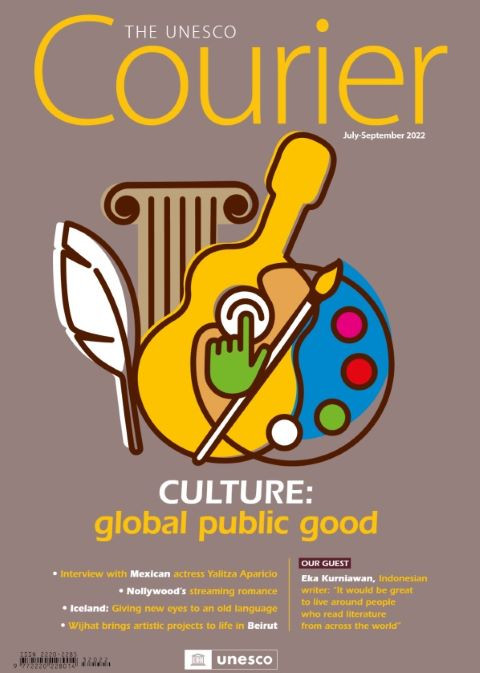 Culture: Global Public Good (The UNESCO Courier no. 3; July-September 2022) Année de publication: 2022 Auteur institutionnel: UNESCO Culture is what defines us in space and time – our past and present roots, our prospects. Culture is an inexhaustible and renewable resource, which adapts to changing contexts and which speaks to humans first and foremost through their capacity to imagine, create and innovate. Culture is our most powerful global public good. In the words of Javier Pérez de Cuéllar, former Secretary-General of the United Nations, culture has a role “as a desirable end in itself, as giving meaning to our existence”. Today, more than ever, we need to find meaning, we need universality, we need culture in all its diversity.
 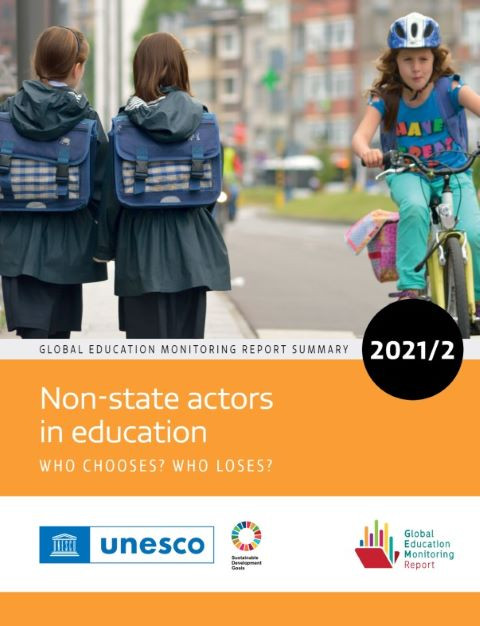 [Summary] Global Education Monitoring Report 2021/2: Non-state Actors in Education: Who Chooses? Who Loses? Année de publication: 2022 Auteur institutionnel: UNESCO Non-state actors’ role extends beyond provision of schooling to interventions at various education levels and influence spheres. Alongside its review of progress towards SDG 4, including emerging evidence on the COVID-19 pandemic’s impact, the 2021/2 Global Education Monitoring Report urges governments to see all institutions, students and teachers as part of a single system. Standards, information, incentives and accountability should help governments protect, respect and fulfill the right to education of all, without turning their eyes away from privilege or exploitation. Publicly funded education does not have to be publicly provided but disparity in education processes, student outcomes and teacher working conditions must be addressed. Efficiency and innovation, rather than being commercial secrets, should be diffused and practiced by all. To that end, transparency and integrity in the public education policy process need to be maintained to block vested interests. The report’s rallying call – Who chooses? Who loses? – invites policymakers to question relationships with non-state actors in terms of fundamental choices: between equity and freedom of choice; between encouraging initiative and setting standards; between groups of varying means and needs; between immediate commitments under SDG 4 and those to be progressively realized (e.g. post-secondary education); and between education and other social sectors.