
Ressources
Explorez une large gamme de ressources sur le GCED afin d’approfondir votre compréhension et de renforcer vos activités de recherche, de plaidoyer, d’enseignement et d’apprentissage.
105 résultats trouvés
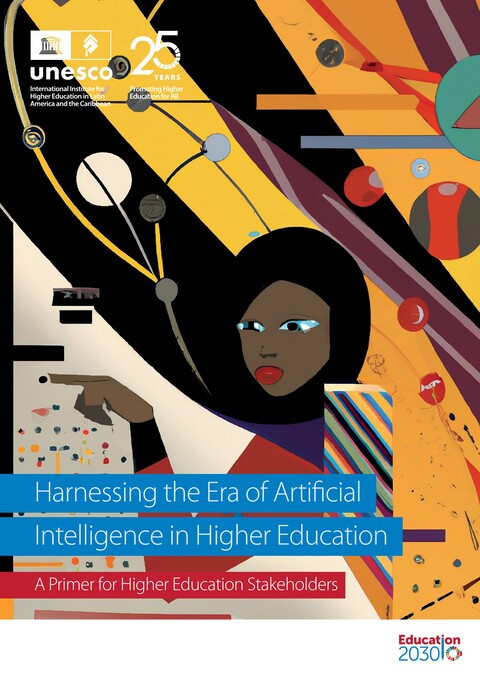 Harnessing the Era of Artificial Intelligence in Higher Education: A Primer for Higher Education Stakeholders Année de publication: 2023 Auteur: Bosen Lily Liu | Diana Morales | Jaime Roser-Chinchilla | Emma Sabzalieva | Arianna Valentini | Daniele Vieira do Nascimento | Clarisa Yerovi Auteur institutionnel: UNESCO | UNESCO International Institute for Higher Education in Latin America and the Caribbean (IESALC) The International Institute for Higher Education in Latin America and the Caribbean (UNESCO IESALC) is one of UNESCO’s key education-focused institutes and is the only institute in the United Nations with a specific mandate for higher education. Taking a holistic and integrated intersectoral and cross-sectoral approach to higher education, UNESCO IESALC provides support to Member States through policy-driven and action-oriented research and publications, capacity development, training, advocacy and networking. Following the release of a Quick Start Guide on using ChatGPT and Artificial Intelligence (AI) in higher education, UNESCO IESALC is pleased to offer to the wider community of higher education stakeholders worldwide this Primer on AI and higher education. Providing information and tips for developing further thinking and policies related to the use of AI processes and outcomes in higher education institutions, the Primer is a comprehensive and comprehensible introduction to AI. It also serves as a practical tool for guidance and reference with recommendations for its use in higher education.
 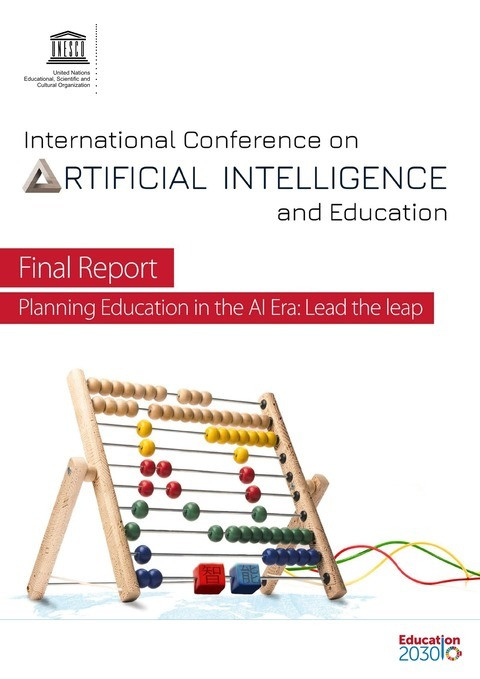 International Conference on Artificial Intelligence and Education, Planning Education in the AI Era: Lead the Leap; Final Report Année de publication: 2019 Auteur institutionnel: UNESCO The current report is an exhaustive account of the discussion and debate at the International Conference on Artificial Intelligence and Education (hereafter referred to as ‘the conference’) held in Beijing from 16 to 18 May 2019. Under the overarching theme of ‘Planning Education in the AI Era: Lead the Leap’, the conference was structured into seven plenary sessions and 16 breakout sessions complemented by a live exhibition and study tours to facilitate forwardlooking debates, share cutting-edge knowledge and AI solutions, and deliberate on sector-wide strategies.
 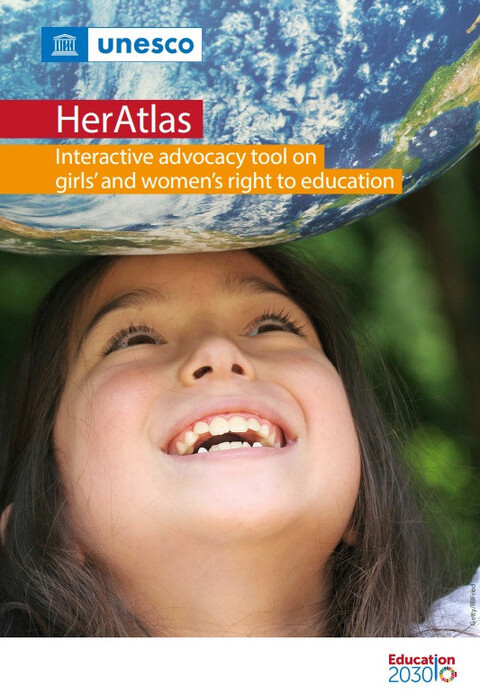 Her Atlas: Interactive Advocacy Tool on Girls’ and Women’s Right to Education Année de publication: 2023 Auteur institutionnel: UNESCO Many girls and women cannot exercise their right to education due to gender inequality and discriminatory practices. Poverty, early marriage, and gender-based violence are just some of the many reasons behind the high percentage of global female illiteracy and school drop-outs. Strengthening the right of girls and women to quality education is key to eliminate discrimination and to achieve equal rights between genders. This cannot be achieved without solid national legal frameworks that are rightsbased, gender responsive and inclusive. This is where HerAtlas comes in. HerAtlas, is a first of its kind online tool that maps the right to education of girls and women. It aims to enhance public knowledge and monitor the status of national constitutions, legislation and regulations related to education rights for girls and women to encourage countries to take action, strengthen their laws and policies, and lead to long term change. Concrete changes are already apparent. In 2019, 4% of countries were explicitly restricting the right to education of married, pregnant, and parenting girls. This has dropped to 2% in 2022, benefiting millions of girls who can now legally attend school when they marry or become pregnant.
 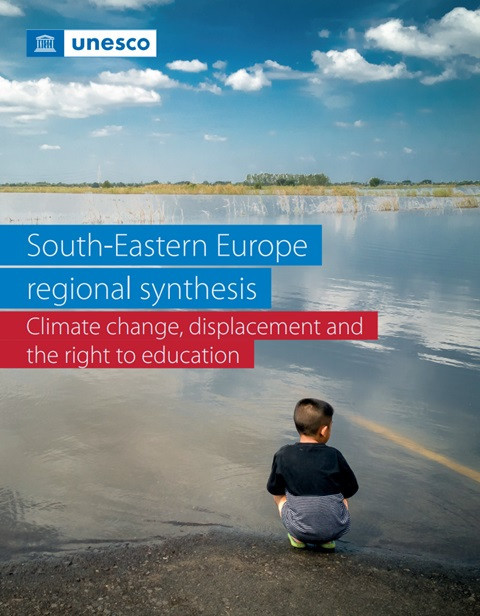 South-Eastern Europe regional synthesis: climate change, displacement and the right to education Année de publication: 2023 Auteur institutionnel: UNESCO In 2021 alone, 23.7 million people were displaced in 137 countries and territories due to natural disasters, which the scientific community has recognized have become more frequent and intense due to climate change. Climate change and displacement is currently taking place in Europe, with particularly disastrous consequences in South-Eastern Europe due to regional specificities. Comparative country case studies were carried out in Bosnia and Herzegovina, the Republic of Moldova, and Serbia, as they exemplify clear, present patterns of climate displacement, to examine the impacts of climate change on the right to education in the region. The case studies show that climate change directly threatens education through the destruction of schools and property. It also indirectly puts learning in peril by leading people across borders where their legal residency nor right to education is ensured. This publication aims to guide policy-makers by providing recommendations on how to ensure the protection of the right to education in South-Eastern Europe in the face of climate change and displacement. It is one of four regional reports that will lead to the development of a global report providing global policy guidance.
  Central America and the Caribbean regional synthesis: climate change, displacement and the right to education Année de publication: 2023 Auteur institutionnel: UNESCO From rising sea level to drought and increasingly frequent natural disasters - the effects of climate change are well-known today. However, its effect on human mobility is just coming to the forefront of the political discussion. In 2020 alone, 30.7 million people globally were displaced by natural disasters. Central America and the Caribbean region is prone to the effects of climate change and displacement due to its socioeconomic characteristics and geographic location. Country case studies were carried out in the Bahamas, Cuba, the Dominican Republic, Guatemala, and Jamaica to examine the impacts on the right to education in the region. The research shows that climate change directly threatens education through the destruction of schools and property. It also leads people across borders where their legal residency and right to education are not guaranteed. This report aims to guide policy-makers on how to ensure education is protected in the face of climate change and displacement. The report is one of four being developed and will contribute to UNESCO’s global initiative on climate change, displacement and the right to education. It will inform the development of a Global Report with policy recommendations.
  Why the World Needs Happy Schools: Global Report on Happiness In and For Learning Année de publication: 2024 Auteur institutionnel: UNESCO Seeing a teacher smile. Hearing students laugh. Feeling a hug from a friend. Smelling fresh air. Tasting a nutritious school meal. These five senses can stimulate happiness at school and improve the learning experiences, outcomes and well-being of students. Through the ‘Happy Schools’ initiative, UNESCO is placing happiness at the core of the transformation of education. It encourages education systems to recognize happiness as both a means to and a goal of quality learning. The initiative is informed by a growing evidence base linking happiness with better learning, teaching, well-being and overall system resilience. This report presents the UNESCO global Happy Schools framework consisting of 4 pillars – people, process, place and principles – and 12 high-level criteria to guide the transformation of learning. It offers a holistic model for embedding happiness into education policies and cultivating it in schools through systemic changes. The report illustrates how the ‘Happy Schools’ initiative aims to create top-down and bottom-up transformation, encouraging governments to recognize happiness as a core objective of education. It supports the scaling of promising practices of joyful learning from the school to the policy level.
  Learning at Risk: the Impact of Climate Displacement on the Right to Education; Global Report Année de publication: 2023 Auteur institutionnel: UNESCO How climate displacement the impacts the right to education The growing impacts of climate change and displacement on education can no longer be ignored. The increasing number of people displaced due to climate change faces unique vulnerabilities, especially in terms of access to education. This challenge is not only attributed to the often limited political and legal recognition of these displaced persons, but also stems from the global community’s lack of awareness of the diverse obstacles they encounter in seeking access to education. This global report, which concludes the “Initiative on the impact of climate change and displacement on the right to education”, aims to provide guidance to policy-makers worldwide on how to better respect, protect and fulfil the right to education of climate-displaced people. It provides an overview of climate-induced barriers to education, and global policy guidance on how to ensure the protection of the right to education of these populations. The report will inform UNESCO’s Initiative on “The evolving right to education within a lifelong learning perspective” which is investigating how the right to education, as enshrined in international normative instruments, could be strengthened to meet modern needs in our rapidly changing societies.
  Recommendation on Education for Peace, Human Rights and Sustainable Development: An Implementation Guide Année de publication: 2025 Auteur institutionnel: UNESCO There is no peace without education. With conflicts rising on so many fronts, there has never been a more urgent need for a transformed education geared towards building and sustaining peace.The Recommendation on Education for Peace and Human Rights, International Understanding, Cooperation, Fundamental Freedoms, Global Citizenship and Sustainable Development, adopted by all 194 Member States of UNESCO in 2023, articulates a humanistic and transformative vision of education that can help address contemporary and future affronts to peace. These challenges range from the resurgence of conflicts driven by systemic inequalities and injustices, the rise and spread of hate speech, racism and discrimination particularly online, to the adverse effects of digital technologies and the existential threat of climate change.UNESCO has developed this Guide as the first of several tools to assist Member States in unpacking and fully implementing the 2023 Recommendation. The Guide elaborates its contents, integrating the 2023 Recommendation’s transdisciplinary lens to connect key concepts and issues. It also provides concrete ideas and curated resources for action at different levels and types of education, while calling for a multi-stakeholder and whole-of-society approach that includes everyone and builds on existing positive efforts.The Guide is a timely addition to the pool of available collective resources to fully implement the 2023 Recommendation and foster an education that is transformative for a just and peaceful world.
  Mainstreaming Social and Emotional Learning in Education Systems: Policy Guide; Highlights Année de publication: 2024 Auteur institutionnel: UNESCO UNESCO’s policy guide unpacks social and emotional learning (SEL) as a broadening of the educational process, from a focus on cognitive aspects to a balance between cognitive, social and emotional, and behavioural dimensions of learning, putting forward initial action ideas to guide its systematic mainstreaming in education. It builds on and extends previous work undertaken by UNESCO on SEL from the perspective of Global Citizenship Education (GCED) and Education for Sustainable Development (ESD), Building Strong Foundations for Health and Well-being Education, the Happy Schools Framework, and in multiple UNESCO Offices and Institutes.
  Addressing Violent Pasts through Education: A Policy Guide Année de publication: 2025 Auteur institutionnel: UNESCO Teaching about violent pasts and their legacies is a powerful way to foster sustainable peace.Education can build a nuanced understanding of complex histories, raise awareness of the roots and legacies of violence, nationally and internationally, and sensitize learners for their own agency as actors of change for reconciliation and conflict prevention.Educating about violent pasts is a challenging yet critical endeavour for policy-makers globally. It entails tailored approaches and an important support for educators to address traumatic pasts sensitively and to navigate related emotions and narratives successfully.Building on UNESCO’s programme on Global Citizenship Education, this guide offers education policy-makers a set of strategies, principles, and education practices to effectively integrate education about violent pasts into local education systems. It suggests a comprehensive approach that spans formal and informal education and aligns with the 2023 Recommendation on Education for Peace, Human Rights and Sustainable Development, opening new perspectives on history education, dialogue, and conflict transformation.