
Ressources
Explorez une large gamme de ressources sur le GCED afin d’approfondir votre compréhension et de renforcer vos activités de recherche, de plaidoyer, d’enseignement et d’apprentissage.
451 résultats trouvés
 Les effets de l’IA sur la vie professionnelle des femmes Année de publication: 2022 Auteur: Clementine Collett | Gina Neff | Livia Gouvea Gomes Auteur institutionnel: UNESCO | Inter-American Development Bank | Organisation for Economic Co-operation and Development (OECD) L'utilisation des technologies d'IA aura une incidence sur les opportunités de travail des femmes, ainsi que sur leur position, leur statut et leur traite,ent sur le lieu de travail. Partout dans le monde, les femmes dans la population active gagnent moins que les hommes, passent plus de temps à s'occuper des enfants et des personnes âgées sans être rémunérées, occupent moins de postes à responsabilités, sont moins présentes dans les domaines des sciences, de la technologie, de l'ingénierie et des mathématiques(STEM) et ont tendance à occuper des emplois plus précaires dans l'ensemble. En exploitant l'IA, les gouvernements, les institutions et les entreprises doivent réduire les inégalités femmes-hommes plutôt que les perpétuer ou de les exacerber. Ce rapport, rédigé par la BID, l'OCDE et l'UNESCO, présente les connaissances actuelles sur position, leur traitement et leur statut dans la population active. Pour ce faire, il explore à l'avenir. Il examine l'impact potentiel des technologies d'IA nouvelles et naissantes sur les cométences dont les employeurs auront besoin, sur la manière dont les femmes structurés grâce à un contrôle et une surveillance automatisée. Le rapport dresse la liste des opportunités et des défis que l'IA présente pour la vie professionnelle des femmes et souligne les complexités que présentent les différents contextes nationaux et régionaux pour comprendre l'impact de l'IA sur le travail des femmes. Le rapport note également que les recherches actuelles ne permettent pas de dresser un tableau complet ou précis de l'impact de l'IA sur la vie professionnelle des femmes et appelle à poursuivre les recherches et les analyses dans ce domaine.
 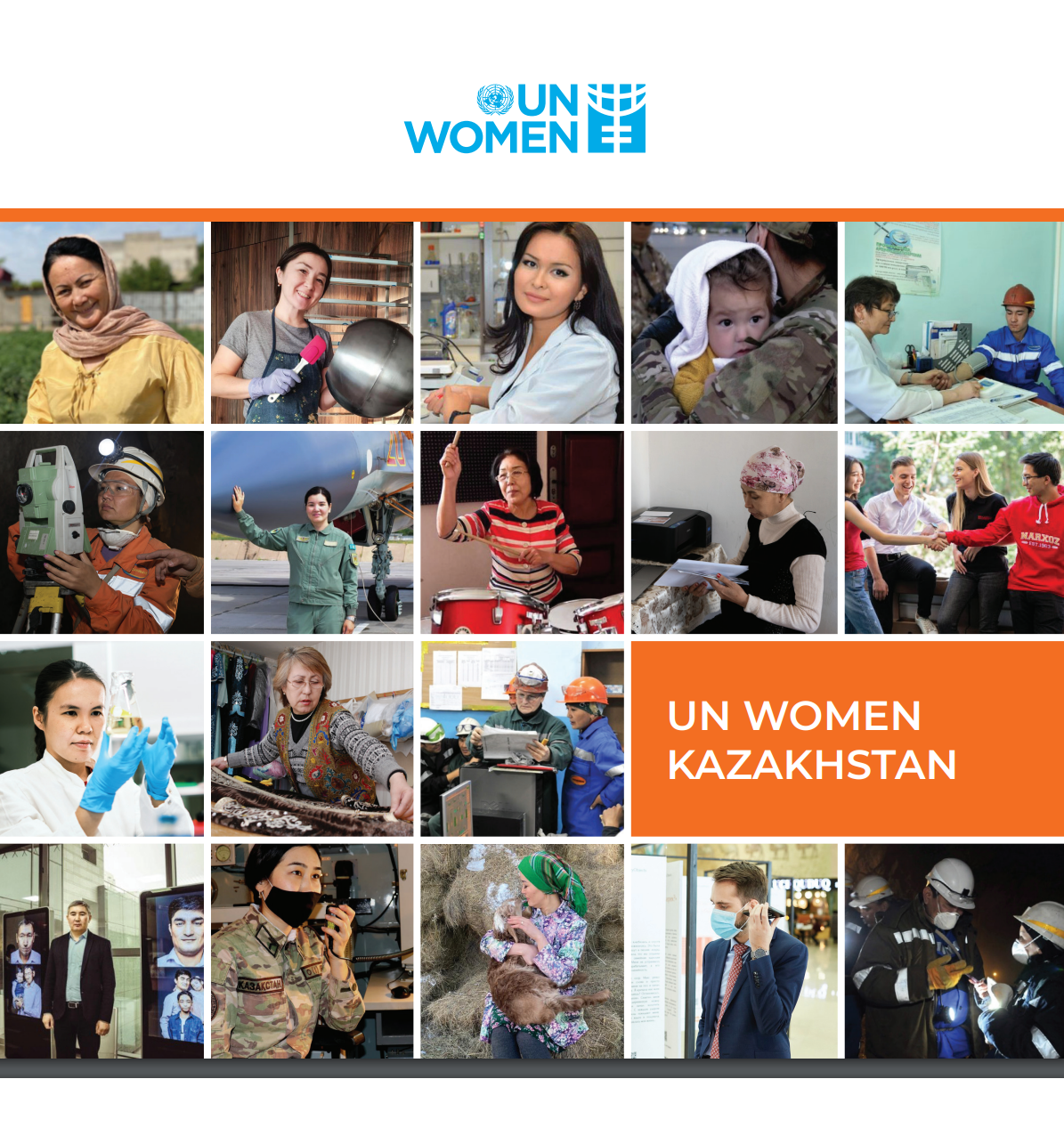 UN WOMEN Kazakhstan Année de publication: 2022 Auteur institutionnel: United Nations Entity for Gender Equality and the Empowerment of Women (UN Women) This one-pager provides a brief outline of UN Women Kazakstan's mandate, goals, activities, key audiences, partners, and other important information. Структура ООН-женщины в Казахстане Année de publication: 2022 Auteur institutionnel: United Nations Entity for Gender Equality and the Empowerment of Women (UN Women) В брошюре представлена краткая информация о Структуре «ООН-женщины» в Казахстане, мандате, целях и деятельности организации, а также ключевых партнерах и т.д.
  Women Influencing Multi-Stakeholder Peace Dialogue, Processes and Policy Spaces Année de publication: 2023 Auteur institutionnel: United Nations Entity for Gender Equality and the Empowerment of Women (UN Women) This paper seeks to draw lessons on how women have been participating as actors in influencing peace dialogue and processes related to the women, peace and security agenda in Europe and Central Asia. It also highlights challenges that need to be taken into consideration and offers recommendations to promote their greater contribution, influence, and participation in peace processes.
  Building Democratic Citizenship in School: Memory and Human Rights Année de publication: 2021 Auteur institutionnel: Argentina. Ministry of Education | Organization of Ibero-American States (OEI) | Spanish Agency for International Development Cooperation (AECID) This material seeks to reflect on the ways of approaching the construction of democratic citizenship, memory and human rights in secondary schools. The book thus proposes a series of memory activities and exercises based on significant historical sources and documents. At the same time, guidelines and suggestions are presented for the development of a citizenship construction project as a teaching strategy. Construir ciudadanía democrática en la escuela: Memoria y Derechos Humanos Année de publication: 2021 Auteur institutionnel: Argentina. Ministry of Education | Organization of Ibero-American States (OEI) | Spanish Agency for International Development Cooperation (AECID) Este material busca reflexionar sobre los modos de abordar la construcción de la ciudadanía democrática, la memoria y los derechos humanos en las escuelas secundarias. El libro propone así una serie de actividades y ejercicios de memoria que parten de fuentes y documentos históricos significativos. A su vez, se presentan pautas y sugerencias para la elaboración de un proyecto de construcción de ciudadanía como estrategia de enseñanza.
 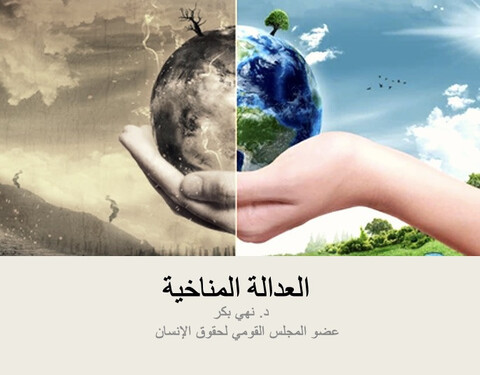 العدالة المناخية و حقوق الأنسان Année de publication: 2022 Auteur: Noha Bakr العدالة المناخية هي ربط تأثيرات الاحتباس الحراري مع مبادئ العدالة، تحديدًا العدالة البيئية والعدالة الاجتماعية، وعن طريق استكشاف بعض القضايا الناجمة عن الاحتباس الحراري مثل المساواة وحقوق الإنسان والحقوق الجماعية والمسؤوليات التاريخية. Climate Justice and Human Rights Année de publication: 2022 Auteur: Noha Bakr Climate justice is linking the impacts of global warming with principles of justice, specifically environmental justice and social justice, by exploring issues resulting from global warming such as equality, human rights, collective rights, and historical responsibilities.
  Interwoven Lives, Threads of Hope: Ending Inequalities in Sexual and Reproductive Health and Right; State of World Population 2024 Année de publication: 2024 Auteur: Daniel Baker | Ann Garbett | Gretchen Luchsinger | Tlaleng Mofokeng | Letlhogonolo Mokgoroane | Gilda Sedgh | Claire Thomas Auteur institutionnel: United Nations Population Fund (UNFPA) Everywhere, people seeking essential sexual and reproductive health care are forced to navigate overlapping hurdles because of their gender, economic status, ethnicity, sexual orientation, disability and more. In the few places where data are collected, women of African descent are found to be more vulnerable to obstetric mistreatment and negative maternal health outcomes. Indigenous women are often denied culturally appropriate maternal health care, and their own childbirth practices may be criminalized, resulting in significantly higher risk of death in pregnancy and childbirth. Gender-unequal norms remain embedded in health-care infrastructure, including persistent underinvestment in the world’s largely female midwifery workforce. Women and girls with disabilities face up to 10 times more gender-based violence while also facing higher barriers to sexual and reproductive information and care. LGBTQIA+ people face serious health disparities in addition to – and as a result of – discrimination and stigma. The path forward to fulfill the Cairo International Conference on Population and Development promise of universal sexual and reproductive health and rights is clear: To achieve it we must root out inequalities from our health systems and policies and focus as a priority on those women and young people who are most marginalized and excluded. We need comprehensive, universal and inclusive health care grounded in human rights and evidence of what works. This work is vitally important, it is just, and it is possible. This report contains many examples of programmes and efforts that have expanded access to, and uptake of, quality care, usually with interventions tailored by and for those most in need. To accelerate success, we will require more and better data, disaggregated to understand exactly who is being left behind, and collected with their input and safety assured.
  Summit of the Future Outcome Document: Pact for the Future, Global Digital Compact and Declarations on Future Generations Année de publication: 2024 Auteur institutionnel: United Nations (UN) World leaders adopt a Pact for the Future that includes a Global Digital Compact and a Declaration on Future Generations (A/RES/79/1). The Pact covers a broad range of themes including peace and security, sustainable development, climate change, digital cooperation, human rights, gender, youth and future generations, and the transformation of global governance.