
Ressources
Explorez une large gamme de ressources sur le GCED afin d’approfondir votre compréhension et de renforcer vos activités de recherche, de plaidoyer, d’enseignement et d’apprentissage.
2,768 résultats trouvés
 Technical Note on the Implementation of the Convention on the Rights of Persons with Disabilities in Uzbekistan Année de publication: 2023 Auteur institutionnel: World Bank This compilation of technical briefs lays out the key problems faced by persons with disabilities in Uzbekistan under all areas of life and formulates detailed recommendations, providing the evidence base for a Strategic Note that aims to guide Uzbekistan's next five-year National Action Plan (NAP) for implementing the United Nations Convention on the Rights of Persons with Disabilities (CRPD). Технические справки по имплементации Конвенции о правах инвалидов Année de publication: 2023 Auteur institutionnel: World Bank В этом сборнике девяти отраслевых технических справок очень подробно анализируются проблемы, с которыми сталкиваются лица с инвалидностью в Узбекистане во всех сферах жизни, и формулируются подробные рекомендации, обеспечивающие доказательную базу для Стратегической записки, которая призвана служить ориентиром для следующего пятилетнего Национального плана действий Узбекистана (НПД) по имплементации Конвенции Организации Объединенных Наций о правах инвалидов (КПИ) в стране.
  Prevention of Violence in Educational Institutions of the Kyrgyz Republic Année de publication: 2015 Auteur: D. Abdyldaeva | V. Gorkina Auteur institutionnel: UNESCO The methodological manual provides information on the nature and causes of violence in educational institutions, its forms and consequences; parties involved; ways to prevent and resolve conflict situations. Particular attention is paid to gender-based violence. The manual provides practical advice on organizational and educational measures, and algorithms for the actions of the management and staff of an educational organization to respond to facts of violence and provide assistance to victims. Предотвращение насилия в образовательных организациях Кыргызской Республики: Методическое пособие для педагогических работников Année de publication: 2015 Auteur: D. Abdyldaeva | V. Gorkina Auteur institutionnel: UNESCO В методическом пособии представлена информация о природе и причинах насилия в образовательных организациях, его формы и последствия; вовлеченные стороны; способы предотвращения и разрешения конфликтных ситуаций. Особое внимание уделяется гендерному насилию. В пособии представлены практические советы по организационным и воспитательным мерам, алгоритмы действий руководства и персонала образовательной организации по реагированию на факты насилия и оказанию помощи пострадавшим.
  Revised Recommendation Concerning Education for International Understanding, Co-operation and Peace and Education Relating to Human Rights and Fundamental Freedoms ('1974 Recommendation') Année de publication: 2022 Auteur institutionnel: UNESCO The revision of the 1974 Recommendation provides the international community with the opportunity to strengthen the instrument so that it can support the design and implementation of effective educational policies and programmes, which can put the world on a pathway to lasting peace and sustainable development for all, in line with the requirements of the 2030 Agenda and the body of international legal norms adopted since 1974. Recommandation révisée sur l’éducation pour la compréhension, la coopération et la paix internationales et l’éducation relative aux droits de l’homme et aux libertés fondamentales (« Recommandation de 1974 ») Année de publication: 2022 Auteur institutionnel: UNESCO La révision de la Recommandation de 1974 offre à la communauté internationale l'occasion de renforcer l'instrument afin qu'il puisse soutenir la conception et la mise en œuvre de politiques et de programmes éducatifs efficaces, susceptibles de mettre le monde sur la voie d'une paix durable et du développement durable pour tous, conformément aux exigences de l'Agenda 2030 et à l'ensemble des normes juridiques internationales adoptées depuis 1974.
 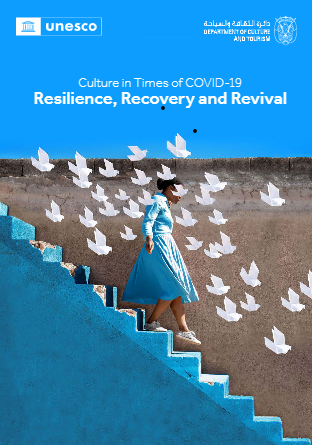 Culture in Times of COVID-19: Resilience, Recovery and Revival Année de publication: 2022 Auteur institutionnel: UNESCO | United Arab Emirates. Department of Culture and Tourism Culture in Times of COVID-19: Resilience, Recovery and Revival offers key insights on trends and structural transformations that can boost the culture sector as a cornerstone of an economy built on sustainability and well-being.A set of strategic development considerations are put forward for governments and their partners, in both the public and private sectors, to promote the value of culture as a public good, encourage cross-sector collaboration and holistically address the essential needs of the sector, while supporting cultural professionals in adapting to a changing world and providing equal access and opportunities across the culturalvalue chain.
 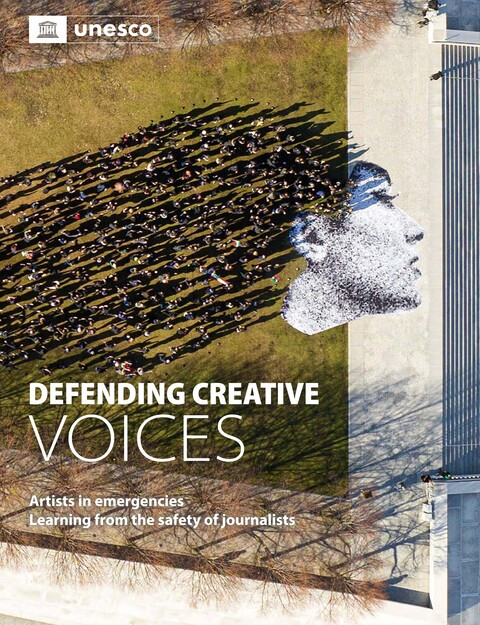 Defending Creative Voices: Artists in Emergencies, Learning from the Safety of Journalists Année de publication: 2023 Auteur: Rosario Soraide Auteur institutionnel: UNESCO Artists and cultural professionals often come across significant challenges to their freedom of expression, including violence and harassment – online and offline – legal persecution, detention, imprisonment and, in the worst of cases, murder. Emergency situations can result in additional risks for them, as many become increasingly targeted in connection to the visibility of their work and see their livelihoods impacted upon by income loss and unemployment in the cultural sector. While the attacks and threats that artists and cultural professionals face during emergencies are similar to those affecting journalists, they do not receive the same level of attention nor access to protection mechanisms and opportunities for assistance. Over the past decades, a strong framework has emerged to advance journalists’ safety at international, regional and national levels, including through legal and regulatory instruments, protection mechanisms, support networks and consistent collective mobilization for their rights. Despite growing awareness of the vulnerability of artists and cultural professionals in emergency contexts and increased efforts to safeguard their rights and ensure their safety, progress in this regard remains comparatively much more incipient. With the support of UNESCO’s Culture and Communication and Information Sector, and based on a comparative analysis, this study therefore aims to strengthen the protection of artists and cultural professionals during emergencies by drawing lessons from the experience, challenges, and achievements in the field of journalists’ safety. It presents actionable recommendations and identifies areas in which synergies between key stakeholders promoting, respectively, artistic and media freedom could serve to reinforce the protection of both at-risk artists and journalists.
 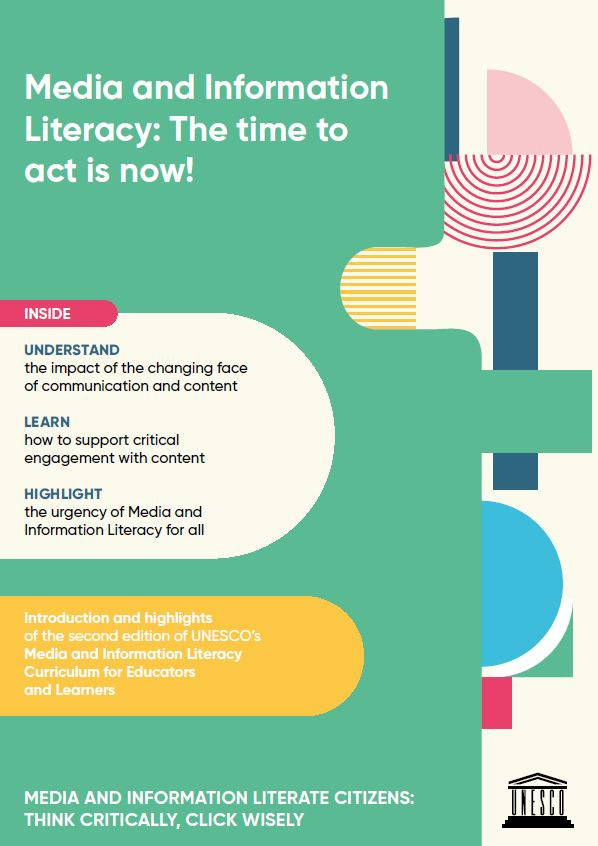 [Summary] Media and Information Literacy: The Time to Act is Now! Année de publication: 2021 Auteur institutionnel: UNESCO UNESCO has developed a comprehensive Curriculum which provides a framework for training teachers. But it is also a foundation that will also be of help to others: to learners, to content providers like internet companies and news media outlets, and to citizens of all ages as they consume, create and use content, including information.The second edition of the learning resource has been significantly expanded since the first publication in 2011. The MIL Curriculum reflects the changing nature of the information landscape. It now includes insight from a broader range of content providers than before, including libraries, archives, museums, media, and digital communications companies.The Curriculum is designed to empower educators and learners in general – from schoolteachers to those involved in training, the media and libraries, governments, and NGOs – to train people to spot misrepresentations and disinformation, and most importantly develop critical thinking competencies.
 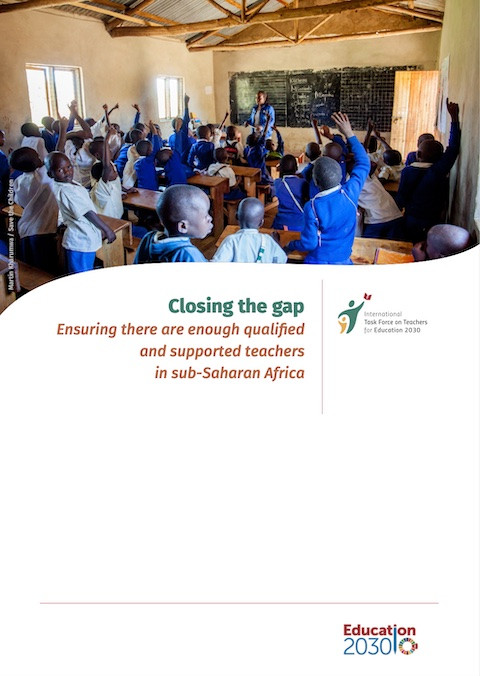 Closing the Gap: Ensuring There Are Enough Qualified and Supported Teachers in Sub-Saharan Africa Année de publication: 2021 Auteur institutionnel: International Task Force on Teachers for Education 2030 | UNESCO The fourth Sustainable Development Goal (SDG 4) aims to ensure better learning opportunities and outcomes and more equitable and inclusive education for all. SDG target 4.c calls for an increase in the supply of qualified teachers, particularly in low-income countries. To achieve this ambitious target, the international community needs to pay renewed attention to teacher support and preparation.This advocacy brief considers what it will take to increase the supply of qualified teachers in sub-Saharan Africa, the region where the teacher shortage is most acute. It analyses the causes for teacher shortages, looks at trends affecting the region and describes the scale of the shortages. It examines the fiscal pressures on low-income countries to cover salary costs and the costs of initial teacher education and continuing professional development, and it proposes some recommendations for governments and the international community to achieve the essential target of substantially increasing the supply of well qualified teachers.