
Ressources
Explorez une large gamme de ressources sur le GCED afin d’approfondir votre compréhension et de renforcer vos activités de recherche, de plaidoyer, d’enseignement et d’apprentissage.
1,951 résultats trouvés
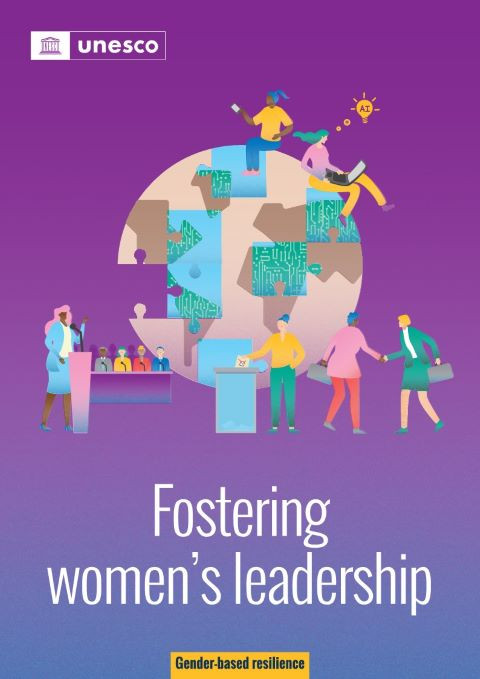 Fostering Women's Leadership Année de publication: 2024 Auteur: Mariagrazia Squicciarini | Anna Rita Manca | Garance Sarlat Auteur institutionnel: UNESCO No (leadership) share no gain (for societies and economies)! Leveraging UNESCO’s unique Gender-Based Resilience Framework, this report explores the role of women in leadership positions in both decision-making and high-tech, including in artificial intelligence-related innovations. It further highlights progress towards the G20 Brisbane Target, aimed to accelerate progress on gender equality by reducing the gender gap in labour market participation rates by 25% by 2025. Women remain underrepresented in decision-making, holding only about 26% of seats in national parliaments worldwide on average. In the world of work, female labour participation continues to lag behind men’s, at 47% for women against 72% for men on average. Despite progress by G20 members towards the Brisbane Target, a 2% average gap in absolute terms remained to be filled in 2022. In the high-tech world, women make up only 30% of AI professionals, and even less of leaders. Female inventors in AI account for about 37% of patents filed in 2022-23.
  Education for Sustainable Development: The Tunisian Experience as an Example Année de publication: 2006 Auteur: Fatima Al-Tarhouni Auteur institutionnel: Federation of the Universities of the Islamic World The author in this article is giving analytical description of education for sustainable development. She uses the Tunisian experience as an example of implementing education for sustainable development. التربية من أجل التنمية المستدامة التجربة التونسية أنموذجا Année de publication: 2006 Auteur: Fatima Al-Tarhouni Auteur institutionnel: Federation of the Universities of the Islamic World يقدم المؤلف في هذه المقالة وصفا تحليليا للتعليم من أجل التنمية المستدامة. تستخدم التجربة التونسية كمثال على تطبيق التعليم من أجل التنمية المستدامة.
 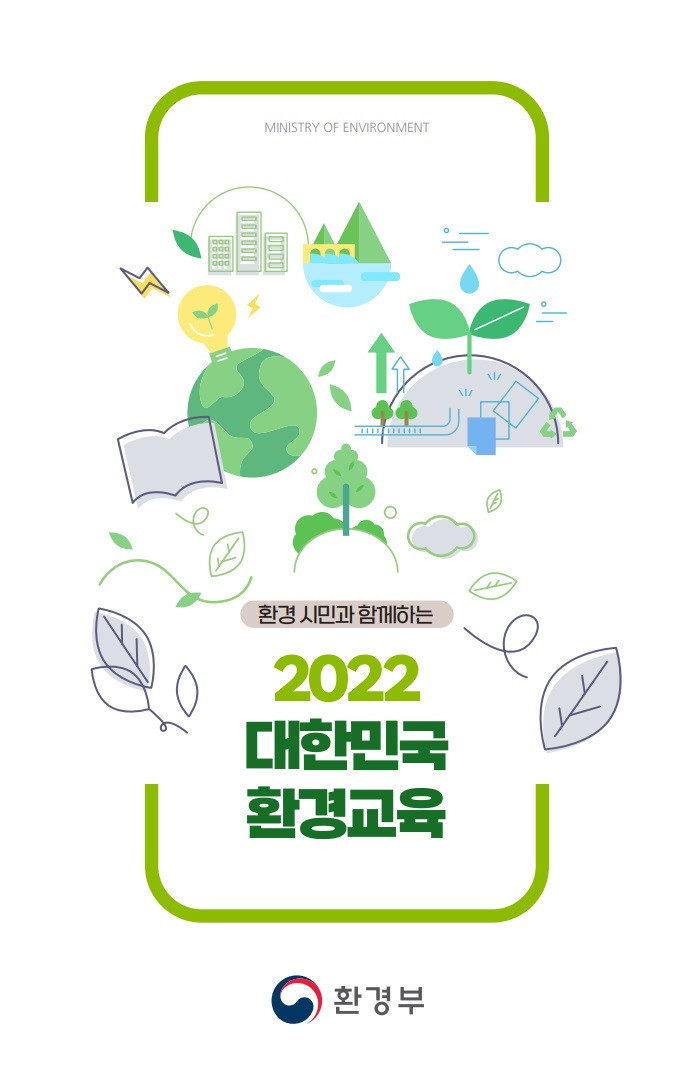 환경 시민과 함께하는 2022 대한민국 환경교육 Année de publication: 2022 Auteur institutionnel: 대한민국 환경부 이 발행물은 국민들에게 환경교육 정책과 사업을 알리고 정책의 발전을 함께 고민하고자 하는 목적으로 발행한 홍보물로 대한민국 환경교육 현황과 주요 국가의 초·중·고등학교와 일반인을 대상으로 하는 환경교육 사업을 조사하여 설명하고 있습니다.
  Environmental Education as a Strategy for Activating Environmental Citizenship (vol.8, no.2; Research Journal) Année de publication: 2023 Auteur: Bel'asal Bint Nabi Yasmine | Amroush Al Houcine Auteur institutionnel: Yahia Fares University of Medea This research paper aims to explore environmental education as a strategy for promoting environmental citizenship. Throughout the latter half of the twentieth century, the environment became a focal point for numerous thinkers and researchers across various fields. The concept of environmental citizenship emerged as a crucial term aimed at fostering individual responsibility towards the environment. Achieving environmental citizenship necessitates effective environmental education, which endeavors to impart direction, values, and behaviors conducive to environmental stewardship. It seeks to elucidate key concepts and cultivate essential skills for comprehending and appreciating the intricate relationships between humanity, culture, and the environment. Topics explored include citizenship, environment, environmental education, the Tbilisi conference, and responsible environmental behavior. التربية البيئية كإستراتيجية من أجل تفعيل المواطنة البيئية (vol.8, no.2 مجلة أبحاث) Année de publication: 2023 Auteur: بلعسل بنت نبي ياسمين | عمروش الحسين Auteur institutionnel: Yahia Fares University of Medea في هذه الورقة البحثية سنحاول التطرق إلى التربية البيئية كإستراتيجية من أجل تفعيل المواطنة البيئية، فقد شغلت البيئة بال الكثير من المفكرين والباحثين على مختلف اختصاصاتهم في بدايات النصف الثاني من القرن الماضي فبرز مفهوم المواطنة البيئية كمصطلح حيوي يتم استخدامه لتعزيز مسؤولية المواطن تجاه بيئته، وحتى تتحقق المواطنة البيئية لابد من وجود تربية بيئية تعمل على غرس الاتجاهات والقيم والسلوكيات البيئية، وتهدف إلى توضيح المفاهيم وتنمية المهارات اللازمة لفهم وتقدير العلاقات التي تربط بين الإنسان وثقافته وبيئته.
 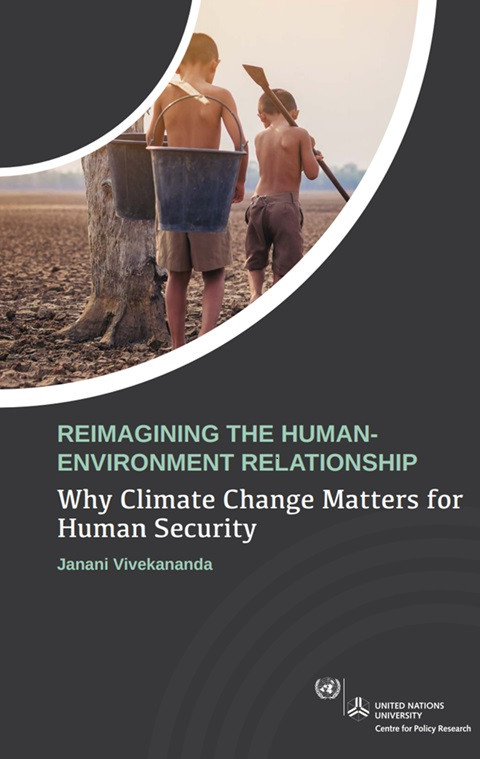 Why Climate Change Matters for Human Security Année de publication: 2022 Auteur: Janani Vivekananda Auteur institutionnel: United Nations University | United Nations Environment Programme (UNEP) This paper outlines the state of knowledge regarding security risks related to climate change, synthesizing the existing scientific evidence to set out five broad pathways of risk. Climate change itself is rarely a direct cause of conflict. Yet, there is ample evidence that its effects exacerbate important drivers and contextual factors of conflict and fragility, thereby challenging the stability of states and societies. Climate change impacts such as coral bleaching, diversity loss, and erratic rainfall can stress livelihoods and drive displacement, increase resource conflicts, and challenge the security and stability of people and states worldwide. Managing these security risks requires action across the entire impact chain: work to mitigate climate change; reducing its consequences on ecosystems; adapting socioeconomic systems; better management of climate-induced heightened resource competition; and strengthening governance and conflict management institutions. And every dimension of the response must be conflict-sensitive and climate proof. Without the right responses, climate change will mean more fragility, less peace and less security. But this paper sets out illustrative examples of how, with a greater understanding of how climate change interacts with social, political, economic and environmental drivers of conflict and fragility, we will be better placed to make the kind of risk-informed decisions is integral to achieving international peace and security.
 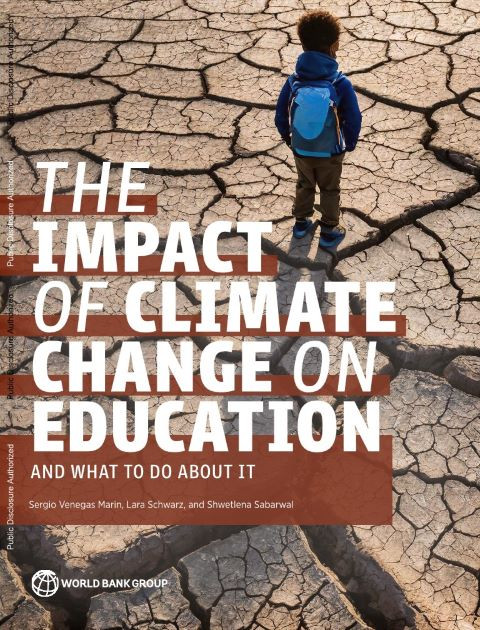 The Impact of Climate Change on Education and What to Do about It Année de publication: 2024 Auteur: Sergio Venegas Marin | Lara Schwarz | Shwetlena Sabarwal Auteur institutionnel: International Bank for Reconstruction and Development | World Bank Education can be the key to ending poverty in a livable planet, but governments must act now to protect it. Climate change is increasing the frequency and intensity of extreme weather events such as cyclones, floods, droughts, heatwaves and wildfires. These extreme weather events are in turn disrupting schooling; precipitating learning losses, dropouts, and long-term impacts. Even if the most drastic climate mitigation strategies were implemented, extreme weather events will continue to have detrimental impacts on education outcomes.
 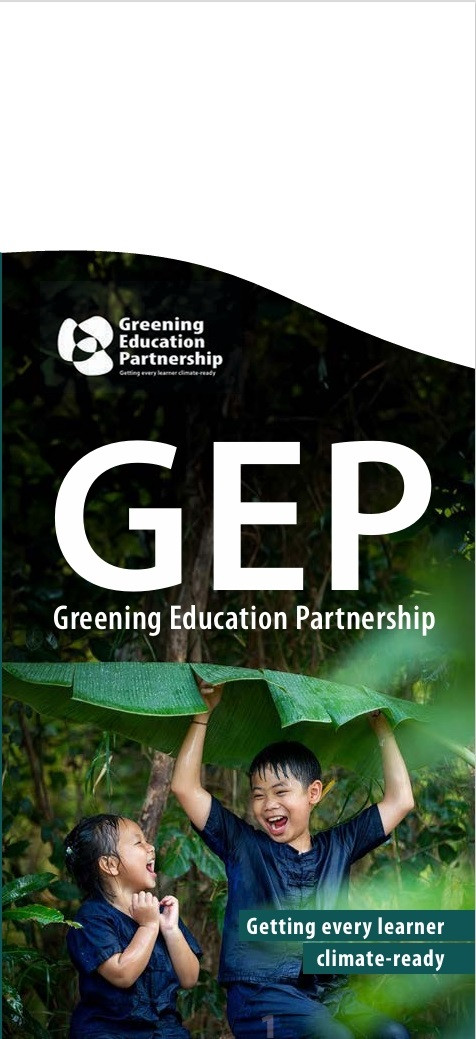 Greening Education Partnership: Getting Every Learner Climate-Ready Année de publication: 2024 Auteur institutionnel: UNESCO Bangkok The UN Secretary-General calls the climate crisis ‘a battle for our lives’, as we still struggle to transform our societies to reach the 1.5°C-degree path recommended by the Paris Agreement. Rapid and radical transformation at all levels and in many aspects of our life is required, with education as a central and powerful means to support the adaptation and strengthening of the resilience of learners and societies. It is also important to ensure that education systems become more resilient to climate change to create safe and climate-proof schools. Building off of the knowledge and practice accumulated in Education for Sustainable Development (ESD), a new Greening Education Partnership aims to deliver strong, coordinated and comprehensive action which will prepare every learner to acquire the knowledge, skills, values, and attitudes to tackle climate change and to promote sustainable development.
  The Climate Dictionary: Speak Climate Fluently Année de publication: 2023 Auteur institutionnel: United Nations Development Programme (UNDP) The Climate Dictionary is a guide to understanding climate change. It aims to bridge the gap between complex scientific jargon and the general public, making climate concepts accessible and understandable to people of different backgrounds and levels of expertise. It is based on the belief that empowering people with knowledge is crucial to fostering collective action and responsibility in the face of climate change. Using a creative combination of engaging images, concise explanations and engaging storytelling, The Climate Dictionary effectively communicates complex climate concepts in a visual and easy-to-consume way.