
Ressources
Explorez une large gamme de ressources sur le GCED afin d’approfondir votre compréhension et de renforcer vos activités de recherche, de plaidoyer, d’enseignement et d’apprentissage.
1,951 résultats trouvés
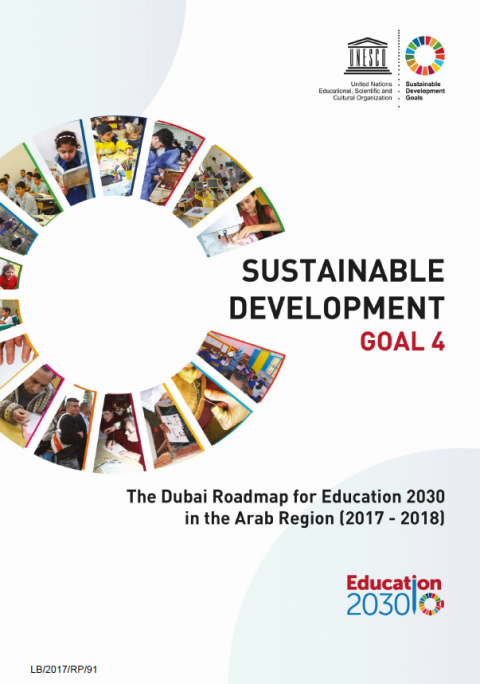 Sustainable Development Goal 4: The Dubai Roadmap for Education 2030 in the Arab Region (2017-2018) Année de publication: 2017 Auteur institutionnel: UNESCO Beirut SDG 4 agenda inspires us to pursue a humanistic vision of education and development based on human rights and dignity, social justice, protection, cultural diversity, and shared responsibility and accountability. Also, it is underpinned by the principle that education is a public good, a fundamental human right and a basis for guaranteeing the realization of other rights. Furthermore, it is essential for peace, human fulfillment and sustainable development. Having adopted the Arab Regional Roadmap for SDG 4 and Education 2030 (Cairo Roadmap) at ARMED I, we, Arab Member States and partners, have since commenced implementation of the Agenda as appropriate and relevant to national contexts.
 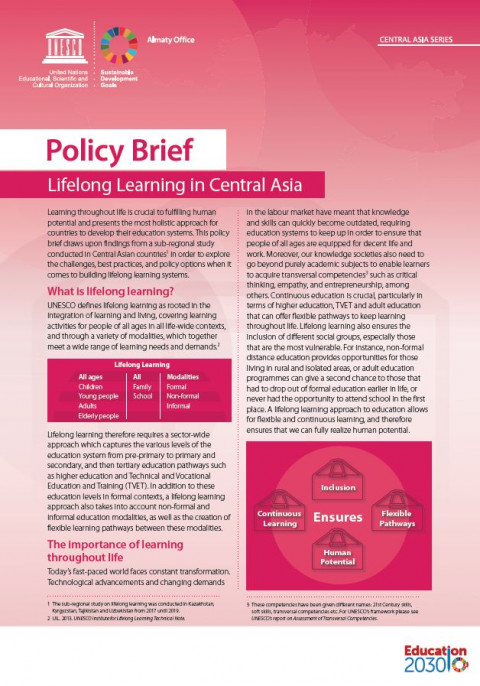 Аналитическая записка: Обучение на протяжении всей жизни в Центральной Азии Année de publication: 2019 Auteur institutionnel: UNESCO Almaty Обучение на протяжении всей жизни занимает самое центральное место в глобальной повестке дня в области образования и ЦУР4 с обязательным обеспечением "инклюзивного и справедливого качественного образования и возможностей обучения на протяжении всей жизни для всех".Центральноазиатские системы образования добились успеха в обеспечении почти всеобщей грамотности, в том числе среди взрослых, а также во всеобщем предоставлении образования на начальном и среднем уровнях. Однако прежняя система Советского Союза привела к определенной негибкости систем образования в субрегионе, а также их неспособности быстро адаптироваться к разным потребностям учащихся, ставя сложную задачу в обеспечении обучения на протяжении всей жизни.
 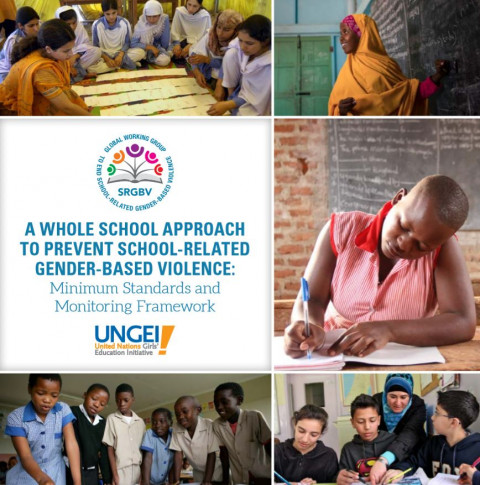 A Whole School Approach to Prevent School-Related Gender-Based Violence Année de publication: 2016 Auteur institutionnel: United Nations Girls' Education Initiative (UNGEI) The limitations of data collection and monitoring mechanisms around school-related gender-based violence (SRGBV) are widely acknowledged. This guide provides a framework to guide policy makers and practitioners in designing school violence prevention programmes and strengthening response actions. The prevention model is based on eight evidence-based standards and is accompanied by a monitoring approach with a set of proposed indicators at school, district and national levels. The goal is to enable implementation strategies to be adapted and monitored in order to improve data collection and accountability around incidents of SRGBV at the school, district and national levels.
  Educación para transformar vidas: metas, opciones de estrategia e indicadores Année de publication: 2016 Auteur institutionnel: UNESCO Santiago La educación está en el centro de la agenda de desarrollo sostenible y es esencial para el éxito de todas estas metas. La nueva agenda de educación resumida en el Objetivo 4 es holística, ambiciosa, deseable y universal, yestá inspirada por una visión de que la educación transforma las vidas de las personas, las comunidades y las sociedades. La agenda atiende los temas no resueltos de los objetivos de la Educación para Todos (EPT) ylos ODM relacionados con la educación, al tiempo que aborda de manera efectiva los actuales y futuros desafíos de la educación a nivel mundial y nacional. Está basada en los derechos y está inspirada en una visión humanista de la educación y el desarrollo, con base en los principios de la dignidad humana, los derechos igualitarios, la justicia social, la paz, la diversidad cultural y la responsabilidad compartida. Basándose y continuando con el movimiento EPT, Educación 2030 toma en cuenta lecciones aprendidas desde 2000. Lo que es nuevo en esta agenda es su enfoque en mayores y más amplios resultados en el acceso, la equidad e inclusión, calidad y aprendizaje, además de un aprendizaje a lo largo de toda la vida.
  20 years of democratic development in Kyrgyzstan: internal and external perspectives Année de publication: 2012 Auteur institutionnel: Friedrich Ebert Foundation This publication comprises an analysis and assessment of the political, regulatory, legal, public and economic reforms that took place in Kyrgyzstan over the last two decades. It discusses the problems that are arise from the current situation and possible options for the KR’s future development - both in case of a success of the modernization approach and in case of its failure, with resulting stagnation and regress. 20 лет демократического развития в Кыргызстане: взгляд изнутри и извне Année de publication: 2012 Auteur institutionnel: Friedrich Ebert Foundation Издание включает в себя анализ и оценку политических, управленческих, правовых, общественных, экономических реформ, происходивших в Кыргызстане за последние два десятилетия, а также рассматривает проблематику текущей ситуации и возможные варианты развития КР, как в случае успеха модернизационного подхода, так и в случае его провала или реализации вариантов стагнации и регресса.
 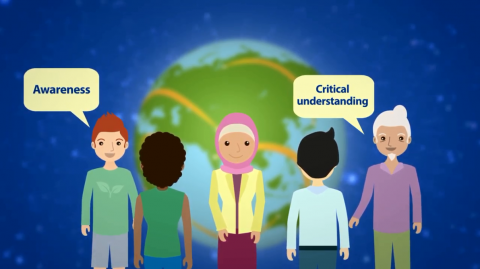 What is Global Education Année de publication: 2019 Auteur institutionnel: North-South Centre of the Council of Europe Pedagogical video about the concept of global education and the approach of the North-South Centre of the Council of Europe. Policy brief: lifelong learning in Central Asia Année de publication: 2019 Auteur institutionnel: UNESCO Almaty Lifelong learning stands at the very core of the global education agenda and SDG 4, with a commitment to ensure ‘inclusive and equitable quality education and lifelong learning opportunities for all.Central Asian education systems have been successful in ensuring near-universal literacy, including among adults, as well as the universal provision of education at the primary and secondary levels. However, the legacy of the Soviet Union has resulted in a certain inflexibility of education systems in the sub-region, as well as their inability to rapidly adapt to the diverse needs of learners—posing a significant challenge to ensuring lifelong learning.
  Measuring SDG 4: how PIRLS can help; how the Progress in International Reading Literacy Study (PIRLS) helps monitor Sustainable Development Goal 4 targets Année de publication: 2017 Auteur institutionnel: International Association for the Evaluation of Educational Achievement (IEA) This booklet has been prepared for the international release of the 2016 Progress in International Reading Literacy Study (PIRLS) and ePIRLS at UNESCO. PIRLS is one of the International Association for the Evaluation of Educational Achievement’s (IEA) core largescale international assessment projects, successfully administered every five years since 2001. It provides internationally comparative data on how well children read by assessing grade 4 students’ reading achievement and offers policyrelevant information for improving teaching and learning. Initiated in 2016, ePIRLS is an extension of PIRLS that monitors how well grade 4 students read, interpret, and critique online information in an environment that looks and feels like the Internet. Mesurer l'ODD 4: la contribution du PIRLS, comment le Programme international de recherche en lecture scolaire (PIRLS) peut aider au suivi des cibles de l'Objectif de développement durable 4 Année de publication: 2017 Auteur institutionnel: International Association for the Evaluation of Educational Achievement (IEA) Cette brochure a été préparée en vue de la présentation internationale du Programme international de recherche en lecture scolaire (PIRLS) et d’ePIRLS 2016 à l’UNESCO. Le PIRLS est l’un des principaux projets d’étude internationale à grande échelle de l’Association internationale pour l’évaluation des acquis scolaires (International Association for the Evaluation of Educational Achievement, IEA), mené avec succès tous les cinq ans depuis 2001. Cette étude fournit des données comparatives internationales sur le niveau d’alphabétisation des enfants en évaluant les performances en lecture des élèves en 4ème année de scolarité, et livre des informations d’intérêt politique destinées à améliorer l’enseignement et l’apprentissage. De plus, inaugurée en 2016, ePIRLS est une extension du PIRLS visant à déterminer la façon dont les élèves en 4ème année de scolarité lisent, interprètent, et critiquent les informations en ligne dans un environnement semblable à celui d’Internet.