
Ressources
Explorez une large gamme de ressources sur le GCED afin d’approfondir votre compréhension et de renforcer vos activités de recherche, de plaidoyer, d’enseignement et d’apprentissage.
1,851 résultats trouvés
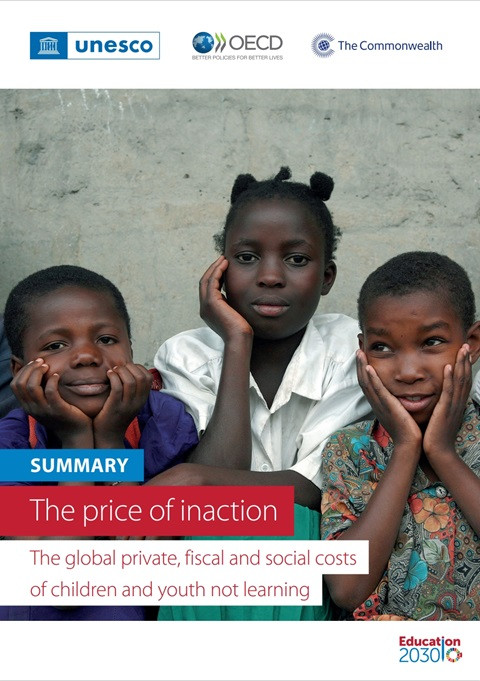 [Summary] The Price of Inaction: The Global Private, Fiscal and Social Costs of Children and Youth Not Learning Année de publication: 2024 Auteur institutionnel: UNESCO | Organisation for Economic Co-operation and Development (OECD) | Commonwealth Secretariat Education is a fundamental human right for all. The United Nations Sustainable Development Goal (SDG) 4 on education has received considerable attention since its adoption in 2015. But more than halfway through the implementation period, achieving the ambitious agenda of inclusive and equitable quality education for all by 2030 remains a significant challenge for countries around the globe. As this report shows, the US$10 trillion social cost of failing to educate all the world’s children is just too high. This is the summary of The Price of Inaction: The Global Private, Fiscal and Social Costs of Children and Youth Not Learning. [Resumen] El precio de la inacción: el costo global privado, fiscal y social de que los niños, niñas y jóvenes no aprendan Année de publication: 2024 Auteur institutionnel: UNESCO | Organisation for Economic Co-operation and Development (OECD) | Commonwealth Secretariat La educación es un derecho humano fundamental para todas y todos. El Objetivo de Desarrollo Sostenible (ODS) 4 de las Naciones Unidas sobre educación ha recibido una atención considerable desde su adopción en 2015. Sin embargo, a más de la mitad del periodo de implementación, la consecución de la ambiciosa agenda de una educación de calidad inclusiva y equitativa para todos en 2030 sigue siendo un desafío considerable para los países del mundo entero. Como muestra este estudio, el costo social de 10 billones de dólares de no educar a todas las niñas y todos los niños del mundo es demasiado elevado. [Résumé] Le prix de l’inaction : les coûts privés, fiscaux et sociaux à l’échelle mondiale des enfants et des jeunes qui n’apprennent pas Année de publication: 2024 Auteur institutionnel: UNESCO | Organisation for Economic Co-operation and Development (OECD) | Commonwealth Secretariat L'éducation est un droit humain fondamental pour tous. L'objectif de développement durable (ODD) 4 des Nations Unies sur l'éducation a suscité une attention considérable depuis son adoption en 2015. Cependant, à plus de la moitié de la période de mise en œuvre, atteindre l'ambitieux objectif d'une éducation de qualité, inclusive et équitable pour tous d'ici 2030 reste un défi majeur pour les pays du monde entier. Comme le montre ce rapport, le coût social de 10 000 milliards de dollars américains lié à l'échec de l'éducation de tous les enfants dans le monde est tout simplement trop élevé.
  Recommendation on Education for Peace and Human Rights, International Understanding, Cooperation, Fundamental Freedoms, Global Citizenship and Sustainable Development Année de publication: 2023 Auteur institutionnel: UNESCO Building more peaceful, just, and sustainable societies starts with education. It influences all aspects of our daily lives and our overall prospects while being impacted by our health and environment. In the global landscape of worsening climate change, democratic backsliding, persistent inequalities, rising discrimination, hate speech, violence and conflict, it can be a tool to address and prevent these problems in the future. And it can also be a long-term investment with increasing returns if shaped and deployed effectively. The new UNESCO Recommendation on Education for Peace and Human Rights, International Understanding, Cooperation, Fundamental Freedoms, Global Citizenship and Sustainable Development, which is commonly referred to as the Recommendation on Education for Peace, Human Rights and Sustainable Development is a landmark guidance document that defines what needs to evolve in and through education to accomplish these goals. 평화, 인권, 국제이해, 협력, 기본적 자유, 세계시민성, 지속가능발전을 위한 교육 권고 Année de publication: 2023 Auteur institutionnel: 유네스코 이 권고는 ‘국제이해, 협력, 평화를 위한 교육과 인권, 기본적 자유에 관한 교육 권고(1974)’를 개정하여 2023년 제42차 유네스코 총회가 채택한 것이다.
 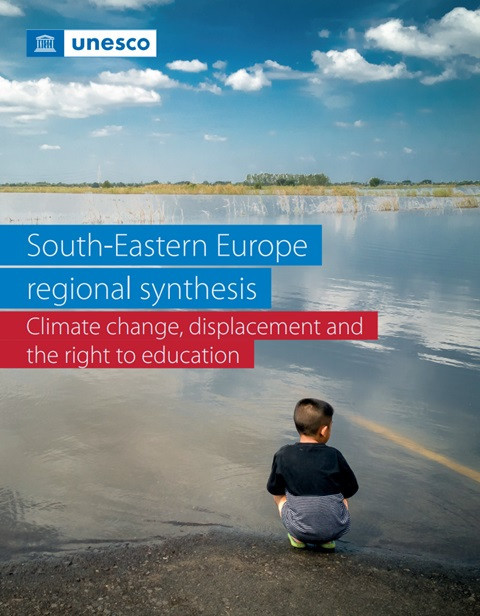 South-Eastern Europe regional synthesis: climate change, displacement and the right to education Année de publication: 2023 Auteur institutionnel: UNESCO In 2021 alone, 23.7 million people were displaced in 137 countries and territories due to natural disasters, which the scientific community has recognized have become more frequent and intense due to climate change. Climate change and displacement is currently taking place in Europe, with particularly disastrous consequences in South-Eastern Europe due to regional specificities. Comparative country case studies were carried out in Bosnia and Herzegovina, the Republic of Moldova, and Serbia, as they exemplify clear, present patterns of climate displacement, to examine the impacts of climate change on the right to education in the region. The case studies show that climate change directly threatens education through the destruction of schools and property. It also indirectly puts learning in peril by leading people across borders where their legal residency nor right to education is ensured. This publication aims to guide policy-makers by providing recommendations on how to ensure the protection of the right to education in South-Eastern Europe in the face of climate change and displacement. It is one of four regional reports that will lead to the development of a global report providing global policy guidance.
 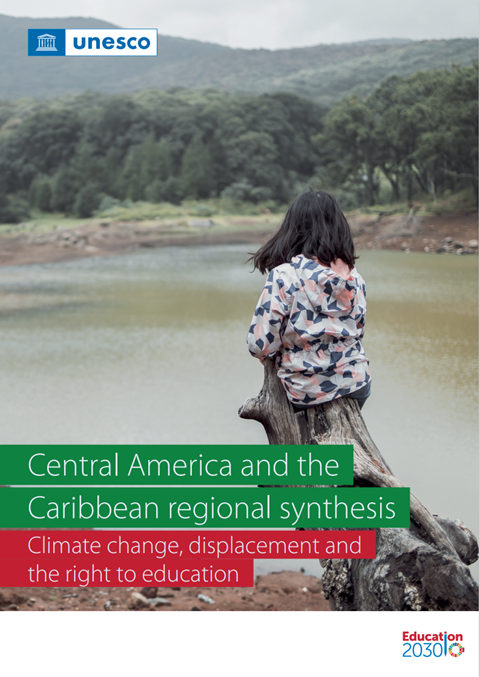 Central America and the Caribbean regional synthesis: climate change, displacement and the right to education Année de publication: 2023 Auteur institutionnel: UNESCO From rising sea level to drought and increasingly frequent natural disasters - the effects of climate change are well-known today. However, its effect on human mobility is just coming to the forefront of the political discussion. In 2020 alone, 30.7 million people globally were displaced by natural disasters. Central America and the Caribbean region is prone to the effects of climate change and displacement due to its socioeconomic characteristics and geographic location. Country case studies were carried out in the Bahamas, Cuba, the Dominican Republic, Guatemala, and Jamaica to examine the impacts on the right to education in the region. The research shows that climate change directly threatens education through the destruction of schools and property. It also leads people across borders where their legal residency and right to education are not guaranteed. This report aims to guide policy-makers on how to ensure education is protected in the face of climate change and displacement. The report is one of four being developed and will contribute to UNESCO’s global initiative on climate change, displacement and the right to education. It will inform the development of a Global Report with policy recommendations.
 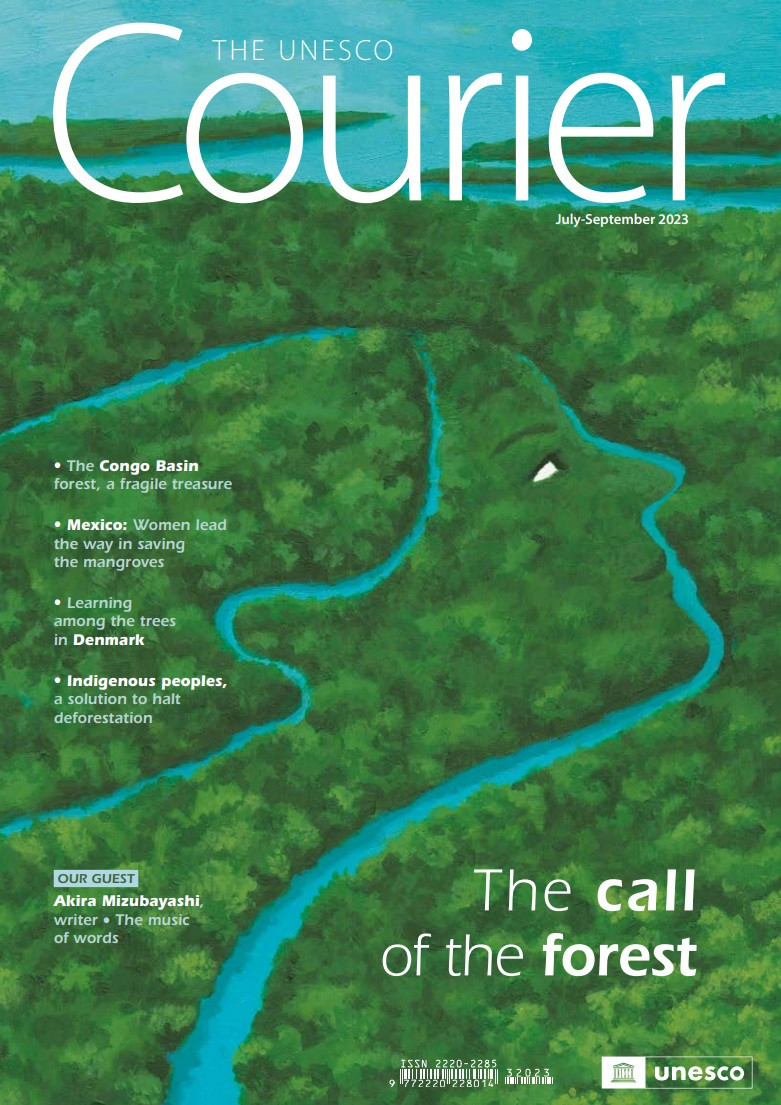 UNESCO World Heritage sites: key to biodiversity conservation Année de publication: 2023 Auteur institutionnel: UNESCO
  Marco de competencias para docentes en materia de IA Année de publication: 2025 Auteur: Fengchun Miao | Mutlu Cukurova Auteur institutionnel: UNESCO Orientación para docentes sobre el uso y el mal uso de la IA en la educaciónLa IA procesa enormes cantidades de información, genera nuevos contenidos y ayuda a la toma de decisiones mediante análisis predictivos. En el ámbito educativo, la IA ha transformado la relación tradicional docente-estudiante, creando una nueva dinámica docente-IA-estudiante. Este cambio exige replantear los roles de los docentes y las competencias que necesitan en la era de la IA. Sin embargo, son pocos los países que han definido estas competencias o desarrollado programas nacionales para capacitar a los docentes en IA, lo que deja a muchos educadores sin una orientación adecuada.El Marco de competencias en materia de IA para docentes aborda esta brecha al definir los conocimientos, habilidades y valores que los docentes deben dominar en la era de la IA. Desarrollada bajo los principios de protección de los derechos de los docentes, del fortalecimiento de la capacidad de acción humana y de la promoción de la sostenibilidad, la publicación describe 15 competencias que atraviesan cinco dimensiones: una forma de pensar centrada en el ser humano, la ética de la IA, los fundamentos y aplicaciones de la IA, la pedagogía de la IA, y la IA para el aprendizaje profesional. Estas competencias se clasifican en tres niveles de progresión: adquirir, profundizar y crear.Como una referencia global, esta herramienta orienta el desarrollo de marcos nacionales de competencias en IA, brinda insumos para los programas de formación docente y ayuda a diseñar parámetros de evaluación. También ofrece estrategias para que los docentes desarrollen conocimientos sobre IA, apliquen principios éticos y apuntalen su crecimiento profesional.
  Référentiel de compétences en IA pour les enseignants Année de publication: 2025 Auteur: Fengchun Miao | Mutlu Cukurova Auteur institutionnel: UNESCO Guider les enseignants à propos de l’usage judicieux ou problématique de l’IA en éducationL’intelligence artificielle (IA) traite une grande quantité d’informations, génère de nouveaux contenus et aide à la prise de décision grâce à des analyses prédictives. Dans le domaine de l’éducation, l’IA a transformé la relation traditionnelle entre l’enseignant et l’apprenant en un triptyque dynamique entre l’enseignant, l’IA et l’apprenant. Cette évolution exige de repenser le rôle des enseignants et les compétences dont ils ont besoin à l’ère de l’IA. Pourtant, peu de pays ont défini ces compétences ou élaboré des programmes nationaux pour former les enseignants à l’IA, ce qui prive de nombreux éducateurs d’un cadre adéquat.Le Référentiel de compétences en IA pour les enseignants comble cette lacune : il définit les connaissances, les habiletés et les valeurs que les enseignants doivent maîtriser à l’ère de l’IA. Élaborée dans le respect de la protection des droits des enseignants, de l’accroissement de l’agentivité humaine et de la promotion de la durabilité, la publication présente 15 compétences réparties en cinq composantes : une approche de l’IA centrée sur l’humain, l’éthique de l’IA, les fondements et les applications de l’IA, la pédagogie de l’IA et l’IA pour l’apprentissage professionnel. Ces compétences sont classées selon trois niveaux de progression : acquérir, approfondir, créer.En tant que référence internationale, cet outil sert de guide pour l’élaboration de référentiels nationaux de compétences en IA, apporte des informations sur les programmes de formation des enseignants et aide à définir des paramètres d’évaluation des apprentissages. Il fournit également aux enseignants des stratégies pour développer leurs connaissances en matière d’IA, respecter des principes éthiques et soutenir leur développement professionnel.