
Ressources
Explorez une large gamme de ressources sur le GCED afin d’approfondir votre compréhension et de renforcer vos activités de recherche, de plaidoyer, d’enseignement et d’apprentissage.
1,851 résultats trouvés
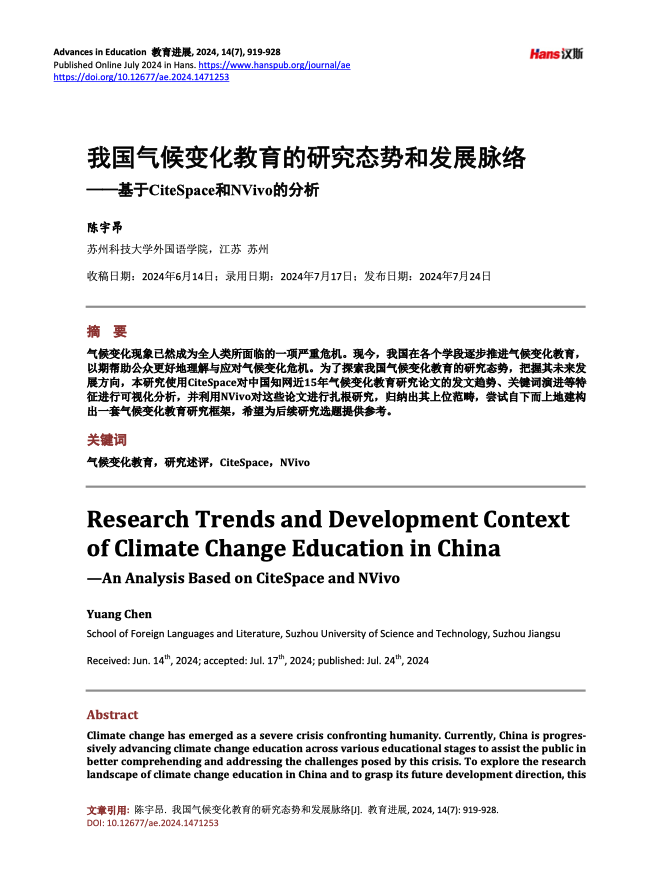 我国气候变化教育的研究态势和发展脉络 : 基于CiteSpace和NVivo的分析 (教育进展 第14卷 第7期) Année de publication: 2024 Auteur: 陈宇昂 气候变化现象已然成为全人类所面临的一项严重危机。现今,我国在各个学段逐步推进气候变化教育,以期帮助公众更好地理解与应对气候变化危机。为了探索我国气候变化教育的研究态势,把握其未来发展方向,本研究使用CiteSpace对中国知网近15年气候变化教育研究论文的发文趋势、关键词演进等特征进行可视化分析,并利用NVivo对这些论文进行扎根研究,归纳出其上位范畴,尝试自下而上地建构出一套气候变化教育研究框架,希望为后续研究选题提供参考。
  People's Climate Vote 2024 Année de publication: 2024 Auteur: Cassie Flynn | Silvia Tovar Jardon | Stephen Fisher | Matthew Blayney | Albert Ward | Hunter Smith | Paula Struthoff | Zoë Fillingham Auteur institutionnel: United Nations Development Programme (UNDP) | University of Oxford The Peoples’ Climate Vote is the world’s largest standalone public opinion survey on climate change. It serves as a platform for people to express their concerns and needs on climate change to world leaders. This initiative, carried out by UNDP and the University of Oxford, was launched in 2021 with a first poll that surveyed people across 50 countries through adverts in popular mobile gaming apps. The 2024 survey is bigger in terms of scope: 77 countries, representing 87 percent of the world’s population, were asked their views on climate change. The 15 questions in the 2024 edition have never been put to people in any survey before. They asked how people’s day-to-day lives are impacted by climate change, how they feel it is being addressed in their countries and what they would like the world to do about it. The results give the most comprehensive public account yet of how people feel and respond to climate change. The Peoples’ Climate Vote 2024 results come at a crucial time. Leading scientific bodies warn that climate change is accelerating faster than expected. Meanwhile, global GHG emission levels continue to rise, and international tensions and conflicts are similarly on the increase. With more than half of the world’s population potentially voting in 2024, understanding how citizens are thinking about climate change is more important than ever. The survey’s results can help decision makers navigate this challenging context, and beyond. To explore the data and country results in more detail, please visit: https://peoplesclimate.vote/
 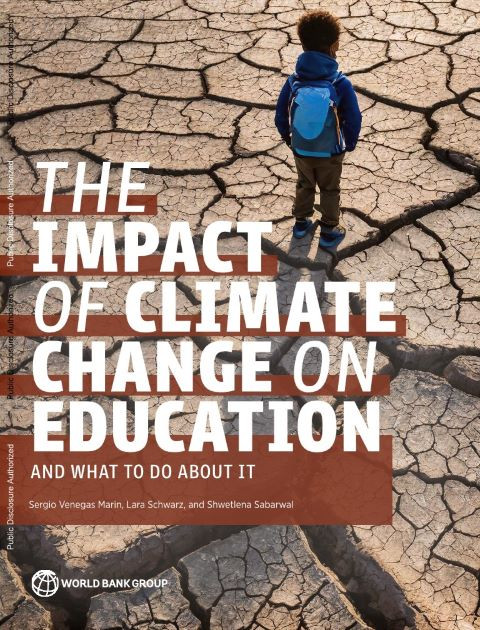 The Impact of Climate Change on Education and What to Do about It Année de publication: 2024 Auteur: Sergio Venegas Marin | Lara Schwarz | Shwetlena Sabarwal Auteur institutionnel: International Bank for Reconstruction and Development | World Bank Education can be the key to ending poverty in a livable planet, but governments must act now to protect it. Climate change is increasing the frequency and intensity of extreme weather events such as cyclones, floods, droughts, heatwaves and wildfires. These extreme weather events are in turn disrupting schooling; precipitating learning losses, dropouts, and long-term impacts. Even if the most drastic climate mitigation strategies were implemented, extreme weather events will continue to have detrimental impacts on education outcomes.
  Leveraging Digitalization for Productivity and Decent Employment: Asia-Pacific Countries with Special Needs Development Report 2024 Année de publication: 2024 Auteur institutionnel: UN. Economic and Social Commission for Asia and the Pacific (UN. ESCAP) The Asia-Pacific Countries with Special Needs Development Report is a recurrent ESCAP annual publication that discusses issues of interest for Asia-Pacific least developed countries (LDCs), landlocked developing countries (LLDCs) and small island developing States (SIDS), collectively referred to as countries with special needs (CSN). The Asia-Pacific Countries with Special Needs Development Report 2023: Strengthening Regional Cooperation for Seamless and Sustainable Connectivity examines how regional cooperation on seamless and sustainable connectivity can facilitate a long-term transformation towards a net zero carbon emissions future. Recognising ongoing efforts and existing initiatives and considering the large financing gaps in the countries in special situations, the Report underscores the need to seek synergies between transport, energy, and digital connectivity initiatives in the region.
  Synergy Solutions for a World in Crisis: Tackling Climate and SDG Action Together Année de publication: 2023 Auteur institutionnel: UNFCCC | UN. Department of Economic and Social Affairs (UN. DESA) In May 2023 UNDESA and UNFCCC Secretariat co-convened the Expert Group on Climate and SDG Synergy. The Group consists of 14 renowned experts from diverse thematic and geographic backgrounds who were given the task of developing the First Global Report on Climate and SDG Synergies. This report demonstrates that aggressively acting on climate and development in an integrated and synergistic way is an important opportunity to achieve the course correction the UN Secretary- General has called for. It highlights some of the challenges but also the opportunities if the international community is seriously committed to enhancing these synergies and thereby addressing these challenges. The report is designed to provide a broad overview of available data and evidence, insights from experts on the frontlines, and recommendations for enhancing synergistic action across the 2030 Agenda and the SDGs. This first edition will form the basis for future iterations, which will entail a wider scope of sectors, and thematic areas and deep dives on specific issues pertaining to strengthening and operationalizing synergic climate and SDG actions at all levels.
  Third Global Conference on Strengthening Synergies Between the Paris Agreement and the 2030 Agenda for Sustainable Development: Building the Evidence Base for Synergistic Action in Support of Raising Climate and SDGs Ambition Année de publication: 2022 Auteur institutionnel: UN. Department of Economic and Social Affairs (UN. DESA) The Third Global Conference on Strengthening Synergies Between the Paris Agreement and the 2030 Agenda For Sustainable Development was co-convened by the United Nations Department of Economic and Social Affairs (UNDESA) and the Secretariat of the United Nations Framework Convention on Climate Change (UNFCCC), and it was hosted by the Ministry of the Environment of Japan, in partnership with the United Nations University (UNU) and the Institute for Global Environmental Strategies (IGES).
 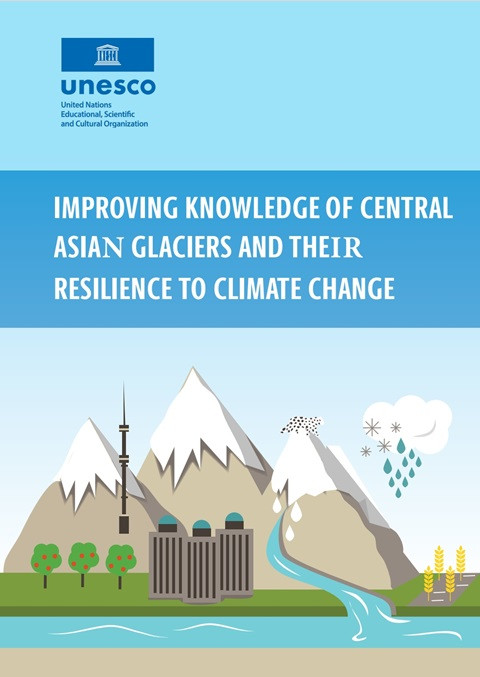 Improving Knowledge of Central Asian Glaciers and Their Resilience to Climate Change Année de publication: 2022 Auteur institutionnel: UNESCO Almaty | Global Environment Facility (GEF) | United Nations Development Programme (UNDP) The planned project under the Global Environment Facility and jointly with the UN Development Programme aims to improve the knowledge and monitoring of all key components of the cryosphere: glaciers, snow and permafrost, and support practical climate adaptation measures in the five nations of Central Asia. Paзвитие знаний о ледниках центральной азии и меры адаптации к изменению климата Année de publication: 2022 Auteur institutionnel: UNESCO Almaty | Global Environment Facility (GEF) | United Nations Development Programme (UNDP) Планируемый проект в рамках Глобального Экологического Фонда и совместно с Программой Развития ООН направлен на улучшение знаний и мониторинга всех ключевых компонентов криосферы: ледников, снега и вечной мерзлоты, а также на поддержку практических мер по адаптации к изменению климата в пяти странах Центральной Азии.
 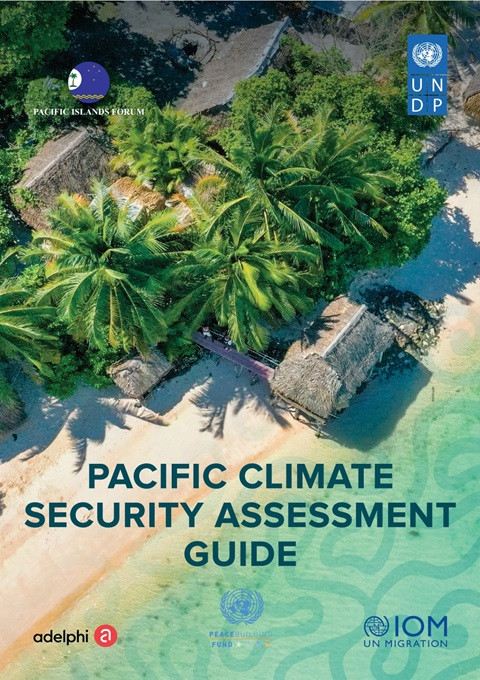 Pacific Climate Security Assessment Guide Année de publication: 2023 Auteur: Spencer McMurray | Lukas Ruttinger | Serena Arcone | Michael Crowe Auteur institutionnel: United Nations Development Programme (UNDP) | Pacific Islands Forum Secretariat (PIFS) The new Pacific Climate Security Assessment guide aims to support Pacific Island Countries to collectively and individually uncover, assess and respond to climate security implications for their peoples, prosperity and peace. The Assessment Guide builds off of the Weathering Risk initiative’s methodology, and was undertaken by adelphi in collaboration with the UNDP, IOM and PIF as a part of the UNPBF-funded “Climate Security in the Pacific” project. In addition to incorporating a brief regional trend analysis and limited entry points to kick start countries’ efforts to address climate insecurity, the guide provides a “how to” for countries to undertake assessments themselves and across different levels. Anchored in the Pacific, the guide was developed through extensive consultation with regional specialists, key regional institutions, civil society and with Forum member representatives.
  Global Environment Outlook 4 (GEO-4): Environment for Development Année de publication: 2007 Auteur institutionnel: United Nations Environment Programme (UNEP) The fourth Global Environment Outlook – environment for development ( GEO-4 ) places sustainable development at the core of the assessment, particularly on issues dealing with intra- and intergenerational equity. The analyses include the need and usefulness of valuation of environmental goods and services, and the role of such services in enhancing development and human well-being, and minimizing human vulnerability to environmental change. The GEO-4 temporal baseline is 1987, the year in which the World Commission on Environment and Development (WCED) published its seminal report, Our Common Future . The Brundtland Commission was established in 1983, under UN General Assembly resolution 38/161 to look at critical environment and development challenges. It was established at a time of an unprecedented rise in pressures on the global environment, and when grave predictions about the human future were becoming commonplace.