
Ressources
Explorez une large gamme de ressources sur le GCED afin d’approfondir votre compréhension et de renforcer vos activités de recherche, de plaidoyer, d’enseignement et d’apprentissage.
950 résultats trouvés
 التربية من أجل المواطنة في العالم العربي: مفتاح المستقبل Année de publication: 2011 Auteur: Muhamman Faour | Marwan Muasher Auteur institutionnel: Carnegie Middle East Center La réforme de l'éducation pour favoriser la citoyenneté est nécessaire de toute urgence si la démocratie est de prendre la main dans le monde arabe. Sous un régime autoritaire, les étudiants ont été principalement appris à être des sujets dociles de la pensée créatrice de l'État a été découragé et de l'information a été traitée comme indiscutable. Au lieu de cela, les élèves doivent apprendre à partir d'un très jeune âge ce que cela signifie d'être des citoyens qui cherchent et produisent la connaissance, question, et innovent. Seulement en enseignant les jeunes à penser de façon critique et respecter différents points de vue seront les pays arabes devenir économiquement compétitive et fiable démocratique. التربية من أجل المواطنة في العالم العربي: مفتاح المستقبل Année de publication: 2011 Auteur: Muhamman Faour | Marwan Muasher Auteur institutionnel: Carnegie Middle East Center Reforming education to foster citizenship is urgently needed if democracy is to take hold in the Arab world. Under authoritarian rule, students were primarily taught to be docile subjects of the state—creative thinking was discouraged and information was treated as indisputable. Instead, students must learn from a very early age what it means to be citizens who seek and produce knowledge, question, and innovate. Only by teaching youth to think critically and respect different points of view will Arab countries become economically competitive and reliably democratic.
  Belonging to the Homeland and Its Impact on Protecting Young People from Delinquency Année de publication: 2018 Auteur: Alla Aldeen Mohammed Auteur institutionnel: Imam Mohammad Ibn Saud Islamic University The file is a paper on belonging to the homeland and its impact on protecting young people from delinquency. This paper was presented at the conference entitled "The Role of Saudi Universities and Its Impact on Protecting Young People from Groups, Parties and Deviance". الانــتماء إلى الــوطن وأثــره في حمايــة الــشباب مــن الانحراف Année de publication: 2018 Auteur: Alla Aldeen Mohammed Auteur institutionnel: Imam Mohammad Ibn Saud Islamic University الملف عبارة عن ورقة عن الانــتماء إلى الــوطن وأثــره في حمايــة الــشباب مــن الانحراف. تم عرض هذه الورقة في المؤتمر المعنون ب "دور الجامعات السعودية وأثرها في حماية الشباب من الجماعات والأحزاب والانحراف.
  The Role of Kuwaiti Satellite Channels in Promotion of Citizenship among Kuwaiti Youth Année de publication: 2012 Auteur: Hassan Al Gharbi Auteur institutionnel: Middle East University The focus of the problem that the research dealt with was on the following question: Have public and private Kuwaiti satellite channels contributed to enhancing the concept of citizenship among young Kuwaitis? The researcher adopted a definition of the concept of citizenship among the multiple definitions of this concept, which was tainted by some uncertainty and disagreement. Citizenship in this study "is the awareness of belonging to a geographical area of a specific political and social goals and shared one common culture and political system." دور الفضائيات الكويتية الرسمية و الخاصة في تعزيز المواطنة لدى الشباب الكويتي Année de publication: 2012 Auteur: Hassan Al Gharbi Auteur institutionnel: Middle East University تركزت المشكلة التي تناولها البحث على التساؤل التالي: هل ساهمت القنوات الفضائية الكويتية العامة والخاصة في تعزيز مفهوم المواطنة بين الشباب الكويتي؟ واعتمدت الباحثة تعريفاً لمفهوم المواطنة من بين التعاريف المتعددة لهذا المفهوم ، والذي شابه بعض عدم اليقين والاختلاف. المواطنة في هذه الدراسة "هي الوعي بالانتماء إلى منطقة جغرافية لأهداف سياسية واجتماعية محددة ومشتركة في ثقافة ونظام سياسي واحد".
 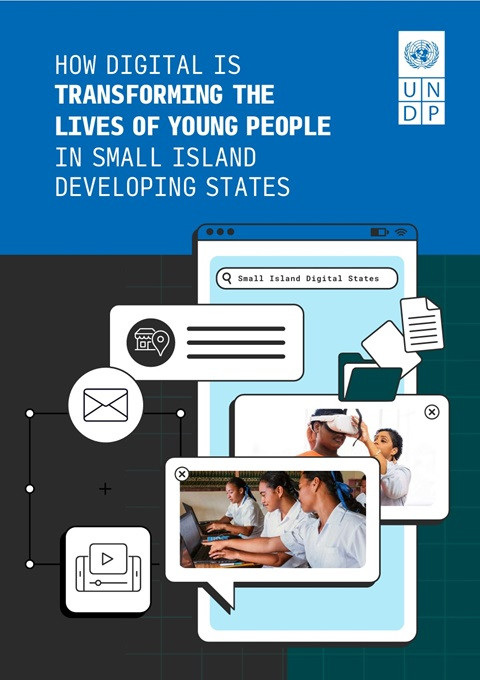 How Digital is Transforming the Lives of Young People in Small Island Developing States Année de publication: 2024 Auteur institutionnel: United Nations Development Programme (UNDP) Young people represent a sizeable and vital population in Small Island Developing States (SIDS). For them, digital technologies are more than just tools; they are gateways to new horizons. Digital is creating fresh opportunities, opening doors to unconventional careers, and redefining how knowledge is acquired and shared. Young people are using digital to start new businesses, explore new opportunities, learn new knowledge and skills, and to build global connections. However, young people are also cautious about digital – and they recognise risks and issues posed by digital channels, tools, and technologies. ‘How Digital is Transforming the Lives of Young People in SIDS’ explores these opportunities and challenges by hearing from young people – in their own words. Through a bespoke survey chatbot, running on messaging platforms most used by young people living in SIDS, more than 5,000 respondents from over 30 countries discuss how they’re using digital to transform their lives and livelihoods. And the barriers and challenges that they are facing on their digital journeys.
  Education for developing a global Omani citizen: current practices and challenges Année de publication: 2014 Auteur: Saif Al-Maamari Auteur institutionnel: Redfame Publishing Oman is a developing country which reformed its educational system in 1998 in order to meet the challenges of the 21st century, especially economic challenges. Strength of national identity and developing a sense of global citizenship were among the priorities of the new educational reform. This paper is based on a review of current practices regarding global citizenship education in educational system. The purpose of this theoretical study was to explore the current provision of the aspects of global citizenship education in Omani schools. Specifically, the study attempts to identify the current practices that are implemented by Omani schools to help Omani students to develop a sense of effective global citizenship. The study indicates that Omani education is not nationally centered as it aims to develop students who have global awareness. The study shows employing different approaches to develop a sense of global citizenship, namely, a separate school subject; integrated theme in social studies education, participation in some international initiatives in global citizenship education, and celebrating the international days and decades. L'éducation pour le Développement d'ONU Citoyen Omanais Mondiale: Pratiques et Défis Actuels Année de publication: 2014 Auteur: Saif Al-Maamari Auteur institutionnel: Redfame Publishing Oman est un pays en développement qui a réformé son système éducatif en 1998 dans le but de relever les défis du 21e siècle, en particulier les défis économiques. Force de l'identité nationale et de développer un sentiment de citoyenneté mondiale étaient parmi les priorités de la nouvelle réforme de l'éducation. Cet article est basé sur un examen des pratiques actuelles concernant L'éducation à la citoyenneté Mondiale (ECM) dans le système éducatif. Le but de cette étude théorique était d'explorer la disposition actuelle des aspects de L'éducation à la citoyenneté Mondiale (ECM) dans les écoles omanaises. Plus précisément, l'étude tente d'identifier les pratiques actuelles qui sont mises en œuvre par les écoles omanaises pour aider les étudiants omanais à développer un sentiment de citoyenneté mondiale efficace. L'étude indique que l'éducation omanaise est pas centrée à l'échelle nationale car elle vise à développer chez les élèves qui ont la conscience globale. L'étude montre en utilisant différentes approches pour développer le sens de la citoyenneté mondiale, à savoir, un sujet d'écoles séparées; thème intégré dans l'enseignement des études sociales, la participation à des initiatives internationales en matière d'éducation à la citoyenneté mondiale, et célébrant les jours et les décennies internationales. Education, Poverty and Terrorism: Is There a Causal Connection? Année de publication: 2003 Auteur: Alan B. Krueger | Jitka Maleckova Auteur institutionnel: American Economic Association In the authors' view, any connection between poverty, education and terrorism is indirect, complicated and probably quite weak. Instead of viewing terrorism as a direct response to low market opportunities or ignorance, the article suggests it is more accurately viewed as a response to political conditions and long-standing feelings of indignity and frustration that have little to do with economics.