
Ressources
Explorez une large gamme de ressources sur le GCED afin d’approfondir votre compréhension et de renforcer vos activités de recherche, de plaidoyer, d’enseignement et d’apprentissage.
1,405 résultats trouvés
 The World in 2030: Public Survey Report Année de publication: 2021 Auteur institutionnel: UNESCO This report presents the results of the World in 2030 Survey, launched by UNESCO in May 2020 to provide a platform for people to share their views on our world’s most pressing challenges, including what specifically they are worried about, and, most importantly, what solutions they feel are mostneeded. The results of this survey present a clear and systematic framework for action, one that can enrich global reflection over the coming decade as part of a renewed push to achieve the Sustainable Development Goals of the UN 2030 Agenda.Over 15,000 respondents from all regions of the world responded to the survey, providing a clear snapshot of global per- spectives. This survey received particular participation from women and young people. A majority of respondents had a university education, and the top region from which participants hailed was Latin America and the Caribbean.Responses to the World in 2030 Survey indicate clear trends in the concerns felt by global citizens. According to survey respondents, the top challenge facing peaceful societies in the lead up to 2030 was, by far, climate change and loss of biodiversity, ranking in the top four challenges of 67% of respondents, and coming out on top for all regions and demographics. When examining this challenge, people were most concerned about increasing natural disasters and extreme weather, loss of biodiversity and its impact on people, pollution of the ocean and rising sea levels, and risk of conflict or violence. The top proposed solutions were investing in green energy and sustainable economies, teaching sustainability through education, effective international cooperation, and building trust in science and science-based decisions.The next four most highlighted global challenges were violence and conflict (44%), discrimination and inequality (43%), lack of food, water and housing (42%), and health and disease (37%). There was some limited variation in the rankings of the relative importance of these four challenges across regions and demographics. For example, women and minority group respondents both ranked discrimination and inequality as the second most important global challenge, following climate change and biodiversity loss, rather than third, while respondents from indigenous communities and from Asia and the Pacific ranked health and disease as the second most important global challenge, rather than fifth. The World in 2030 survey was an open online questionnaire held from May to September 2020. It was made available in more than 25 languages. This report also analyses results along regional, gender, age and other demographic lines, presenting a complex and valuable portrait of global sentiment on these key issues.
  Freedom & Creativity: Defending Art, Defending Diversity; Special Edition Année de publication: 2020 Auteur: Laurence Cuny Auteur institutionnel: UNESCO In anticipation of the third edition of Re|Shaping Cultural Policies, this special edition of the Global Report series that monitors the implementation of the 2005 Convention on the Protection and Promotion of the Diversity of Cultural Expressions, focuses on one of the Convention’s overarching goals: the promotion of human rights and fundamental freedoms and, in particular, artistic freedom. Freedom of expression, information and communication, as well as the ability of individuals to choose cultural expressions is a prerequisite for the protection and promotion of the diversity of cultural expressions.Building on the recommendations put forth in the 2018 Global Report, this special edition provides an overview of current advances and challenges in the legal protection of artistic freedom, the protection of the social and economic rights of artists and cultural professionals and the monitoring of artistic freedom at the national, regional and international levels.By producing new evidence and valuable analysis, the 2005 Convention Global Report series is intended as a reference tool for cultural policymaking and advancing creativity for development. Libertad & creatividad: defender el arte, defender la diversidad; edición especial Année de publication: 2020 Auteur: Laurence Cuny Auteur institutionnel: Organización de las Naciones Unidas para la Educación, la Ciencia y la Cultura (UNESCO) Como anticipo de la tercera edición de Re|Pensar las políticas culturales, esta edición especial de la serie de Informes Mundiales, que examina la aplicación de la Convención de 2005 sobre la Protección y Promoción de la Diversidad de las Expresiones Culturales, se centra en uno de los objetivos principales de la Convención: la promoción de los derechos humanos y las libertades fundamentales y, en particular, la libertad artística. Libertad de expresión, información y comunicación, así como la capacidad de las personas para elegir las expresiones culturales es un requisito previo para la protección y promoción de la diversidad de las expresiones culturales.Apoyándose en las recomendaciones formuladas en el Informe Mundial de 2018, esta edición especial ofrece una visión general de los avances y desafíos actuales en la protección jurídica de la libertad artística, la protección de los derechos sociales y económicos de los artistas y profesionales de la cultura y la supervisión de la libertad artística a nivel nacional, regional e internacional.Con su aporte de nuevas pruebas y valiosos análisis, la serie de Informes Mundiales de la Convención de 2005 está pensada como un instrumento de referencia para la formulación de políticas culturales y el fomento de la creatividad para el desarrollo.
  COVID 19, Technology-Based Education and Disability: The Case of Bangladesh; Emerging Practices in Inclusive Digital Learning for Students With Disabilities Année de publication: 2021 Auteur: Vashkar Bhattacharjee | Shahriar Mohammad Shiblee Auteur institutionnel: UNESCO This study sheds light on Bangladesh’s initiatives in the area of disability-inclusive education. The particu- lar focus is on the role of its Accessible Reading Materials (ARM) initiative and how this has contributed to ensuring disability-inclusive and accessible education during the COVID-19 pandemic in Bangladesh. ARM is a government-led initiative that was launched in 2014 by the then Access to Information (a2i) programme of the Prime Minister’s Office, now the Aspire to Innovate Programme of the Information and Communica- tion Technology (ICT) Division of the Government of Bangladesh. It was launched in recognition of the need for solutions to ensure virtual, as well as regular reading access for all students, including children and young people with barriers to reading. ARM is aimed at satisfying the educational needs of all students including students with print and learning disabilities.
 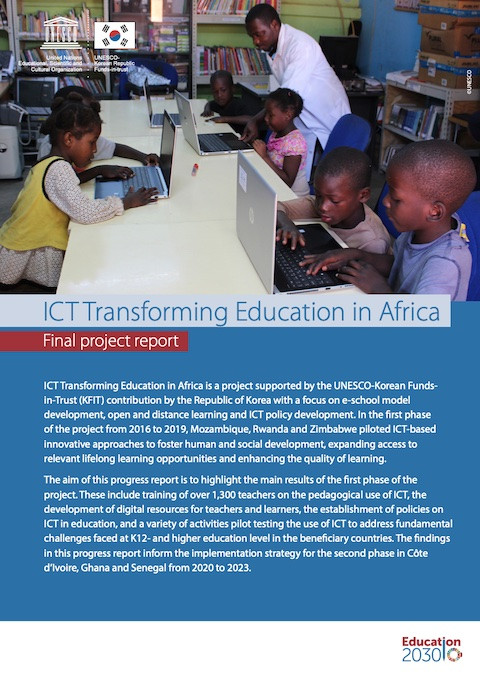 ICT Transforming Education in Africa: Final Project Report Année de publication: 2020 Auteur institutionnel: UNESCO ICT Transforming Education in Africa is a project supported by the UNESCO-Korean Funds- in-Trust (KFIT) contribution by the Republic of Korea with a focus on e-school model development, open and distance learning and ICT policy development. In the first phase of the project from 2016 to 2019, Mozambique, Rwanda and Zimbabwe piloted ICT-based innovative approaches to foster human and social development, expanding access to relevant lifelong learning opportunities and enhancing the quality of learning.The aim of this progress report is to highlight the main results of the first phase of the project. These include training of over 1,300 teachers on the pedagogical use of ICT, the development of digital resources for teachers and learners, the establishment of policies on ICT in education, and a variety of activities pilot testing the use of ICT to address fundamental challenges faced at K12- and higher education level in the beneficiary countries. The findings in this progress report inform the implementation strategy for the second phase in Côte d’Ivoire, Ghana and Senegal from 2020 to 2023.
 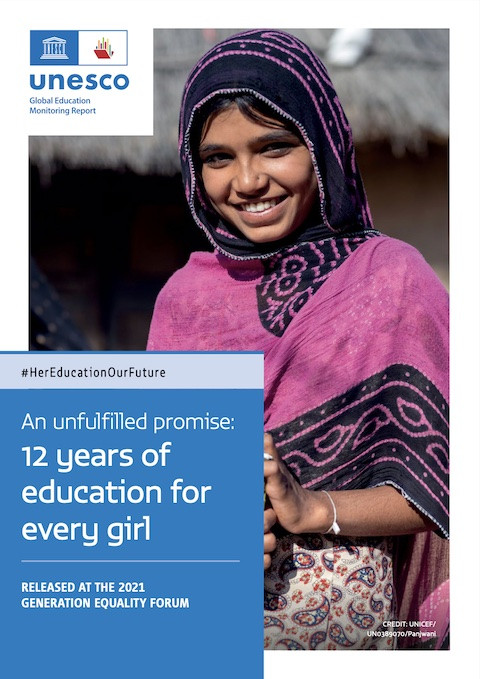 An Unfulfilled Promise: 12 Years of Education for Every Girl Année de publication: 2021 Auteur institutionnel: Global Education Monitoring Report Team | UNESCO Just over 25 years ago in 1995, 189 governments adopted the Beijing Declaration and Platform for Action – a visionary agenda for women’s empowerment and the most comprehensive global policy framework to advance gender equality to date. Girls’ and women’s education and training featured in the document as one of 12 key areas where urgent action was needed to ensure greater equality.Since Beijing, the international community has emphasized the transformative power of girls’ and women’s education and its benefits – not only for girls and women, but for entire societies and even future generations. Under the 2030 Agenda for Sustainable Development, Sustainable Development Goal (SDG) 4 on inclusive, equitable quality education and lifelong learning sets ambitious targets to ensure equality of opportunity – including a target aiming to ensure that all girls and boys complete 12 years of education by 2030.This short paper explores the evolution of girls’ and boys’ completion rates in primary and secondary education since 1995 – and calls for action to deliver on our commitments to leaving no one behind.
 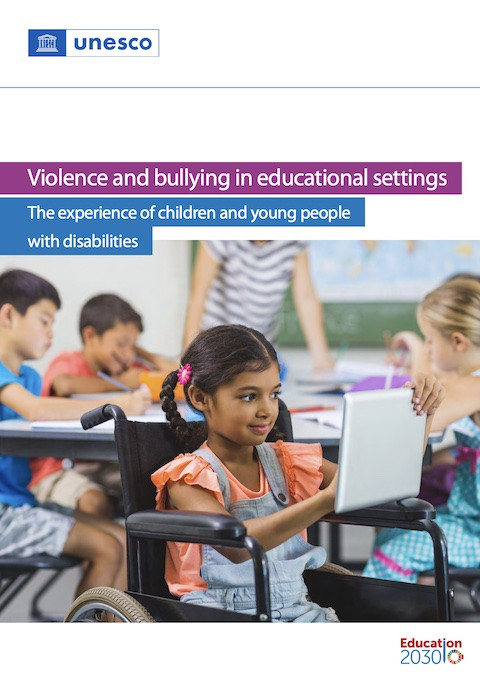 教育环境中的暴力和欺凌 : 残障儿童和青年的经历 Année de publication: 2021 Auteur institutionnel: 联合国教科文组织 (UNESCO) 本文是联合国教科文组织关于校园暴力和欺凌的系列技术简报之一,重点关注残障学生的经历。本文首次汇集了关于教育环境中残障学生遭受暴力和欺凌的规模和性质的证据,旨在提高对该问题的认识,鼓励采取行动确保残障儿童和青年能够获得安全的学习环境。本文主要面向教育政策制定者和规划者、学校管理者、校长、教师和其他学校工作人员。
 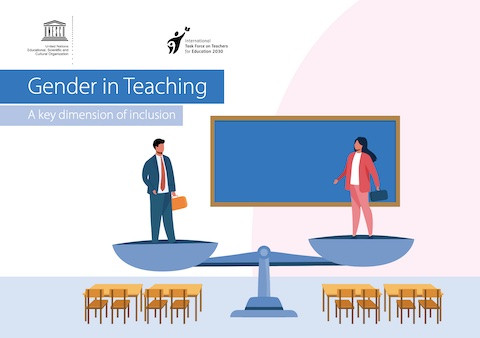 Gender in Teaching: A Key Dimension of Inclusion Année de publication: 2020 Auteur institutionnel: UNESCO | International Task Force on Teachers for Education 2030 Without teachers, Sustainable Development Goal 4 to ensure inclusive and equitable, quality education for all by 2030 will not be achieved.Since teachers act as role models for students, inclusion in education means that the teaching workforce mirror the diversity of the classroom. As countries look to recruit more teachers to meet SDGs, one significant factor important to creating inclusive classrooms is gender.This document has been prepared for the 2020 World Teachers’ Day celebrated by UNESCO and the Teacher Task Force with the theme Teachers: Leading in crisis, reimagining the future. Le genre dans l’enseignement: Un élément essentiel de l’inclusion Année de publication: 2020 Auteur institutionnel: Organisation des Nations Unies pour l'éducation, la science et la culture (UNESCO) | International Task Force on Teachers for Education 2030 Sans enseignant(e)s, il sera impossible d’atteindre l’objectif de développement durable 4 qui vise à assurer l’accès de tous à une éducation inclusive de qualité, sur un pied d’égalité, d’ici à 2030.Les enseignant(e)s sont des exemples pour les élèves ; à ce titre, l’inclusion dans l’éducation signifie que la composition ducorps enseignant doit refléter la diversité des élèves. À l’heure où les pays cherchent à recruter davantage d’enseignant(e)s pour atteindre les ODD, le genre constitue l’un des facteurs les plus importants pour créer des classes inclusives.Le présent document a été préparé en vue de la Journée mondiale des enseignant(e)s 2020, célébrée par l’UNESCO et l’Équipe spéciale sur les enseignants autour du thème Enseignants : leaders en temps de crise et façonneurs d’avenir.
  Communication and Information Programme Année de publication: 2021 Auteur institutionnel: UNESCO UNESCO is the UN specialized agency building peace in the minds of people through education, the sciences, culture, communication and information. Our mission is to foster intercultural dialogue and sustainable development, by promoting the free flow of ideas.By adopting a multi-disciplinary and inclusive approach, UNESCO works with both duty-bearers and rights-holders across the world to develop and implement targeted actions that are born out of local needs, which ensures a holistic and results-based approach for sustainable change.In the field of communication and information, UNESCO defends and promotes freedom of expression, media independence and pluralism, and the building of inclusive knowledge societies underpinned by universal access to information and the innovative use of digital technologies.Through capacity-building, policy advice, international cooperation, monitoring and foresight in the fields of freedom of expression, access to information, and digital transformation, UNESCO will continue to empower key actors with a view to ensuring that fundamental freedoms are guaranteed online and offline, in line with international standards.This is all the more relevant to ensure the ethical development and use of emerging technologies, which have a growing impact on all aspects of the world’s societies. Citizens will also be empowered to enjoy these fundamental freedoms through the development of 21st century skills and the fostering of enabling environments for media pluralism and diversity.