
Ressources
Explorez une large gamme de ressources sur le GCED afin d’approfondir votre compréhension et de renforcer vos activités de recherche, de plaidoyer, d’enseignement et d’apprentissage.
2,162 résultats trouvés
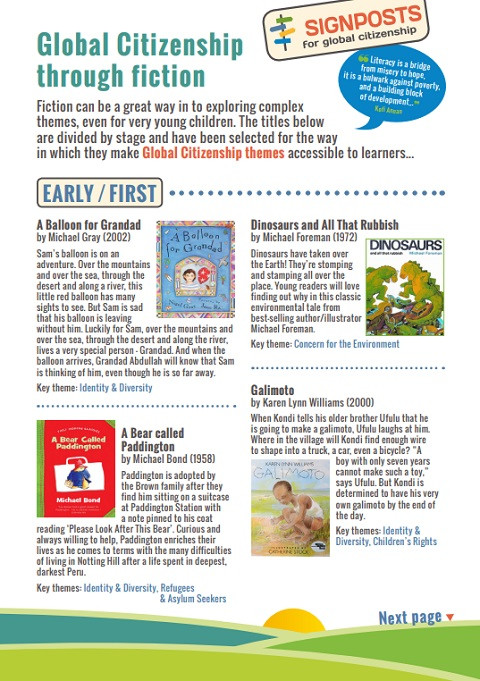 Global Citizenship through Fiction Année de publication: 2016 Auteur institutionnel: Signposts | International Development Education Association Scotland (IDEAS) This flyer summarises a selection of texts linking global citizenship and fiction. There is a synopsis of each text and texts range from Early Years to Stage 2.
 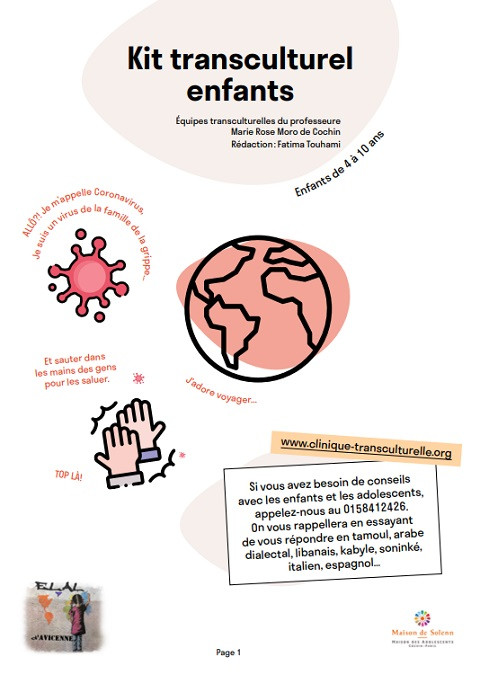 Kit transculturel enfants Année de publication: 2020 Auteur: Marie Rose Moro Auteur institutionnel: Maison de Solenn Ce kit transculturel est destiné à aider les les familles migrates en période de confinement où il devient crucial d’expliquer à chacun, avec les bons mots et dans sa langue, ce qui se passe. Il est nécéssaire d’aider l’enfant à continuer sa vie d’enfant.
  Activism, the SDGs and Youth: Development Education & Global Citizenship Education; Resource Pack Année de publication: 2018 Auteur: Valerie Duffy | Dermot O’Brien Auteur institutionnel: National Youth Council of Ireland (NYCI) | Irish Aid This resource explores the issue of Activism and the Sustainable Development Goals and represents an important contribution at this moment in time where activism and action within the Global Citizenship movement is gaining momentum. It is aimed at Global Educators, Youth Workers, Development Education practitioners, trainers, activists, changemakers of all shapes and sizes but in particular those working with the current generation of young people.
  La prévention de la violence par l'éducation Année de publication: 2018 Auteur: Gabriele Goettelmann Auteur institutionnel: UNESCO Rabat Ce matériel de formation est composé de trois modules dédiés à La Prévention de la Violence par l’Education (PVE). Chaque unité devrait permettre aux participants à cette formation de mieux cerner la problématique de la violence et des extrémismes violents et d’utiliser correctement la terminologie associée. En même temps, il aborde le rôle de l’éducation dans la prévention de la violence et des extrémismes violents.
 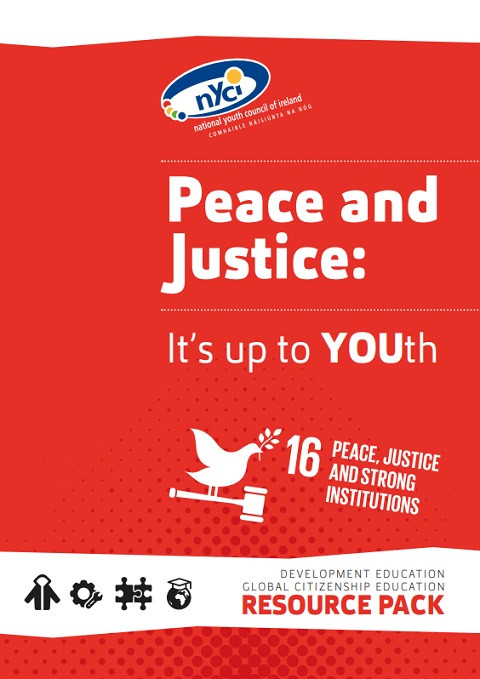 Peace and Justice: It’s up to Youth; Resource Pack Année de publication: 2017 Auteur: Valerie Duffy | Ismael Hayden | Dermot O’Brien Auteur institutionnel: National Youth Council of Ireland (NYCI) | Irish Aid This resource for youth workers on Peace, Justice and the SDGs focuses on Goal 16. It provides activities and opportunities for young people (and those who work with young people) to engage more on key issues of our time, to reflect on root causes and consequences, and to clear a path for this generation to lay strong foundations for present and future pathways to peace, justice, equality, and human rights.
  Recommendations for Teaching and Learning about the Holocaust Année de publication: 2019 Auteur institutionnel: International Holocaust Remembrance Alliance (IHRA) These recommendations, written by a group of international experts, are crafted to help educators with fact-based and educationally sound techniques for teaching the complex and nuanced history of the Holocaust. These recommendations will allow you to: Explain why teaching and learning about the Holocaust matters. The guidelines provide compelling reasons for covering the Holocaust in classroom curricula, so that students have a deeper understanding of the past and how it shapes the present. Find appropriate sources for the classroom. Covering this subject in a way which is both sensitive and accurate can be difficult; these recommendations include practical guidance on how to make your choices. Bring curricula up to date with latest research. There’s a huge range of recent research in this field; we’ve made it easy to incorporate these findings into your classroom.
 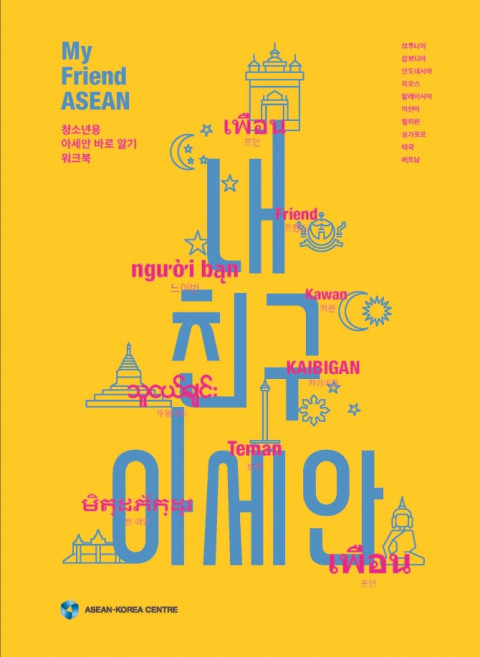 내 친구 아세안: 청소년용 아세안 바로 알기 워크북 Année de publication: 2019 Auteur institutionnel: 한-아세안센터 정보자료국 아시아 태평양 지역 중, 동남아시아 10개국의 연합을 아세안(ASEAN)이라고 하며 브루나이·캄보디아·인도네시아·라오스·말레이시아·미얀마·필리핀·싱가포르·태국·베트남이 그 국가들이다. 정치형태, 종족, 종교, 문화, 역사 등 다양한 환경을 가진 사람들이 공존하고 다양한 사람들이 어우러져 살고 있는 아세안 10개국은 2015년 말 ‘아세안 공동체’ 라는 하나의 공동체를 탄생시켰다. 이 책은 아세안 국가들과 우리나라와의 관계를 살펴보고 청소년들에게 다소 낯선 아세안 회원국을 각 나라별로 일러스트와 이미지를 통해 쉽게 알 수 있도록 설명한다.
  Addressing Inclusion: Effectively Challenging Racism in Schools Année de publication: 2019 Auteur institutionnel: Coalition for Racial Equality and Rights (CRER) | respectme | Government of Scotland Addressing Inclusion: Effectively Challenging Racism in Schools” is a resource developed by the Coalition for Racial Equality and Rights (CRER) and respectme, Scotland's anti-bullying service. The resource provides information and guidance to school staff on addressing racist bullying in Scottish schools and has been written to complement ‘Respect for All’, the national approach to anti-bullying.
 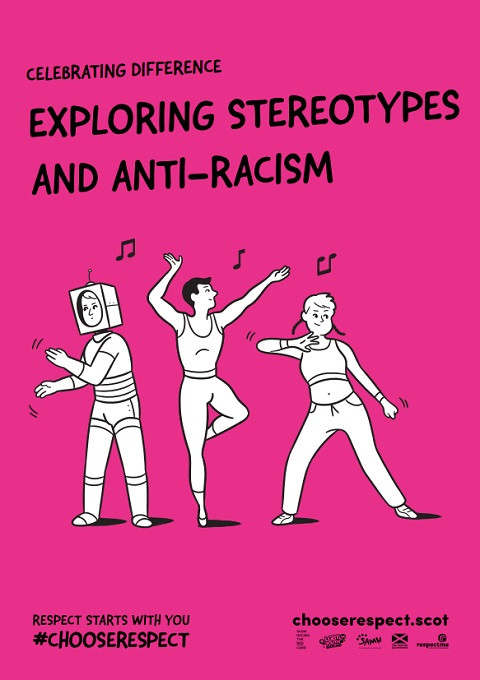 Celebrating Difference: Exploiting Stereotypes and Anti-Racism Année de publication: 2018 Auteur institutionnel: respectme This resource has been developed as part of the ‘Celebrating Difference’ campaign, which is run by Respect Me, in partnership with LGBT Youth Scotland, the Scottish Association for Mental Health, Show Racism the Red Card, and the Scottish Government. It contains various lessons about challenging stereotypes.
 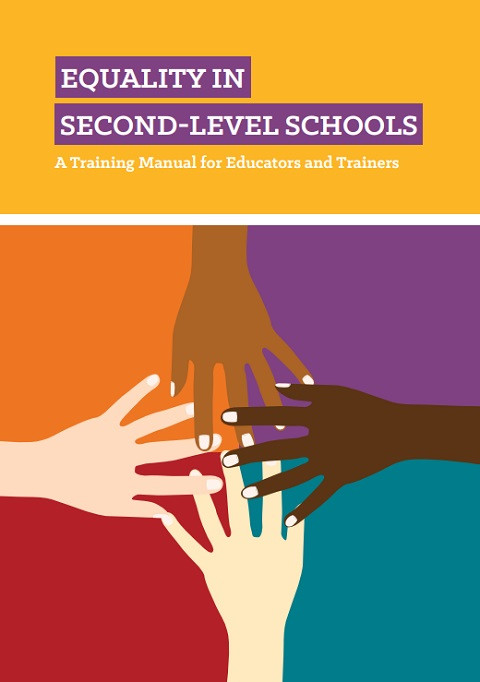 Equality in Second-level Schools: A Training Manual for Educators and Trainers Année de publication: 2014 Auteur: Mary Gannon | Karen O'Shea Auteur institutionnel: Equality Authority | European Union (EU) This resource is based on two and a half days of training delivered to second-level teachers on how to guide discussion and take action on equality in the curriculum and the school. The activities and resources provide ideas and methodologies to engage students in discussing and taking action on equality, human rights and social justice issues in the classroom, the school and the community. These include issues relating to the 9 equality grounds in Irish equality legislation: gender, civil status, family status, sexual orientation, religion, age, disability, race and the Traveller community. Exploring and taking action in these areas supports the development of key skills across curricula including critical and creative thinking, communication, active citizenship and working together.