
Ressources
Explorez une large gamme de ressources sur le GCED afin d’approfondir votre compréhension et de renforcer vos activités de recherche, de plaidoyer, d’enseignement et d’apprentissage.
3,790 résultats trouvés
 Citizenship education in Egypt Année de publication: 2013 Auteur: Madeline Waddell Auteur institutionnel: University of Puget Sound The Arab Spring brought hope of a democratic Middle East to many in the international community. While the literature on democratic transitions includes an array of components, scholars on the region have concentrated on institutional developments such as elections and constitutions. While these structural components are essential, this paper advocates for citizenship education as another crucial element in democratic transitions. Although not typically part of this literature, citizenship education entails building an informed and active populace able to contribute to a total culture of democracy. This paper analyzes these pedagogic efforts in transitional Egypt by contrasting the State’s role in citizenship education with that of civil society. This contrast leads to the conclusion that an emphasis on the third sector is necessary for carrying out the goals of citizenship education apolitically. Egypt’s school system is not only the most robust in the Arab world, but has historically been utilized by different authoritarian regimes to advance political goals. When juxtaposed with the emergence of an abundance of NGOs after the 2011 Revolution, it becomes an ideal case study. Analysis is based on theories of citizenship education and research of the Egyptian education system, and is supplemented with informal interviews in the country.
 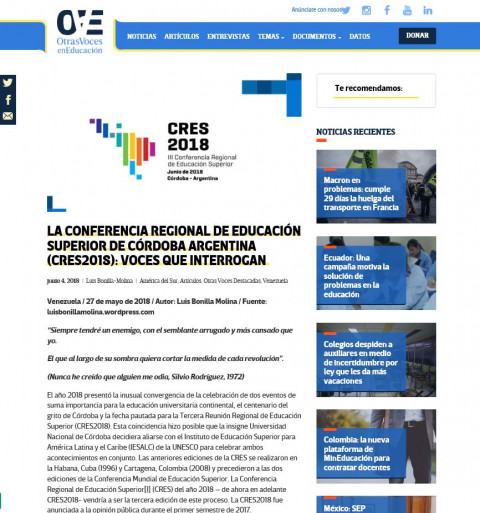 The Regional Conference on Higher Education of Córdoba Argentina (CRES2018): Voices That Question Année de publication: 2018 Auteur: Luis Bonilla-Molina The report is about the Regional Conference on Higher Education (CRES2018), where the Universidad Nacional de Córdoba partnered with the Intenational Institute for Higher Education in Latin America and the Caribbean (IESALC) from the UNESCO. During the event seven main areas concerning Higher Education in Latin America were debated from a critical perspective. Regarding globalization, according to the author, during the event "the effects of the cultural 'worldization'" were analyzed, and it was stated that "planetary citizenship is a blurred topic" that can promote cultural homogenization, and that therefore, there was a need of the promotion of a critical intercultural approach. La Conferencia Regional de Educación Superior de Córdoba Argentina (CRES2018): Voces que interrogan Année de publication: 2018 Auteur: Luis Bonilla-Molina El reporte habla de la celebración de la Tercera Reunión Regional de Educación Superior (CRES2018) donde la Univ. Nacional de Córdoba se alió con el Instituto de Ed. Superior para América Latina y el Caribe (IESALC) de la UNESCO. Durante ese evento hubieron siete ejes de debates que analizaban la Ed. Superior en América Latina desde una perspectiva crítica. En cuanto a la globalización, según el autor, durante el encuentro se problematizaron "los efectos de la mundializaciòn cultural", y se aseguró que la "ciudadanía planetaria aparece como un tema difuso" que puede promover homogeneización cultural por lo que se planteó la necesidad de un enfoque basado en un interculturalismo crítico.
  Guide pratique sur l’éducation à la citoyenneté mondiale : Concepts et methodologies en matière d’éducation à la citoyenneté mondiale à l’usage d’éducateurs et de responsables politiques Année de publication: 2008 Auteur: Alicia Cabezudo | Christos Christidis | Miguel Carvalho da Silva | Valentina Demetriadou-Saltet | Franz Halbartschlager | Georgeta-Paula Mihai Auteur institutionnel: North-South Centre of the Council of Europe Ce guide pratique sur l’éducation à la citoyenneté mondiale a émané du besoin exprimé par les praticiens du réseau de la Semaine de l’éducation à la citoyenneté mondiale du Centre Nord Sud (CNS), de disposer d’un instrument commun, façonné à la lumière de l’expérience acquise par le réseau et d’autres partenaires, qui pourrait aider les éducateurs à comprendre et à mener à bien des initiatives en matière d’éducation à la citoyenneté mondiale.En offrant des points de vue sur l’éducation à la citoyenneté mondiale ainsi que les méthodes et les critères d’évaluation qui s’y appliquent, notamment en termes d’échange de pratiques, d’outils et de ressources, ce guide pratique étoffe le travail de fond en matière d’ECM. Il apporte, par ailleurs, une aide aux praticiens opérant dans les secteurs formels et non formels de l’éducation : premièrement, en introduisant des éléments primaires que ces premiers peuvent développer au gré de leurs besoins et de leur propre expérience ; deuxièmement, en identifiant des approches et des pratiques déjà en œuvre en matière d’éducation à la citoyenneté mondiale ; troisièmement, en les invitant à réfléchir et à devenir plus conscients de leurs propres activités dans ledit domaine ; quatrièmement, en amplifiant l’échange de pratiques et en créant des synergies entre les parties prenantes ; cinquièmement, en contribuant à la définition des politiques éducationnelles au niveau local, régional, national et international.
 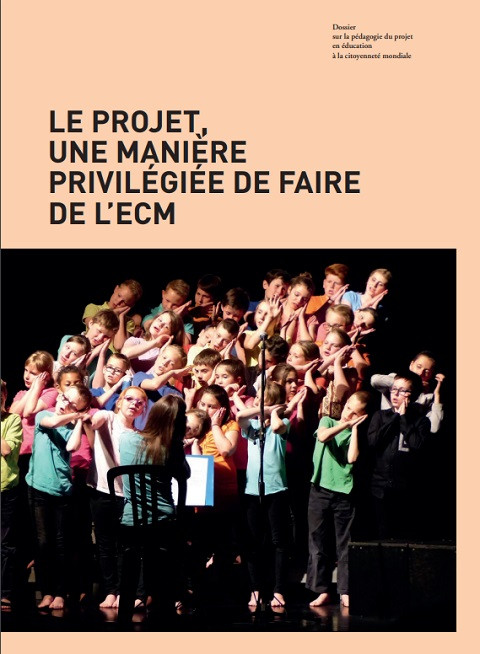 Le projet, une manière privilégiée de faire de l’ECM : Dossier sur la pédagogie du projet en éducation à la citoyenneté mondiale Année de publication: 2019 Auteur institutionnel: Annoncer la Couleur (ALC) | Enabel Ce dossier montre les avantages de faire de l’éducation à la citoyenneté mondiale par la mise en projet. Cela donne aussi les bonnes méthodes pédagogiques pour adopter l’enseignement par projet génère une nouvelle dynamique dans la pratique de l’enseignant. Intéressé∙e par les thèmes de l’éducation à la citoyenneté mondiale, il ou elle les intégrera, en tout ou en partie, dans son cours à condition d’y trouver des avantages.
 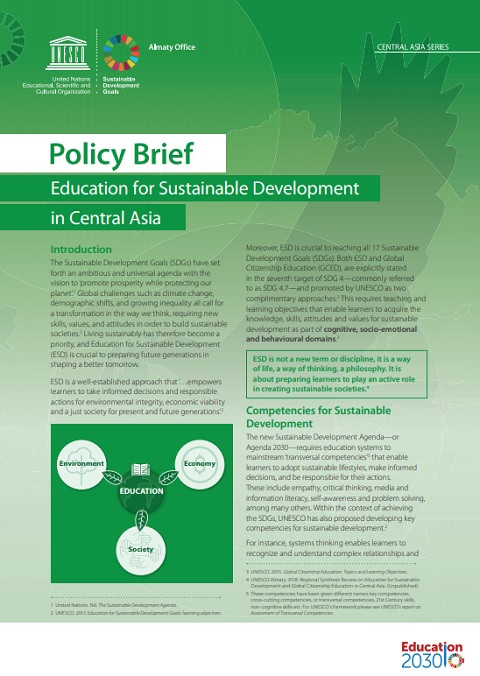 Policy Brief: Education for Sustainable Development in Central Asia Année de publication: 2019 Auteur institutionnel: UNESCO Almaty Education for Sustainable Development(ESD) is crucial to reaching all 17 Sustainable Development Goals (SDGs). Both ESD and Global Citizenship Education (GCED) are explicitly stated in the seventh target of SDG4 and promoted by UNESCO as two complimentary approaches. This requires teaching and learning objectives that enable learners to acquire the knowledge, skills, attitudes and values for sustainable development as part of cognitive, socio-emotional and behavioural domains. This policy brief explores the challenges, promising practices, and policy recommendations when it comes to mainstreaming ESD in Central Asia’s education systems. Аналитическая записка: Образование в интересах устойчивого развития в Центральной Азии Année de publication: 2019 Auteur institutionnel: UNESCO Almaty ОУР имеет решающее значение для достижения всех установленных 17 ЦУР. Как ОУР, так и Образование в духе глобальной гражданственности (ОГГ) непосредственно указаны в седьмой задаче ЦУР 4 как два взаимодополняющих подхода. Для этого перед преподаванием и обучением необходимо ставить задачи, которые позволяют учащимся приобретать знания, навыки, подходы и ценности для устойчивого развития в рамках когнитивных, социальноэмоциональных и поведенческих аспектов. В настоящей аналитической записке излагаются проблемы, примеры применения многообещающих практик и рекомендации по внедрению ОУР в системы образования стран Центральной Азии.
 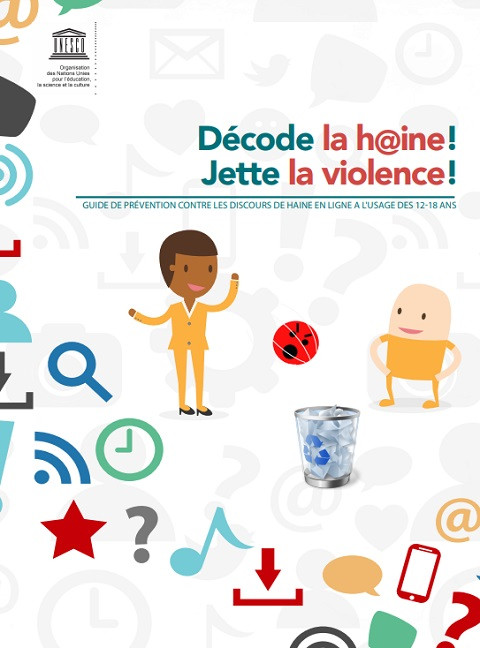 Décode la h@ine! Jette la violence!: Guide de prévention contre les discours de haine en ligne à l'usage des 12-18 ans Année de publication: 2019 Auteur: Khalid Aoutail Auteur institutionnel: UNESCO Rabat Ce guide, conçu à partir d'une collecte des données sur l'expression de la haine en ligne sous toutes ses formes, et de leur analyse, propose des modules simples à comprendre afin d'accompagner celles et ceux qui le souhaitent dans la création d'un réseau virtuel d'échange pacifié. Les recommandations présentes ici ne se limitent pas à l'expression de la haine en ligne mais abordent toutes les formes de violences qui peuvent exister.
  Moral Education and the Cultivation of Positive Citizen: Insights from Isaiah Berlin’s Conceptualization of Two Types of Freedom Année de publication: 2019 Auteur: Ye Fei Auteur institutionnel: 苏州大学 On the basis of a binary model of freedom, Isaiah Berlin distinguished two types of citizenship: “negative citizen” and “active citizen”. “Negative citizens” tend to place individual freedom and rights above the community, and to defend the individual freedom as the top priority, which readily leads to the division and alienation between the individual and the community. “Active citizens”, on the other hand, tend to place a greater emphasis on the close relationship between freedom and responsibility and the integration of individual and the society, advocating that individuals shall have the courage to assume public responsibility while defending their individual rights. In the ongoing social transformation, moral education shall guide the cultivation of “active citizens” and promote the development of moral responsibility and public spirit, which is valid practice with relation to individual personality improvement, school moral education reform, and social development. To this end, moral education should be devoted to constructing a public living space in the classroom, developing the concept of democratic co-governance in schools, and meanwhile establishing an effective connection between schools and communities. Thus, students can be expected to become responsible and positive citizens who treasure such public virtues as equality, cooperation, respect, and tolerance, and who shall contribute to the progress of public life in building a respectable character.
  Young Children’s Citizenship Education in Canada: Background, Content and Values; Based on the Analysis of Early Learning Guidelines in Alberta, British Columbia and Nova Scotia Année de publication: 2019 Auteur: Xu Peng Auteur institutionnel: Primary and Secondary Education in Foreign Countries Citizenship education for young children has been growingly emphasized by western countries. With the influence of global policy discourses, curriculum reform in early childhood education and studies of young children’s citizenship, citizenship education has become a key aspect in Canadian early childhood curriculum. Based on recent studies, this research forms a theoretical framework for citizenship education, which covers four dimensions of citizenship (political education, social education, subjectivity education and civic practice education). The early learning frameworks in Alberta, British Columbia and Nova Scotia are analyzed through thematic analysis. In general, citizenship education for young children in these three provinces reveal the following features: emphasizing young children’s rights and responsibilities, and advocating young children’s subject positions as citizens; the traditional citizenship is being changed and young children’s participation is highlighted as the root of democracy; young children’s citizenship lies in multiple discursive fields with indigenous perspective emerging.