
Ressources
Explorez une large gamme de ressources sur le GCED afin d’approfondir votre compréhension et de renforcer vos activités de recherche, de plaidoyer, d’enseignement et d’apprentissage.
3,790 résultats trouvés
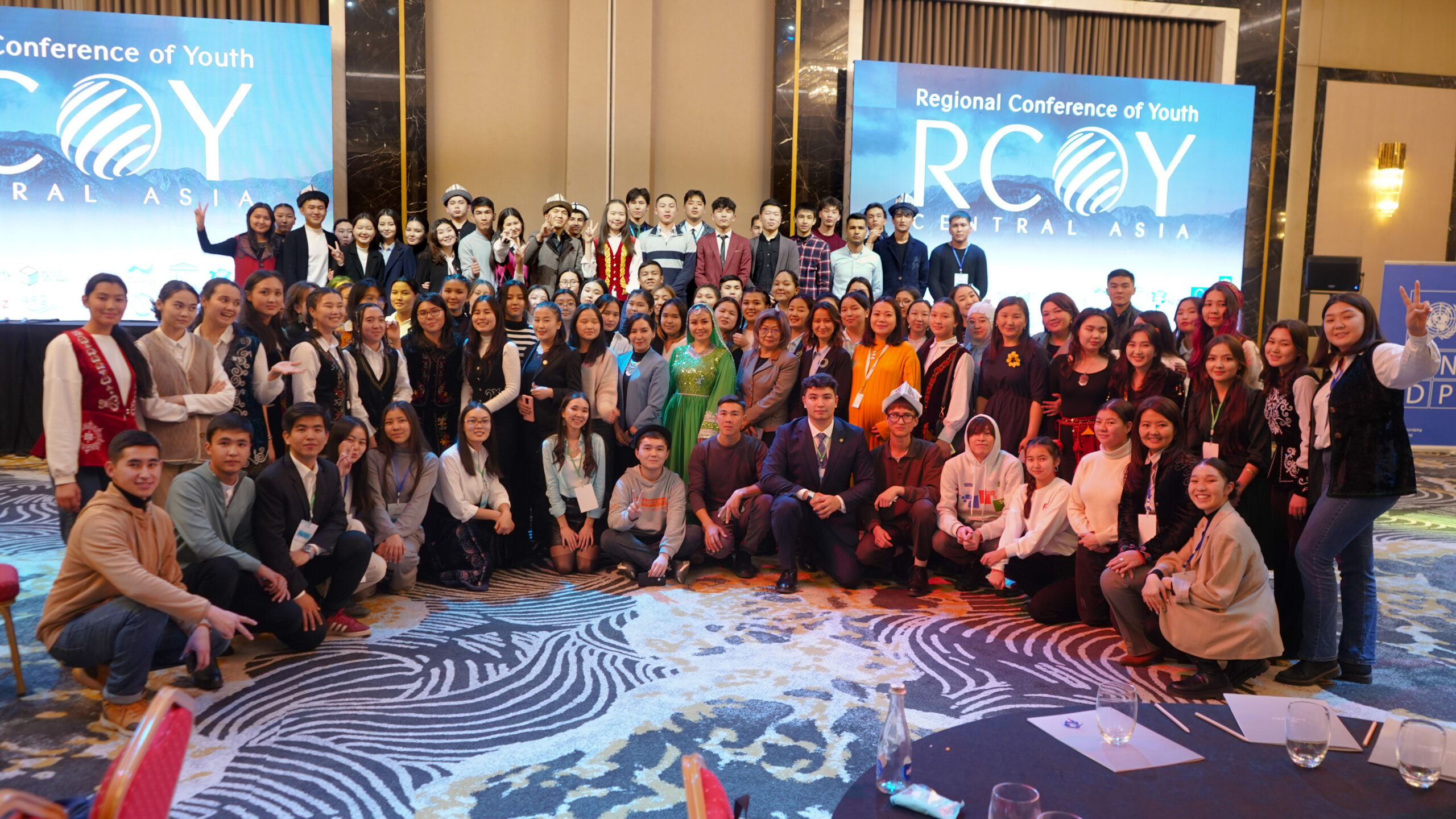 Youth Involvement in Climate Issues in Kazakhstan and Tajikistan: Illusion or Reality? Année de publication: 2024 Auteur: Anisa Abibulloyeva | Mukhtar Amanbayuly Auteur institutionnel: Central Asian Bureau for Analytical Reporting (CABAR) Government agencies in Central Asian countries and international organizations that deal with environmental issues, especially climate change, do not sufficiently take into account the opinions of young environmentalists, according to young experts from Tajikistan and Kazakhstan, Anisa Abibulloyeva and Mukhtar Amanbayuly. Вовлечение молодежи в климатические вопросы в Казахстане и Таджикистане: иллюзия или реальность? Année de publication: 2024 Auteur: Anisa Abibulloyeva | Mukhtar Amanbayuly Auteur institutionnel: Central Asian Bureau for Analytical Reporting (CABAR) Государственные органы стран Центральной Азии и международные организации, которые занимаются проблемами окружающей среды, особенно изменения климата, недостаточно учитывают мнения молодых экологов, считают молодые эксперты из Таджикистана и Казахстана Аниса Абибуллоева и Мухтар Аманбайулы.
  Case Studies in Action: Youth Empowerment for a Peaceful Caribbean Année de publication: 2024 Auteur: Gizem Kilinç Auteur institutionnel: UNESCO Kingston This compilation, titled “Case Studies in Action: Youth Empowerment for a Peaceful Caribbean” presents fourteen concise case studies highlighting (sub-)regional, national, and local initiatives that contribute to the operationalisation of the Youth, Peace, and Security (YPS) agenda. It features a combination of initiatives led by government, regional organisations, the United Nations, youth organisations, civil society, and multi-stakeholder groups across the Dutch and English-speaking Caribbean. The primary objective of this overview is to enrich the knowledge base on meaningful youth engagement in peace and security issues within the region, shedding light on successful approaches, obstacles encountered, and lessons learned. Organised into five sections aligned with the pillars of the YPS agenda—prevention, protection, disengagement and reintegration, partnership, and participation—the case studies are accompanied by an introduction and a summary of recommendations.
  Rewriting the nation: World War II narratives in Polish history textbooks This chapter examines the processes of rewriting nationhood in educational narratives regarding the Second World War (WWII) in Poland. Using mixed methods, this case study analyzes narrative change in state-approved history textbooks published between 1977 and 2008, thus covering the period of political transition from a communist to a democratic Poland. Although trends in learning theory and international norms suggest that attention to diversity should have increased in textbooks, in Poland these trends have been subsumed by more long-lasting Polish specific cultural tropes. WWII narratives, in particular, emphasize an ethnically homogeneous nation. Throughout the 31-year sample, educating youth about WWII in Poland continues to be focused on reclaiming “Polishness” rather than on espousing global understandings and citizenship. (By the author)
  The Presentation of the Holocaust in German and English School History Textbooks: A Comparative Study As textbooks are one way of teaching and influencing pupils’ learning, this paper aims to examine critically and compare the presentation of the Holocaust in English and German textbooks. To set the scene, the paper investigates the theoretical and methodological background of textbook analysis. This is followed by a description of the sample and method chosen for this study. The analysis concentrates upon the question of culpability for the Holocaust in German and English textbooks and reasons for this. The paper concludes by exploring the possible effects the presentation of ‘blame’ for the Holocaust has upon the pupils who read textbooks. (by the author) What Shall We Tell the Children? International Perspectives on School History Textbooks The pages of this book illustrate that as instruments of socialization and sites of ideological discourse textbooks are powerful artefacts for introducing young people to a specific historical, cultural and socioeconomic order. Crucially, exploring the social construction of school textbooks and the messages they impart provides an important context from within which to critically investigate the dynamics underlying the cultural politics of education and the social movements that form it and which are formed by it. The school curriculum is essentially the knowledge system of a society, incorporating its values and its dominant ideology. The curriculum is not "our knowledge" born of a broad hegemonic consensus, rather it is a battleground on which cultural authority and the right to define what is labelled legitimate knowledge are fought over. As each chapter in this book illustrates, curriculum as theory and practice has never been, and can never be, divorced from the ethical, economic, political and cultural conflicts of society, which have such a deep impact upon it. Individuals cannot escape the clear implication that questions about what knowledge is of most worth, and about how it should be organized and taught, are problematic, contentious and very serious. (By the author) Textbooks and the Holocaust in Independent Ukraine: An Uneasy Past The article examines how Ukrainian history textbooks dealt with the Holocaust between independence and 2006. The analysis reveals two major, conflicting narratives about the Holocaust, though both externalize and relativize the Holocaust. As a template for understanding genocide, the Holocaust was applied to the Soviet-imposed 1932-33 famine in Ukraine, the Holodomor. The emphasis placed on the famine in both narratives partially obscures the Holocaust and in propagating the Judeo-Bolshevik myth, turns Jews into leading perpetrators of the Holodomor. In the Ukrainian case, the complex relationship among history, historical culture, and contemporary politics is compounded by the familiar tension between national history and the international reality of the Holocaust. The historical Sovietization of Holocaust victims was attacked by historians in the Ukrainian diaspora who resented the accusations that Ukrainians were collaborators and fascists. They sought to replace the Soviet historical narrative with one that made Ukrainians the central victims, not perpetrators. Ukraine's own nationalization of the Holocaust functioned in much the same way as the Sovietization of the Holocaust. Nationalization, obfuscation, and an implicit competition among victim narratives all contribute to the relatively complicated place of the Holocaust in Ukrainian historical narratives. (By the author) Holocaust education and human rights: Holocaust discussions in social science textbooks worldwide, 1970-2008 This paper examines discussions of the Holocaust in 465 secondary school social science textbooks (history, civics, and social studies) from 69 countries published between 1970 and 2008. It finds that textbooks from Western countries are more likely to discuss the Holocaust early on, but the rate is increasing in other regions of the world. Moreover, these discussions are increasingly framed in terms of a universal violation of human rights. Today, over half of Holocaust discussions in textbooks use the language of human rights or a crime against humanity. I argue the shift towards more abstract discourse depicting some events as culturally relevant worldwide reflects the construction of a globalized culture and society. (By the author)
  Les juifs dans les manuels scolaires d'Histoire en France This book examines the dissonance between national memory and history concerning French Jewry. From the third Republic to the present, the analysis of textbooks reveals what representations the French educational system has disseminated across the nation and how these images persist or fade through time. Analysing the dominant discourses on the Holocaust in grade 9 South African history textbooks The Holocaust has become a focal point in many History classrooms in recent years as a direct result of linking the teaching of the Holocaust with Human Rights Education. Whilst there may be many studies on the Holocaust as a historical event, this study has analysed how the Holocaust has been embedded as a narrative in the Grade 9 GET South African History textbooks and which dominant discourses emerge from this. This research is phenomenological in nature and was situated within an interpretivist paradigm. I employed Narrative Inquiry and Fairclough's three dimensions of discourse as the analysis methodologies. The analysis was completed through an instrument in which the various aspects that aid in the construction of a narrative were interrogated. The study concluded that the Holocaust has a deeply-rooted link to education and the History curriculum in South Africa, as there has been a shift in ideological thinking emanating from western consciousness and finding a place in African consciousness due to the former's prevalence globally. The focus of the narrative of the Holocaust ‒as seen in the four selected Grade 9 GET History textbooks which constituted the sample for this study ‒ has shifted from a purely historical perspective to a perspective which is more social in nature. (By the author)