
Ressources
Explorez une large gamme de ressources sur le GCED afin d’approfondir votre compréhension et de renforcer vos activités de recherche, de plaidoyer, d’enseignement et d’apprentissage.
662 résultats trouvés
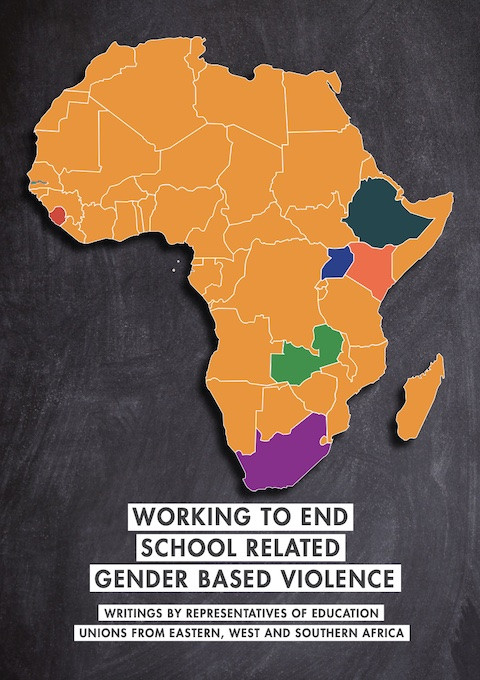 Working to End School Related Gender Based Violence: Writings by Representatives of Education Unions From Eastern, West and Southern Africa Année de publication: 2019 Auteur: Shamim Meer Auteur institutionnel: Gender at Work | Labour Research Service (LRS) | Global Affairs Canada (GAC) | United Nations Girls' Education Initiative (UNGEI) | Education International (EI) School Related Gender Based Violence (SRGBV) is violence that undermines the bodily integrity, human rights, and gender equality of all those involved in the school but primarily that of the school child.In 2016, 7 teacher unions i.e. SADTU and NAPTOSA from South Africa, BETUZ and ZNUT from Zambia, UNATU from Uganda, ETA from Ethiopia and KNUT from Kenya and in 2018, SLTU from Sierra Leone, GTU from the Gambia and the staff from the Ghana-based Education International Regional Africa Office - actively engaged in a Gender at Work - Gender Action Learning Process (GAL).The main aim of this specific GAL process was to create a participatory EI pilot program in Southern, East and West Africa focusing on individual teachers’ and teacher unions’ capacity to address SRGBV. With the support of Gender at Work facilitators, participants strengthened their understanding of gender inequality and gender based violence in the context of the school. Throughout the GAL Process participants spoke from their hearts, sharing inspirational stories of change.
  Equity and Social Inclusion: Overcoming Inequalities Towards More Inclusive Societies Année de publication: 2016 Auteur: Betilde Muñoz-Pogossian | Alexandra Barrantes Auteur institutionnel: Organization of American States (OAS) Inequality continues to be one of the main challenges for the countries of the Americas, and the debate about its roots and consequences has permeated all areas of public policy. The truth is that advances in civil and political rights have not been matched by advances in economic, social and cultural rights, and in this context and during the last 15 years, many of the countries of the region have taken measures of public policy to generate greater inclusion and a better redistribution of the benefits of economic growth, with the intention that this will translate into the enjoyment of more rights (in all spheres) for citizens. Equidad e inclusión social: Superando desigualdades hacía sociedades más inlcusivas Année de publication: 2016 Auteur: Betilde Muñoz-Pogossian | Alexandra Barrantes Auteur institutionnel: Organization of American States (OAS) La desigualdad continúa siendo uno de los principales retos de los países de las Américas, y el debate sobre sus raíces y consecuencias ha permeado todos los ámbitos de la política pública. Lo cierto es que los avances en materia de derechos civiles y políticos no se han correspondido con avances en materia de derechos económicos, sociales y culturales.En este marco y durante los últimos 15 años, muchos de los países de la región han tomado medidas de política pública para generar mayor inclusión y una mejor redistribución de los beneficios del crecimiento económico, con la intención de que esto se traduzca en el goce de más derechos (en todas sus esferas) para los ciudadanos y ciudadanas.
  SDG Good Practices: A Compilation of Success Stories and Lessons Learned in SDG Implementation (1st Edition) Année de publication: 2020 Auteur institutionnel: UN. Department of Economic and Social Affairs (UN. DESA) This publication presents 16 SDG Good Practices from across the globe, received in response to the first open call for good practices, success stories and lessons learned in SDG implementation, promoted by UN DESA between 2018 and 2019.Sorted by geographical region, this publication describes the diverse examples in detail, featuring updates and reflections on the impact and adaptations to the COVID-19 pandemic and showcasing results and impact.As the world pursues a transformative recovery from COVID-19 and embarks on the Decade of Action for accelerating the implementation of the SDGs, it is hoped that these examples provide inspiration to Governments and stakeholders in their efforts to address crisis, reduce the risk of future potential emergencies and deliver on the ambitious and inclusive vision of the 2030 Agenda.
  School-Related Gender-Based Violence Measurement Toolkit Année de publication: 2020 Auteur: Dexis Consulting Group Auteur institutionnel: United States Agency for International Development (USAID) This toolkit delivers practical guidance and resources for measuring the prevalence and extent of students’ experiences of school-related gender-based violence (SRGBV), and provides methods for assessing key risk factors and drivers of SRGBV. This toolkit contains a conceptual framework for measuring SRGBV, a school- based survey for measuring experiences of SRGBV, risk factors, and drivers, as well as practical guidance for implementing the survey.
  National Report on the State of the Environment and the Use of Natural Resources of the Republic of Kazakhstan for 2011-2014 Année de publication: 2015 Auteur institutionnel: Kazakhstan. Ministry of Energy National report on the state of the environment and use of natural resources is compiled in order to annually inform the population about the actual environmental situation on the territory of the Republic of Kazakhstan and the measures taken to improve it. The National Report presents the values of indicators characterizing the relationship between the state of the environment and indicators of socio-economic development. Национальный доклад о состоянии окружающей среды и использовании природных ресурсов Республики Казахстан за 2011 – 2014 годы Année de publication: 2015 Auteur institutionnel: Kazakhstan. Ministry of Energy Национальный доклад о состоянии окружающей среды и использовании природных ресурсов составляется в целях ежегодного информирования населения о фактической экологической ситуации на территории Республики Казахстан и мерах, принимаемых по ее улучшению. В Национальном докладе представлены значения показателей, характеризующих взаимосвязь состояния окружающей среды и показателей социально-экономического развития.
  Young People of Central Asia: Tajikistan Année de publication: 2017 Auteur: Muzaffar Olimov | Shavkat Sakhibov Auteur institutionnel: Friedrich-Ebert-Stiftung Kazakhstan Office The Friedrich Ebert Foundation initiated the Youth of Central Asia project. Its purpose is to study the values and attitudes of young Tajikistanis, lifestyles, identities, political views and foreign policy orientations. The project resulted in a research analytical report by independent economist Shavkat Sahibov and Professor Muzaffar Olimov, Doctor of History. Молодежь Центральной Азии: Таджикистан Année de publication: 2017 Auteur: Muzaffar Olimov | Shavkat Sakhibov Auteur institutionnel: Фонд имени Фридриха Эберта в Казахстане Фондом им. Фридриха Эберта был инициирован проект «Молодежь Центральной Азии». Его цель – изучение ценностей и взглядов молодых таджикистанцев, образа жизни, идентификации, политических взглядов и внешнеполитических ориентаций. По итогам проведенной работы независимым экономистом Шавкатом Сахибовым и доктором исторических наук, профессором Музаффаром Олимовым был подготовлен исследовательский аналитический отчет.
  SDG 4 Data Digest 2020: Using Household Survey Data to Monitor SDG 4 Année de publication: 2020 Auteur institutionnel: UNESCO Institute for Statistics (UIS) The 2020 edition of the SDG 4 Data Digest by the UNESCO Institute for Statistics focuses on household surveys as an important and underutilized tool to collect the data needed to track progress towards Sustainable Development Goal 4 and to ensure that no one is left behind. The Digest describes existing survey programmes and offers advice on the design and implementation of new surveys. The Digest identifies a number of advantages to using household surveys and describes the categories of indicators best suited for monitoring with survey data. Data from household surveys complement administrative data collected in schools and can be disaggregated to a greater extent than administrative data to facilitate the monitoring of exclusion in education. The definitions and calculation methods of selected indicators are laid out and the combination of household survey data with data from other sources is explained. This issue of the Digest is aimed at government officials, national planners, donors and others who make decisions about the implementation of nationally representative household surveys. It describes the requirements for conducting a household survey and the steps that must be followed from questionnaire design to data collection and analysis, and it gives advice on presentation of the findings. A section on COVID-19 summarizes the impact of the current pandemic on data collection. Additional resources, with suggested survey questions for the collection of education data through household surveys, are also included.