
Ressources
Explorez une large gamme de ressources sur le GCED afin d’approfondir votre compréhension et de renforcer vos activités de recherche, de plaidoyer, d’enseignement et d’apprentissage.
3,385 résultats trouvés
 Потенциал будущего сотрудничества между республикой Узбекистан и Шанхайской организацией сотрудничества (ШОС) (XXI Век: Наука и образование; Том1; №1, 2024) Année de publication: 2024 Auteur: Феруза Назарова | Этибор Султонова Auteur institutionnel: Ташкентский государственный институт востоковедения В статье рассматривается значение инициатив для сотрудничества между Республикой Узбекистан и Шанхайской организацией сотрудничества (ШОС) и ключевые аспекты этого сотрудничества, а также перспективы дальнейшего роста. В статье предлагается несколько путей укрепления этого сотрудничества, включая расширение торгово-экономических связей, обмен технологиями и опытом, а также реализацию совместных инициатив и проектов, способствующих устойчивому развитию региона.
  尊重个体的人: 国际法视野下国际理解教育的核心 (现代教育论丛; No.1, 2023) Année de publication: 2023 Auteur: 涂诗万 | 陈晶莹 国际理解教育中存在“一”与“多”之间的紧张关系。如果回到国际理解教育的源头——国际法,就能找到“一”与“多”之间的结合点,从而可化解它们之间的紧张。在教育目的方面,多项国际法明确规定培养和增进对人权和人的基本自由的尊重是现代教育应有的目的。从教育内容方面看,国际理解教育中的人权教育、多元文化教育、全球视野教育和民族文化认同教育都体现了国际法中尊重个体的人的原则。在教育方法方面,现代教育所倡导的向教师赋权、“学生中心”、自由交流和人道的惩罚都体现了国际法中尊重个体的人的原则。总之,国际理解教育就是要理解国际上共同理解的原则和价值。毫无疑问,国际法正是国际上共同理解的原则和价值的“公约数”。而对每个人的人权和基本自由的尊重则是这个“公约数”的核心。真正落实“尊重个体的人”的原则要求我们把自己作为方法,通过构建意义丰富的自治型的小共同体实施教育。
  他异与共同价值: 全球化时代国际理解教育的范式转型与价值转向 (现代教育论丛; No.2, 2023) Année de publication: 2023 Auteur: 叶雅萱 当前,全球化的日益深入使文化交往成为必然之事,而文化差异又难以避免地客观存在着。在这一背景下,充满异质性的多元文化如何共存与发展则成为全球化新时期各文化主体共同面对的重要课题。国际理解教育致力于通过促进文化理解使各文化共存成为可能。关于文化理解,有“不同”与“陌异”两种常见的认识范式,二者分别以内在性和外在性的眼光看待文化间关系。基于此二者的国际理解教育则分别走向普世主义与相对主义两种截然不同的价值立场,皆存在一定的教育隐忧。而“他异”的文化理解范式则可能成为超越两者、扭转国际理解教育困境的出口。“他异”的认识范式主张以兼具外在性与伦理性的眼光看待文化间关系,建立起互为他者的伦理共在关系。基于此,国际理解教育转向具有关系性、生成性的共同价值立场,重视文化主体间在对话与交往中建构让多元文化得以共存与发展的价值共识。
  Arts Education for the Children of the Arab World as a Mediator for Development and the Axis of International Understanding: The Child's Song Année de publication: 2014 Auteur: Amal Sadiq Auteur institutionnel: Arab Council for Childhood and Development (ACCD) This paper focuses on art education and music in the Arab world and its link to development. The paper goes on critical understanding on how music and art can educate children for international understanding. تعليم الفنون لأطفال العالم العربى وسيط للتنمية ومحور التفاهم الدولى : أغنية الطفل Année de publication: 2014 Auteur: Amal Sadiq Auteur institutionnel: Arab Council for Childhood and Development (ACCD) تركز الورقة على التربية الفنية والموسيقى في الوطن العربي وصلتها بالتنمية. تتناول الورقة فهمًا نقديًا لكيفية تعليم الموسيقى والفن للأطفال من أجل التفاهم الدولي.
 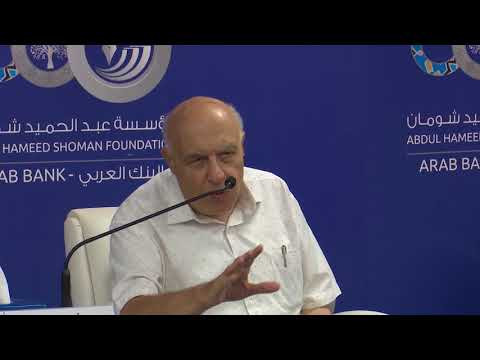 Globalization and Its Impact on the Concept of Identity Année de publication: 2017 Auteur: Hisham Ghassib Auteur institutionnel: Abdul Hameed Shoman Foundation The Abdul Hameed Shoman Cultural Foundation Forum, on 7/8/2017, hosted the Jordanian thinker, Dr. Hisham Ghosseb in a lecture entitled "Globalization and its Impact on the Concept of Identity", presented by Dr. Maher Al-Sarraf.This video is a lecture in which the lecturer talks about globalization and its impact. The lecturer discusses the concept of globalization, its ideologies, and the extent of its impact on identity. العولمة وأثرها على مفهوم الهوية Année de publication: 2017 Auteur: Hisham Ghassib Auteur institutionnel: Abdul Hameed Shoman Foundation ستضاف منتدى مؤسسة عبد الحميد شومان الثقافي، بتاريخ 7/8/2017 المفكر الأردني د. هشام غصيب في محاضرة بعنوان "العولمة وأثرها على مفهوم الهوية"، قدمه فيها وأدار الحوار مع الجمهور د. ماهر الصراف.الفيديو عبارة عن محاضرة يتحدث فيها المحاضر عن العولمة وتأثيرتها. يناقش المحاضر مفهوم العولمة وايدلوجاتيها ومدى تأثيرهاعلى الهوية.
 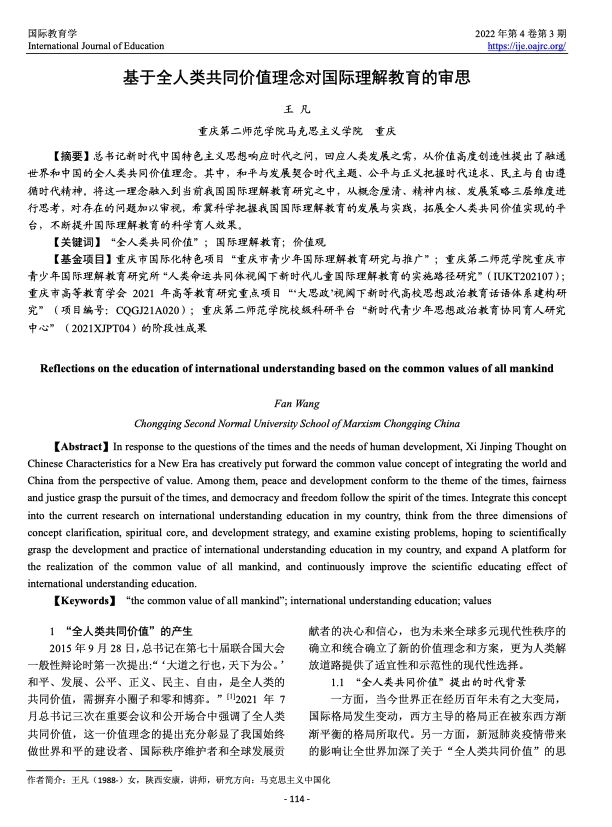 基于全人类共同价值理念对国际理解教育的审思 Année de publication: 2022 Auteur: 王凡 总书记新时代中国特色主义思想响应时代之问,回应人类发展之需,从价值高度创造性提出了融通世界和中国的全人类共同价值理念。其中,和平与发展契合时代主题、公平与正义把握时代追求、民主与自由遵循时代精神。将这一理念融入到当前我国国际理解教育研究之中,从概念厘清、精神内核、发展策略三层维度进行思考,对存在的问题加以审视,希冀科学把握我国国际理解教育的发展与实践,拓展全人类共同价值实现的平台,不断提升国际理解教育的科学育人效果。
 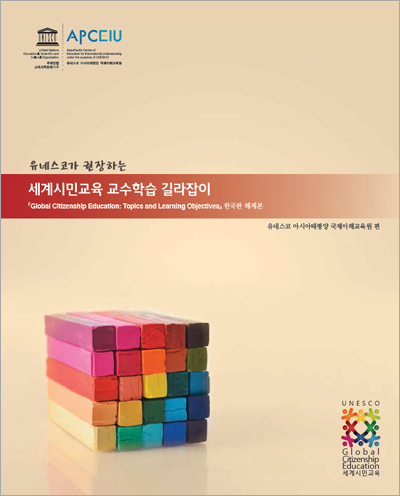 A Pedagogical Guide on Global Citizenship Education in Korean Context Année de publication: 2015 Auteur institutionnel: APCEIU APCEIU has published a pedagogical guide on Global Citizenship Education (GCED) for Korean readers, which is the Korean adaptation of the UNESCO pedagogical guide, GCED: Topics and Learning Objectives (a.k.a. TLOs).Following the recently launched Korean translation of the TLOs, this Korean adaptation contextualizes the TLOs in Korean education, aligns its terminologies with Korean curriculum, and provides further explanations for Korean readers. This guide was developed by professors in the field of teacher education, primary and secondary school teachers, and curriculum developers with special expertise in GCED/EIU.It is hoped that this guide will help Korean educators and key stakeholders better understand GCED as a new pedagogy and also reflect on traditional teaching-learning experiences in various respects. Éducation Mondiale à la citoyenneté: Sujets et objectifs d'apprentissage Année de publication: 2015 Auteur institutionnel: Centre Asie-Pacifique d'éducation pour la compréhension internationale (APCEIU) APCECI a publié un guide pédagogique sur l'éducation à la citoyenneté Mondiale (ECM) pour les lecteurs coréens, qui est l'adaptation coréenne du guide pédagogique de l'UNESCO, ECM: Sujets et objectifs d'apprentissage (TLO) alias.Après la traduction coréenne a récemment lancé le TLO, cette adaptation coréenne contextualise les TLO dans l'éducation coréenne, aligne ses terminologies avec curriculum coréen, et fournit d'autres explications pour les lecteurs coréens. Ce guide a été élaboré par des professeurs dans le domaine de la formation des enseignants, les enseignants des écoles primaires et secondaires, et les développeurs de programmes d'études avec une expertise particulière dans ECM / ECI.Il est à espérer que ce guide aidera les éducateurs coréens et les principaux intervenants de mieux comprendre ECM comme une nouvelle pédagogie et de réfléchir également sur les expériences d'enseignement et d'apprentissage traditionnelles à divers égards.