
Ressources
Explorez une large gamme de ressources sur le GCED afin d’approfondir votre compréhension et de renforcer vos activités de recherche, de plaidoyer, d’enseignement et d’apprentissage.
3,438 résultats trouvés
 Why and how Africa should invest in African languages and multilingual education: an evidence- and practice-based policy advocacy brief Année de publication: 2010 Auteur: Adama Ouane | Christine Glanz Auteur institutionnel: UNESCO Institute for Lifelong Learning (UIL) | Association for the Development of Education in Africa (ADEA) This advocacy brief seeks to show the pivotal role of languages in achieving such learning. It aims in particular to dispel prejudice and confusion about African languages, and exposes the often hidden attempt to discredit them as being an obstacle to learning. It draws on research and practice to argue what kind of language policy in education would be most appropriate for Africa. Pourquoi et comment l'Afrique doit investir dans les langues africaines et l'enseignement multilingue: note de sensibilisation et d'orientation étayée par les faits et fondée sur la pratique Année de publication: 2010 Auteur: Adama Ouane | Christine Glanz Auteur institutionnel: UNESCO Institute for Lifelong Learning (UIL) | Association for the Development of Education in Africa (ADEA) This advocacy brief seeks to show the pivotal role of languages in achieving such learning. It aims in particular to dispel prejudice and confusion about African languages, and exposes the often hidden attempt to discredit them as being an obstacle to learning. It draws on research and practice to argue what kind of language policy in education would be most appropriate for Africa. ¿Por qué y cómo Africa debería invertir en las lenguas africanas y la educación plurilingüe? Opúsculo de apoyo activo a una política basada en la práctica y en pruebas Année de publication: 2010 Auteur: Adama Ouane | Christine Glanz Auteur institutionnel: UNESCO Institute for Lifelong Learning (UIL) | Association for the Development of Education in Africa (ADEA) This advocacy brief seeks to show the pivotal role of languages in achieving such learning. It aims in particular to dispel prejudice and confusion about African languages, and exposes the often hidden attempt to discredit them as being an obstacle to learning. It draws on research and practice to argue what kind of language policy in education would be most appropriate for Africa.
 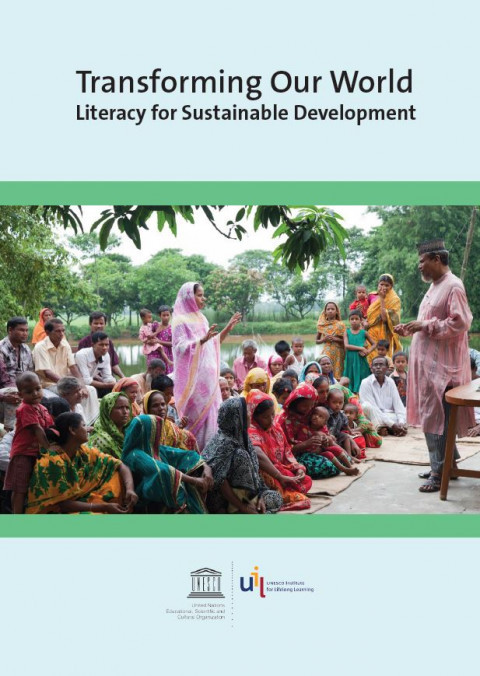 Transforming our world: literacy for sustainable development Année de publication: 2015 Auteur: Ulrike Hanemann | Cassandra Scarpino Auteur institutionnel: UNESCO Institute for Lifelong Learning (UIL) This compilation offers global examples of innovative and promising literacy and numeracy programmes that link the teaching and learning of literacy to sustainable development challenges such as health, social equality, economic empowerment and environmental sustainability. This publication is a timely contribution to the 2030 Agenda for Sustainable Development, which promotes the engagement of stakeholders to ‘ensure inclusive and equitable quality education and promote lifelong learning opportunities for all.’ Transformer notre monde: l'alphabétisation au service du développement durable Année de publication: 2015 Auteur: Ulrike Hanemann | Cassandra Scarpino Auteur institutionnel: UNESCO Institute for Lifelong Learning (UIL) This compilation offers global examples of innovative and promising literacy and numeracy programmes that link the teaching and learning of literacy to sustainable development challenges such as health, social equality, economic empowerment and environmental sustainability. This publication is a timely contribution to the 2030 Agenda for Sustainable Development, which promotes the engagement of stakeholders to ‘ensure inclusive and equitable quality education and promote lifelong learning opportunities for all.’
 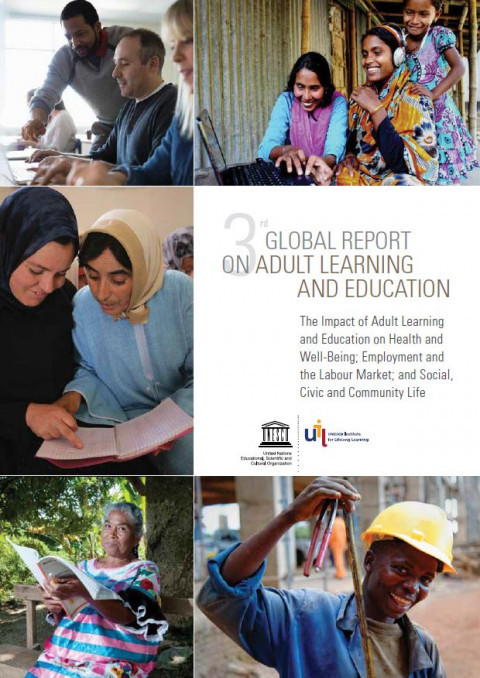 3rd Global Report on Adult Learning and Education: The Impact of Adult Learning and Education on Health and Well-being, Employment and the Labour Market, and Social, Civic and Community Life Année de publication: 2016 Auteur institutionnel: UNESCO Institute for Lifelong Learning (UIL) The Global Reports on Adult Learning and Education (GRALE) play a key role in meeting UNESCO’s commitment to monitor and report on countries’ implementation of the Belém Framework for Action. This Framework was adopted by 144 UNESCO Member States at the Sixth International Conference on Adult Learning and Education (CONFINTEAVI), which was held in Belém, Brazil, in 2009. In the Belém Framework for Action, countries agreed to improve ALE across five areas of action: policy; governance; financing; participation, inclusion and equity; and quality (UNESCO Institute for Lifelong Learning, 2010b).GRALE III appears as the ALE community prepares for an important global conference: the 2017 Mid-Term Review of CONFINTEA VI. GRALE III will help high-level decision makers take stock of progress in delivering their Belém promises since 2009. It will also help them look ahead to 2030. Policymakers are now considering how to put into practice the ALE promises made in the 2030 Agenda for Sustainable Development (United Nations, 2015) and the Recommendation on Adult Learning and Education (2015) (UNESCO, 2015). GRALE III will support their deliberations by showing how ALE can help achieve broader health, economic and social outcomes. It will identify major challenges for ALE and examine the implications for ALE of major global trends like migration and demographic shifts.GRALE III brings together the latest data, policy analysis and case studies on ALE. Government leaders will find high quality evidence to inform their policies, strategies and budgets. Proponents of change will find compelling arguments showing how ALE promotes sustainable development, healthier societies, better jobs and more active citizenship. Policy analysts will find entry points and ideas for future research and policy.
  Gender Digital Divide Assessment: Uzbekistan Année de publication: 2023 Auteur institutionnel: UNDP Uzbekistan The Government of the Republic of Uzbekistan, realizing the negative impact of the gender digital divide on the development of the country, has included the issue of ensuring gender digital equality among its priorities. The United Nations Development Programme in Uzbekistan conducted an assessment to measure and analyze the main factors affecting the digital inclusion (or isolation) of women and girls, and recommended a number of actions that the Government can take to address existing gaps. Оценка гендерного цифрового разрыва: Республика Узбекистан Année de publication: 2023 Auteur institutionnel: UNDP Uzbekistan Правительство Республики Узбекистан, осознавая негативное влияние гендерного цифрового разрыва на развитие страны, включило вопрос обеспечения гендерного цифрового равенства в число своих приоритетов. Программа развития ООН в Узбекистане провела оценку с целью измерения и анализа основных факторов, влияющих на цифровую инклюзию (или изоляцию) женщин и девочек, и рекомендовала ряд действий, которые правительство может предпринять для устранения существующих разрывов.
  SDG4 - 교육 2030: 포용성과 교육에 관한 연구 Année de publication: 2019 Auteur: 임후남 | 이대식 | 류방란 | 박성호 | 김혜자 | 윤선애 | 조혜승 Auteur institutionnel: 한국교육개발원 이 연구는 한국 교육의 포용성 실태 및 수준을 분석하고, 포용적 교육의 목표를 실현하기 위해 정책적 개선이 필요한 과제가 무엇인지를 제안하는 것을 목적으로 하였다.포용적 교육 관련 이론들을 탐구하는 한편, 포용적 교육의 개념과 요소, 유사 개념들에 대한 논의를 고찰하였다. 논의를 종합하면, 포용적 교육은 모든 학생이 처한 상황과 조건, 특성과 요구를 반영한 동등한 양질의 교육 기회와 권리를 보장하고, 이를 통해 공동체의 지속가능한 발전 또한 보장하는 교육을 지향한다. 이는 기존의 공정성 및 형평성 교육을 계승한 것이며, 그 대상 및 가치와 지향을 확장한 것이다. 포용적 교육은 “누구도 소외(배제)되지 않고, 다양한 개인의 요구와 특성(차이)을 고려한 유연한 교육과정을 통해 성, 민족(인종), 경제력 등에 따라 차별받지 않고, 공동체의 지속가능한 발전과 웰빙에 기여할 수 있는 개인으로 성장할 수 있도록 하는 교육”이라고 정의될 수 있다. 포용적 교육은 취약계층 중심의 정책목표를 전체(누구나)로 확대하고, 교육의 접근, 참여를 넘어서 성취의 격차와 차별의 철폐를 강조한다.
  포용성 증진을 위한 교육과 도시 Année de publication: 2019 Auteur institutionnel: 대한민국 교육부 | 한국교육개발원 | 유네스코한국위원회 이 발간물은 유네스코한국위원회, 교육부, 한국교육개발원의 주최로 2019년 11월 5일 개최한 「제3회 SDG4-교육 2030 포럼」 및 「학습도시와 SDGs 포럼」의 관련 정보와 발표 및 토론자료를 엮은 자료집으로 지속가능발전을 위한 포용성과 교육을 주제로 다루고 있다.