
Ressources
Explorez une large gamme de ressources sur le GCED afin d’approfondir votre compréhension et de renforcer vos activités de recherche, de plaidoyer, d’enseignement et d’apprentissage.
3,441 résultats trouvés
 뉴 노멀 시대의 민주시민교육 실행 방안 연구 Année de publication: 2021 Auteur: 김현진 | 이선호 | 이선영 | 김진희 | 양희준 | 조윤정 | 조혜진 Auteur institutionnel: 한국교육개발원 이 연구는 뉴노멀 시대 민주시민교육의 실행 전략을 도출하기 위해 학교 운영 전반의 현황뿐만 아니라, 정책 추진에 대한 인식 등 민주시민교육 전반에 대한 실증적 자료를 수집하여, 이를 기반으로 뉴노멀 시대의 민주시민교육을 위한 실행 전략을 도출하였다. 이 연구를 통해 민주시민교육은 교육목표 수립부터 학교구성원이 함께 공유하고 학교 전반의 교육 활동에서 민주성을 지향하는 것이라는 점을 확인하였다. 본 저작물은 한국교육개발원에서 2021년 작성하여 공공누리 제4유형으로 개방한 ‘뉴 노멀 시대의 민주시민교육 실행 방안 연구(김현진 외)’를 이용하였으며 해당 저작물은 한국교육개발원 홈페이지 (www.kedi.re.kr)에서 무료로 다운받으실 수 있습니다.
  지속가능개발목표(SDGs) 달성을 위한 교육개발협력 연구(Ⅵ): 지속가능발전교육과 세계시민교육을 통한 SDGs 범분야 실천 전략 Année de publication: 2022 Auteur: 윤종혁 | 김소아 | 김현진 | 서예원 | 안해정 | 김신애 | 박환보 | 유성상 Auteur institutionnel: 한국교육개발원 한국교육개발원은 개발도상국의 SDGs 달성을 지원하기 위한 교육개발협력의 실천전략 을 모색하고자 2017년부터 총 6개년 동안 「지속가능개발목표(SDGs) 달성을 위한 교육개발협력연구」를 수행하였습니다. 올해 연구는 최종 마무리하는 연구로서 SDG 4.7에서 강조하고 있는 세계시민교육과 지속가능발전교육을 포함한 환경교육, 평화・비폭력, 국제이해, 문화적 다양성 존중, 젠더 평등, 난민 및 이주민 등 소수집단 인권, 민주주의 등을 촉진시키기 위한 교육개발협력 전략을 마련하였습니다. 본 저작물은 한국교육개발원에서 2022년 작성하여 공공누리 제4유형으로 개방한 ‘지속가능개발목표(SDGs) 달성을 위한 교육개발협력 연구(Ⅵ)(윤종혁 외)’를 이용하였으며 해당 저작물은 한국교육개발원 홈페이지 (www.kedi.re.kr)에서 무료로 다운받으실 수 있습니다.
  2022년 평생교육통계 자료집 Année de publication: 2022 Auteur institutionnel: 대한민국 교육부 | 한국교육개발원 「2022 평생교육통계 자료집」은 17개 시도, 4,869개의 평생교육기관을 조사하여 우리나라의 평생교육시설을 진단할 수 있는 기초자료를 종합하였습니다.본 저작물은 교육부에서 2022년 작성하여 공공누리 제3유형으로 개방한 '2022년 평생교육통계 자료집'을 이용하였으며, 해당 저작물은 교육부 누리집(https://www.moe.go.kr/)과 교육통계 서비스 누리집(https://kess.kedi.re.kr/index) 에서 무료로 내려받으실 수 있습니다.
  2022 한국 성인의 평생학습실태 Année de publication: 2022 Auteur: 최성부 | 이혜진 | 배효진 | 김별라 | 임소현 | 강성국 | 정동철 | 박미현 | 김경남 | 김나정 | 안윤정 | 라다애 | 장훈민 | 박초아 Auteur institutionnel: 대한민국 교육부 | 한국교육개발원 「2022년 한국 성인의 평생학습 실태」자료집은 평생학습개인실태조사 결과를 평생학습 전문가 뿐 아니라 일반독자들이 이해할수 있도록 지표 중심으로 구성한 자료집입니다. 본 자료집은 정책 담당자뿐만 아니라 연구자 및 일반 독자들이 쉽게 이해할 수 있도록 만25~79세 우리나라 성인의 전 생애단계별 평생학습 참여 실태를 지표 중심으로 구성하였습니다.본 저작물은 교육부에서 2022년 작성하여 공공누리 제3유형으로 개방한 '2022 한국 성인의 평생학습실태'를 이용하였으며, 해당 저작물은 교육부 누리집(https://www.moe.go.kr/)과 교육통계 서비스 누리집(https://kess.kedi.re.kr/index) 에서 무료로 내려받으실 수 있습니다.
 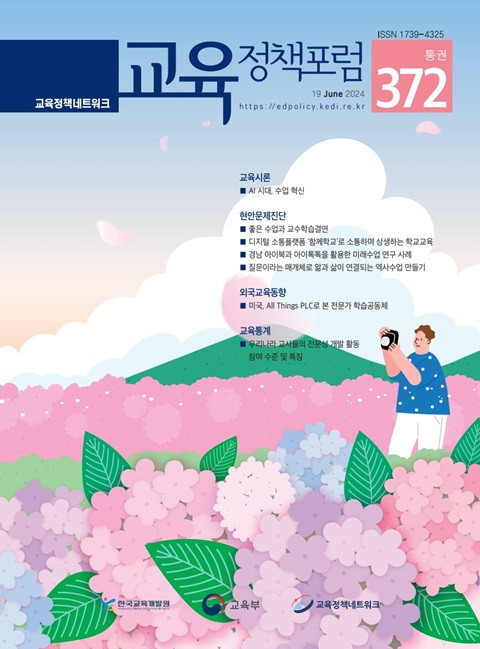 AI 시대, 수업 혁신 (교육정책포럼; 2024년 6월, Vol. 372) Année de publication: 2024 Auteur institutionnel: 한국교육개발원 교육시론ㅁ AI 시대, 수업 혁신 현안문제진단ㅁ 좋은 수업과 교수학습결연ㅁ 디지털 소통플랫폼 '함께학교'로 소통하며 상생하는 학교교육ㅁ 경남 아이북과 아이톡톡을 활용한 미래수업 연구 사례ㅁ 질문이라는 매개체로 앎과 삶이 연결되는 역사수업 만들기 외국교육동향ㅁ All Things PLC로 본 전문가 학습공동체 교육통계ㅁ 우리나라 교사들의 전문성 개발 활동 참여 수준 및 특징
 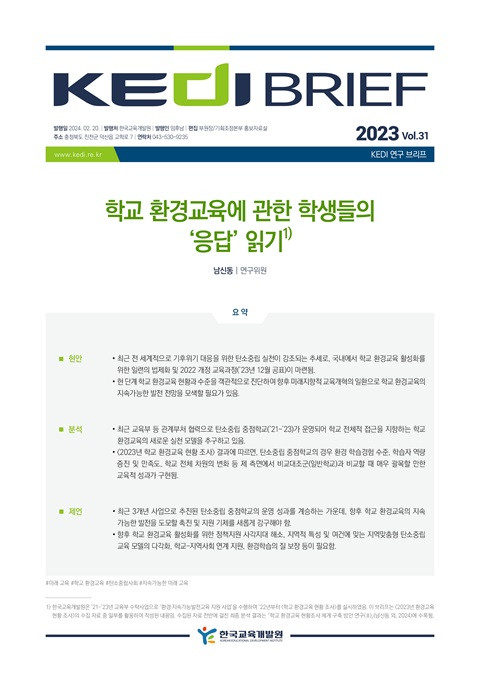 학교 환경교육에 관한 학생들의 ‘응답’ 읽기 (KEDI Brief; vol. 31, 2023) Année de publication: 2024 Auteur: 남신동 Auteur institutionnel: 한국교육개발원 현안• 최근 전 세계적으로 기후위기 대응을 위한 탄소중립 실천이 강조되는 추세로, 국내에서 학교 환경교육 활성화를 위한 일련의 법제화 및 2022 개정 교육과정(’23년 12월 공표)이 마련됨.• 현 단계 학교 환경교육 현황과 수준을 객관적으로 진단하여 향후 미래지향적 교육개혁의 일환으로 학교 환경교육의 지속가능한 발전 전망을 모색할 필요가 있음. 분석• 최근 교육부 등 관계부처 협력으로 탄소중립 중점학교(’21~’23)가 운영되어 학교 전체적 접근을 지향하는 학교 환경교육의 새로운 실천 모델을 추구하고 있음.• <2023년 학교 환경교육 현황 조사> 결과에 따르면, 탄소중립 중점학교의 경우 환경 학습경험 수준, 학습자 역량 증진 및 만족도, 학교 전체 차원의 변화 등 제 측면에서 비교대조군(일반학교)과 비교할 때 매우 괄목할 만한 교육적 성과가 구현됨. 제언• 최근 3개년 사업으로 추진된 탄소중립 중점학교의 운영 성과를 계승하는 가운데, 향후 학교 환경교육의 지속 가능한 발전을 도모할 촉진 및 지원 기제를 새롭게 강구해야 함.• 향후 학교 환경교육 활성화를 위한 정책지원 사각지대 해소, 지역적 특성 및 여건에 맞는 지역맞춤형 탄소중립 교육 모델의 다각화, 학교-지역사회 연계 지원, 환경학습의 질 보장 등이 필요함.
 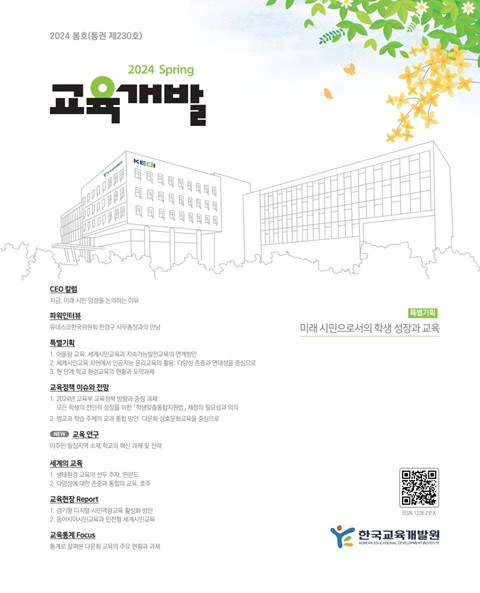 미래 시민으로서의 학생 성장과 교육 (교육개발; 2024년 봄호, Vol. 230) Année de publication: 2024 Auteur institutionnel: 한국교육개발원 CEO 칼럼지금, 미래 시민 양성을 논의하는 이유 파워인터뷰유네스코한국위원회 한경구 사무총장과의 만남 특별기획미래 시민으로서의 학생 성장과 교육1.어울림 교육: 세계시민교육과 지속가능발전교육의 연계방안2.세계시민교육 차원에서 인공지능 윤리교육의 활용: 다양성 존중과 연대성을 중심으로3.현 단계 학교 환경교육의 현황과 도약과제 교육정책 이슈와 전망1. 2024년 교육부 교육정책 방향과 중점 과제: 모든 학생의 전인적 성장을 위한 「학생맞춤통합지원법」제정의 필요성과 의의2. 범교과 학습 주제의 교과 통합 방안: 다문화·상호문화교육을 중심으로 NEW 교육 연구이주민 밀집지역 소재 학교의 혁신 과제 및 전략 세계의 교육1.생태환경 교육의 선두 주자, 핀란드2.다양성에 대한 존중과 통합의 교육, 호주 교육현장 Report1.경기형 디지털 시민역량 교육 활성화 방안2.동아시아시민교육과 인천형 세계시민교육 교육통계 Focus통계로 살펴본 다문화 교육의 주요 현황과 과제
 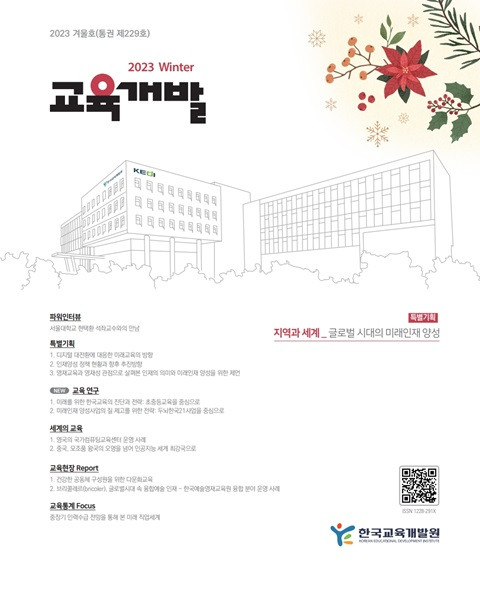 지역과 세계: 글로벌 시대의 미래인재 양성 (교육개발; 2023년 겨울호, Vol. 229) Année de publication: 2023 Auteur institutionnel: 한국교육개발원 파워인터뷰서울대학교 현택환 석좌교수와의 만남 특별기획지역과 세계 _ 글로벌 시대의 미래인재 양성1.디지털 대전환에 대응한 미래교육의 방향2.인재양성 정책 현황과 향후 추진방향3.영재교육과 영재성 관점으로 살펴본 인재의 의미와 미래인재 양성을 위한 제언 NEW 교육 연구1. 미래를 위한 한국교육의 진단과 전략: 초중등교육을 중심으로2. 미래인재 양성사업의 질 제고를 위한 전략: 두뇌한국21사업을 중심으로 세계의 교육1. 영국의 국가컴퓨팅교육센터 운영 사례2. 중국, 모조품 왕국의 오명을 넘어 인공지능 세계 최강국으로 교육현장 Report 1. 건강한 공동체 구성원을 위한 다문화교육2. 브리콜레르(bricoler), 글로벌시대 속 융합예술 인재 - 한국예술영재교육원 융합 분야 운영 사례 교육통계 Focus중장기 인력수급 전망을 통해 본 미래 직업세계
  Trends in Adult Learning and Education in the Arab States: Findings from the Fourth Global Report on Adult Learning and Education Année de publication: 2020 Auteur institutionnel: UNESCO Institute for Lifelong Learning (UIL) This report reveals that adult learning and education in the region is strongly focused on literacy, with less attention given to other areas of adult learning, such as continuing education and professional development, and citizenship education. This suggests that, while further progress is needed in achieving basic education for all, the other dimensions of adult learning need to be given adequate attention to ensure provision that is comprehensive and relevant to the diverse needs of adult and youth learners. Furthermore, the report suggests that good governance, supportive political will and adequate funding are key to fully realizing the potential of adult learning and education for economic, social, technological, and societal transformation. It is hoped that this report can provide some benchmarks and be a source of inspiration for policy-makers and stakeholders in Arab countries to further enhance the provision, quality and relevance of adult learning and education in order to build a sustainable and resilient future. الكبار وتعليمهم يف الدول العربية : اتجاهات يف تعل َصة من التقرير العاملي نتائج مستخل الرابع بشأن تعلم الكبار وتعليمهم Année de publication: 2020 Auteur institutionnel: UNESCO Institute for Lifelong Learning (UIL) يكشف التقرير أن تركيز دول المنطقة ّ العربية ينصب ّ في المقام األو ّ ل على مجال »القرائية/محو األمية والمهارات األساسية« ، في حين تحظى مجاالت أخرى ذات صلة، مثل »التعليم المستمر والتطوير المهني«، و« تعليم المواطنة«، بدرجة أقل من االهتمام. لذلك، ومع وجود حاجة إلى إحراز ّق بتوفير التعليم األساسي للجميع ّ مزيد من التقدم فيما يتعل ّصلة ، يظلّ من الضروري إيالء اهتمام أكبر لألبعاد األخرى المت ّم الكبار وتعليمهم، بما يضمن توفير التعليم على نحو شامل بتعل ّمين من الكبار والشباب. ّ ومالئم لالحتياجات المتنوعة للمتعل ّ عالوة على ذلك، يشير التقرير إلى أن الحوكمة الرشيدة واإلرادة ّ السياسية الداعمة والتمويل الكافي تشكل عوامل أساسية لضمان ّم الكبار وتعليمهم االستفادة الكاملة من اإلمكانات التي يتيحها تعل ّ لتعزيز التحول االقتصادي واالجتماعي والتكنولوجي والمجتمعي المنشود. وأخيرا، أملنا أن يوفّر هذا التقرير بعض النقاط المرجعية وأن ّ يشكل مصدر إلهام لصانعي السياسات ولجميع الجهات المعنية ّم الكبار وتعليمهم من حيث توفير البرامج وضمان الجودة وتحقيق ّ في البلدان العربية، من أجل المضي قدما في تعزيز تعل ُه االستدامة ُ ِ سهم في بناء مستقبل أفضل سمت ّ الجدوى، مما ي والقدرة على الصمود