
Ressources
Explorez une large gamme de ressources sur le GCED afin d’approfondir votre compréhension et de renforcer vos activités de recherche, de plaidoyer, d’enseignement et d’apprentissage.
1,443 résultats trouvés
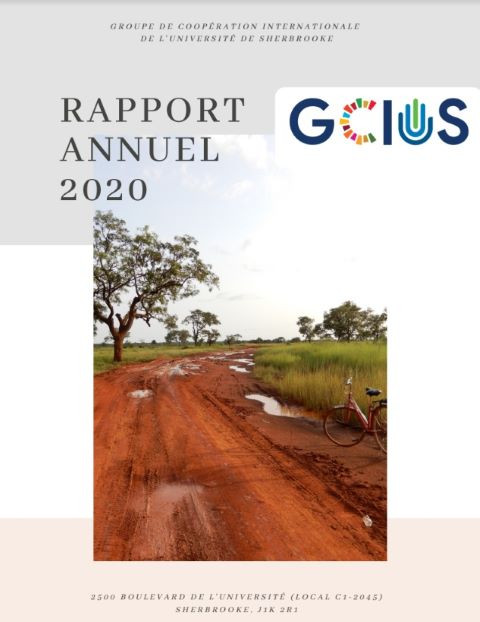 Rapport annuel 2020 Année de publication: 2020 Auteur institutionnel: Université de Sherbrooke. Groupe de Coopération Internationale Le GCIUS s'est donné pour mission de favoriser l'émergence d'initiatives de développement durable des communautés locales dans les pays d'intervention et des étudiant.e.s de l'UdeS, via des réseaux solidaires, inclusifs et dynamiques. Le GCIUS appuie les étudiant.e.s et les communautés locales dans la coconstruction de projets multidisciplinaires de développement durable visant l'amélioration des conditions d'existence auprès des communautés dans le besoin.
 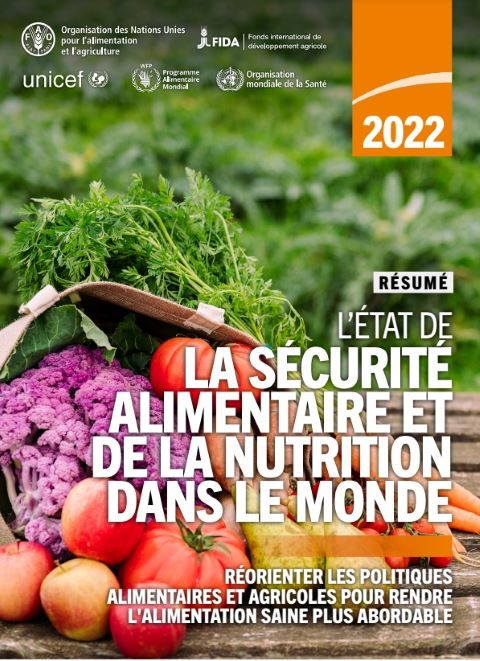 Security, Food and Nutrition in the World Année de publication: 2022 Auteur institutionnel: Food and Agriculture Organization of the United Nations (FAO) This report repeatedly highlights the intensification of the main factors of food insecurity and malnutrition: conflicts, climatic phenomena extremes, and economic shocks, the effects of which combine with those of the increase in some inequalities. The issue is not whether more trials are to come or not; it's about rather taking matters into their own hands with more courage and building resilience in the face of future shocks.
 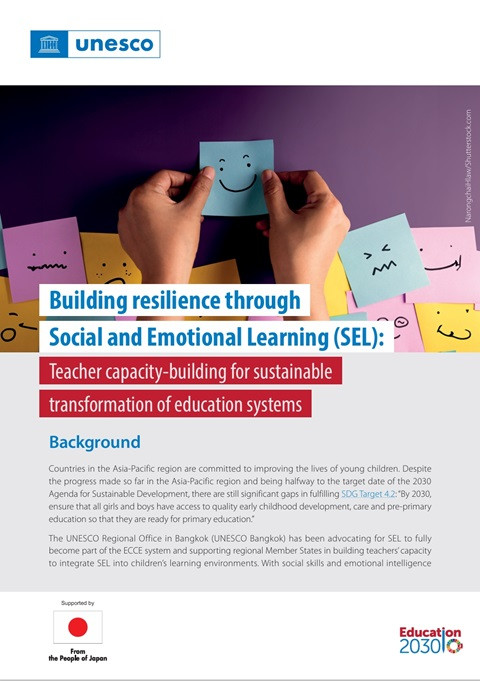 Building Resilience Through Social and Emotional Learning (SEL): Teacher Capacity-building for Sustainable Transformation of Education Systems Année de publication: 2024 Auteur institutionnel: UNESCO Bangkok Countries in the Asia-Pacific region are committed to improving the lives of young children. Despite the progress made so far in the Asia-Pacific region and being halfway to the target date of the 2030 Agenda for Sustainable Development, there are still significant gaps in fulfilling SDG Target 4.2: 'By 2030, ensure that all girls and boys have access to quality early childhood development, care and pre-primary education so that they are ready for primary education.' The UNESCO Regional Office in Bangkok (UNESCO Bangkok) has been advocating for SEL to fully become part of the ECCE system and supporting regional Member States in building teachers’ capacity to integrate SEL into children’s learning environments. With social skills and emotional intelligence taught in schools early, children will gain knowledge, skills, and attitudes to develop healthy identities, manage emotions, and achieve personal and collective goals. This can positively contribute to society and transformative resilience through enhancing civic engagement.
 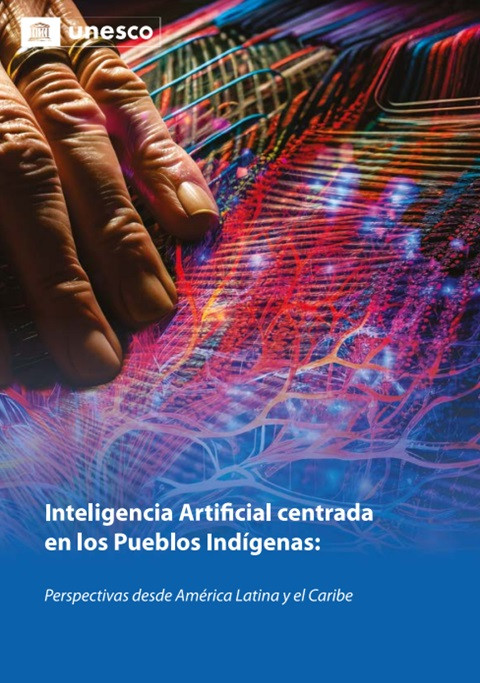 Inteligencia Artificial centrada en los Pueblos Indígenas: Perspectivas desde América Latina y el Caribe Année de publication: 2023 Auteur: Luz Elena González Zepeda | Cristina Elena Martínez Pinto Auteur institutionnel: UNESCO Montevideo Este reporte es una invitación para entender la necesidad de una IA participativa que respete y se enriquezca con la diversidad cultural, convirtiéndose en una herramienta para el desarrollo sostenible y la promoción de libertades fundamentales.Se presenta como un llamado a la acción para incorporar activa y respetuosamente las perspectivas de los pueblos indígenas en la IA, apuntando hacia una futura sabiduría colectiva que honre la riqueza de las experiencias y conocimientos humanos.Todo esto, sobre la base de la Recomendación sobre la Ética en la Inteligencia Artificial de la UNESCO, que funciona como una brújula de orientación ética y un cimiento normativo mundial, que permitirá desarrollar IA al servicio de la sociedad, con especial énfasis a los grupos poblacionales más vulnerables, y respetuosa de los derechos humanos.
 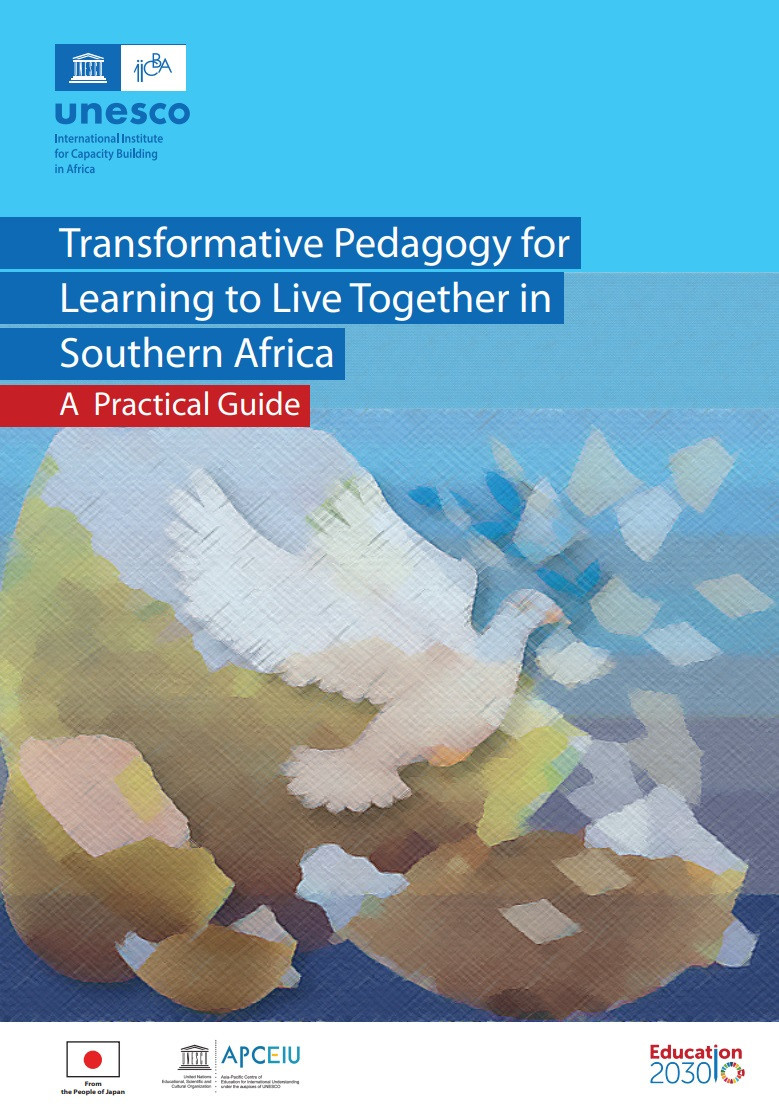 Transformative pedagogy for learning to live together in Southern Africa: a practical guide Année de publication: 2022 Auteur institutionnel: UNESCO International Institute for Capacity-Building in Africa (IICBA) IntroductionEducation is a powerful force for peacebuilding and transformation: it can contribute to changing individuals and communities, promoting a more just and equitable world fostering inclusion, social cohesion and ultimately contributing to creating peaceful societies. Teachers play a central role in the establishment of knowledge, attitudes and values among young people; they also empower them to propose alternative narratives, to engage with their communities and to contribute to building peaceful societies through their actions.This work can be done through subject areas, e.g., history, civic and moral education, art, music, sports etc., or through dedicated subjects. In any case, there is a need to equip teachers with specific skills and knowledge and this guide can also be used in science subjects.This work cannot begin or take place in the school environment only. It is important to establish a continuum between the school and its surrounding environment. This requires knowledge of the local context and mobilization of organizations and/or community stakeholders. All these aspects are building blocks of transformative pedagogy, which is the central element of this Guide. Chapter One provides concrete elements of analysis to help understand violence and its root causes in the SADC region and to identify prevention strategies. Chapter Two discusses the importance of education, highlighting key elements that contribute to education for peace building and transformation. Chapter Three focuses on the importance of fostering ethical reflections as spaces for dialogue and identity building to develop a sense of purpose and belonging. Chapter Four provides concrete approaches for teachers to adopt Transformative Pedagogy .Chapter Five highlights core competences for Learning to Live Together understood as the combination of knowledge, skills and attitudes essential to promote mutual understanding and social cohesion (the core competencies presented do not constitute an exhaustive list). Chapter Six discusses learners empowerment and participation in community engagement, equipping teachers with concrete tools and approaches to support learners as active change-makers to transform their communities. Chapter seven focuses on assessment as a key component of the transformative learning process allowing both teachers and learners to self-reflect, make connections, understand where they are in the learning process, how they arrived there and what questions they may still have. Chapter Eight introduces concrete activities for learners that can inspire teachers, as well as provide some ideas of initiatives that can be organised. A table at the beginning of Chapter Eight connects the relevant contents of the Guide with each activity presented.
  2022 대한민국 SDG4 이행현황 보고서 Année de publication: 2023 Auteur institutionnel: SDG4-교육2030협의체 | 유네스코한국위원회 SDG4-교육20230 협의체가 공동집필한 보고서로서, 2022년도 SDG4(교육분야 지속가능발전목표) 관련 국내외 동향을 소개하고 SDG4 세부목표별 국내 이행현황 및 과제를 분석하고 있다.
  L'éducation aux médias, à l'information et à la citoyenneté numérique - rapport sur l'exercice 2022-2023 Année de publication: 2023 Auteur institutionnel: Autorité de Régulation de la Communication audiovisuelle et numérique Pour la troisième année consécutive, l'Arcom présente un bilan rendant compte des actions entreprises par les médias audiovisuels en matière d'éducation aux médias, à l'information et à la citoyenneté numérique, et mettant en lumière des initiatives innovantes à l’échelle nationale ou européenne.For the third year in a row, Arcom is presenting a review reporting on actions undertaken by audivisual media, in the field of media education, information literacy, and digital citizenship, and highligthing innovative initiative on nationale and european scale.
 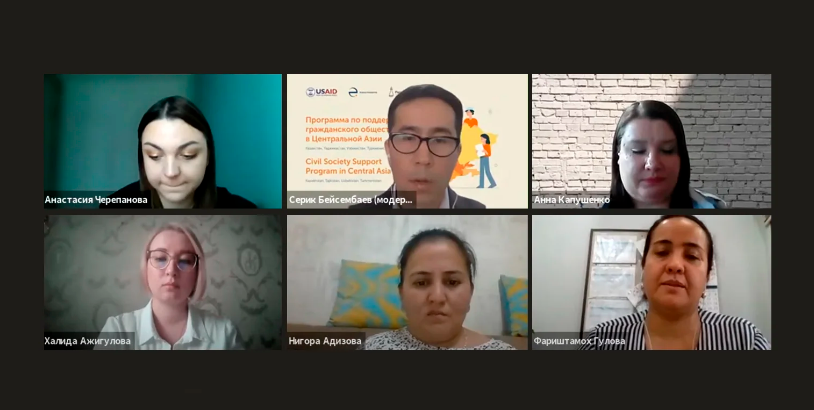 Борьба с насилием в отношении женщин в Центральной Азии: Новые законы, старые практики Année de publication: 2021 Auteur institutionnel: Исследовательский центр Paperlab (Казахстан) Проблема насилия в отношении женщин все еще остается острой проблемой в странах Центральной Азии. Согласно ООН, 18% женщин из стран этого региона сообщили, что лично сталкивались с бытовым насилием и дискриминацией. На дискуссионной онлайн-площадке PaperLab эксперты и исследователи вместе с представителями гражданского общества и государственных органов обсудили тему борьбы с гендерным насилием в контексте законодательных и программных мер, которые реализуются в странах Центральной Азии.
 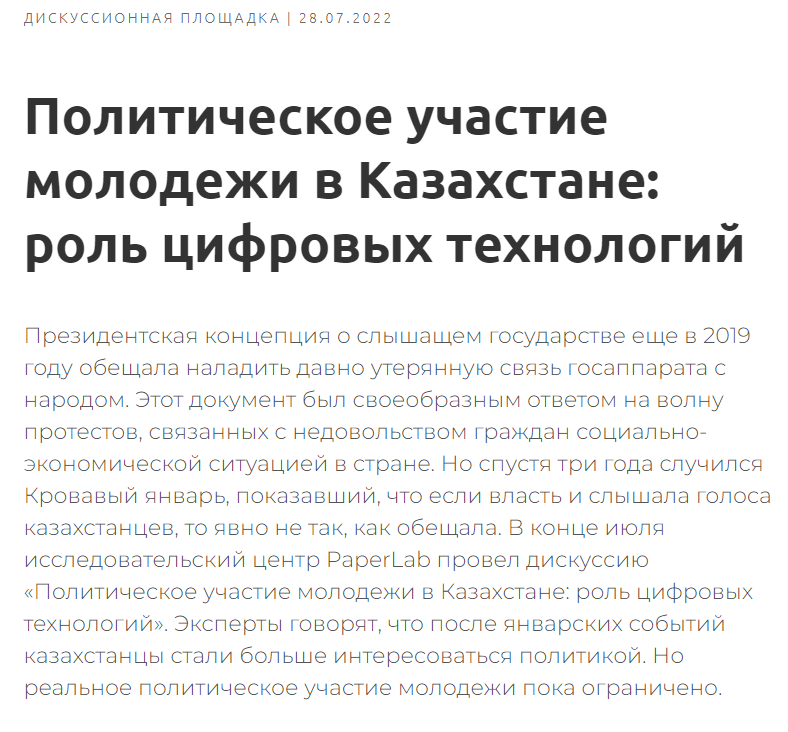 Political Participation of Young People in Kazakhstan: The Role of Digital Technologies Année de publication: 2022 Auteur institutionnel: Paperlab Research Center (Kazakhstan) At the end of July, the PaperLab Research Center held a discussion on "Political participation of youth in Kazakhstan: the role of digital technologies". Experts say that after the January events, Kazakhstanis became more interested in politics. But the real political participation of young people is still limited. Политическое участие молодежи в Казахстане: Роль цифровых технологий Année de publication: 2022 Auteur institutionnel: Исследовательский центр Paperlab (Казахстан) В конце июля исследовательский центр PaperLab провел дискуссию «Политическое участие молодежи в Казахстане: роль цифровых технологий». Эксперты говорят, что после январских событий казахстанцы стали больше интересоваться политикой. Но реальное политическое участие молодежи пока ограничено.