
Ressources
Explorez une large gamme de ressources sur le GCED afin d’approfondir votre compréhension et de renforcer vos activités de recherche, de plaidoyer, d’enseignement et d’apprentissage.
1,443 résultats trouvés
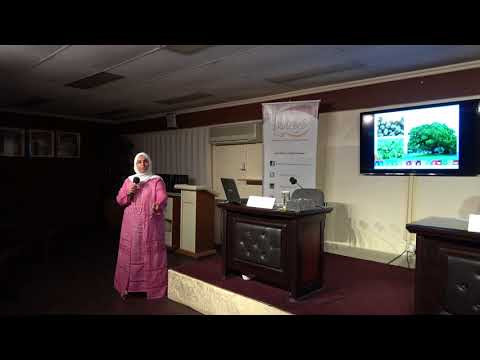 [Video] توطين أهداف التنمية المستدامة Année de publication: 2018 Auteur institutionnel: Akanoo cc الفيديو يتحدث عن كيفية توطين أهداف التنمية المستدامة في دولة البحرين. وقد بدأت المحاضرة بإعطاء خلفية تاريخية عن هذه الاهداف وكيف تم صياغتها بعد الاهداف الانمائية في الالفية الماضية. بعد ذلك تحدثت المحاضرة بالتفصيل عن الأهداف ال 17 التي أطلقتها الأمم المتحدة في نهاية 2015. ومن حيث توطين هذه الأهداف، تطرقت المحاضرة لبعض الاستراتيجيات الممكنة التي يمكن أن يتبعها الافراد والشركات والحكومة في البحرين لتوطين أهداف التنمية المستدامة في محيطهم.لقد أوصت المتحدثة بضرورة مشاركة جميع الافراد في المجتمع البحريني في تحقيق أهداف التنمية المستدامة وذللك للوصول للتنمية المستدامة في البحرين. وقد ناقشت المتحدثة ايضا التحديات التي تواجه البحرين حاليا في تحقيق أهداف التنمية المستدامة. وفي ضوء ذلكن أوصت المتحدثة بمجموعة من الأنشطة والتي من الممكن أن تساعد في رفع الوعي عند الشعب البحريني بخصوص تحقيق الأهداف. وفي الختام ناقشت المتحدثة كيف يمكن للبحرين أن توطن أهداف التنمية بما يخدم تنميتها المستدامة. [Video] Contextualizing Sustainable Development Goals Année de publication: 2018 Auteur institutionnel: Akanoo cc The Video is about a lecture talking about how contextualizing Sustainable Development Goals in Bahrain. To make the context, the lecturer started by describing how the Un reached to articulate the SDGs after the last MDGs. Then, the 17 goals were presented in details. In terms of localizing these SDGs, the lecturer gave some strategies on how individuals, companies and the government can implement these SDGs in their context. It is recommended that all members of the Bahraini society should participate in achieving the SDGs to reach to sustainable development. The lecturer also draw attention to some challenges facing Bahrain to achieve SDGs. To overcome these challenges, the lecturer suggested a number of activities to raise awareness among Bahraini people about the importance of participating in achieving SDGs. Finally, how Bahrain can contextualize SDGs is presented.
  The Sustainable Development Goals Report 2019 Année de publication: 2019 Auteur institutionnel: United Nations (UN) Four years after signing the 2030 Agenda for Sustainable Development, countries have taken action to integrate the Goals and targets into their national development plans and to align policies and institutions behind them. The Sustainable Development Goals Report 2019 uses the latest available data to track global progress on the SDGs and to take stock of how far we have come in realizing our commitments. The report shows that, while advances have been made in some areas, monumental challenges remain. The evidence and data spotlight areas that require urgent attention and more rapid progress to realize the 2030 Agenda’s far-reaching vision. Member States agree that these challenges and commitments are interrelated and call for integrated solutions. It is therefore imperative to take a holistic view of the 2030 Agenda and to identify the highest impact areas in order to target interventions. The most urgent area for action is climate change. If we do not cut record-high greenhouse gas emissions now, global warming is projected to reach 1.5°C in the coming decades. As we are already seeing, the compounded effects will be catastrophic and irreversible: increasing ocean acidification, coastal erosion, extreme weather conditions, the frequency and severity of natural disasters, continuing land degradation, loss of vital species and the collapse of ecosystems. These effects, which will render many parts of the globe uninhabitable, will affect the poor the most. They will put food production at risk, leading to widespread food shortages and hunger, and potentially displace up to 140 million people by 2050. The clock for taking decisive actions on climate change is ticking. The other defining issue of our time is increasing inequality among and within countries. Poverty, hunger and disease continue to be concentrated in the poorest and most vulnerable groups of people and countries. Over 90 per cent of maternal deaths occur in low- and middle-income countries. Three quarters of all stunted children live in Southern Asia and sub-Saharan Africa. People living in fragile States are twice as likely to lack basic sanitation, and about four times as likely to lack basic drinking water services as people in non-fragile situations. Youth are three times more likely to be unemployed than adults. Women and girls perform a disproportionate share of unpaid domestic work and lack autonomy in decision-making. Just as problems are interrelated, the solutions to poverty, inequality, climate change and other global challenges are also interlinked. Valuable opportunities exist to accelerate progress by examining interlinkages across Goals. For example, tackling climate change requires a shift to clean energy, reversing the trend in forest loss, and changing our production and consumption patterns. Promoting sustainable agriculture can help reduce both hunger and poverty, since close to 80 per cent of those who are extremely poor live in rural areas. Increasing access to safe drinking water, sanitation and hygiene can save millions of lives per year and improve school attendance. Improving proficiency in reading and mathematics of some 200 million children who are falling behind in sub-Saharan Africa will help them climb out of poverty and ultimately enable the region to better compete in the global marketplace. This report also highlights the importance of investing in data for the full implementation of the 2030 Agenda. Most countries do not regularly collect data for more than half of the global indicators. The lack of accurate and timely data on many marginalized groups and individuals makes them “invisible” and exacerbates their vulnerability. While considerable effort has been made to address these data gaps over the past four years, progress has been limited. Increased investment is urgently needed to ensure that adequate data are available to inform decision-making on all aspects of the 2030 Agenda. Towards that end, the Dubai Declaration, launched at the second World Data Forum in October 2018, outlines a demand-driven funding mechanism under Member States’ oversight that will respond quickly and efficiently to the priorities of national statistical systems.
  2018-2019 브릿지 프로그램 연차보고서 Année de publication: 2019 Auteur institutionnel: 유네스코한국위원회 국제사회는 지속가능발전목표 4번(SDG4)를 통해 2030년까지 모든 이들에게 포용적이고 공평한 양질의 교육을 보장하고, 평생학습의 기회가 증진되도록 노력하자는 교육 기치를 내세웠다.특히 SDG4는 아동의 초등교육 강화에 중심을 둔 '새천년개발목표' 2번(MDG2)과 모든 연령대의 기초교육에 초점을 둔 '모두를위한교육'(EFA)의 미완의 목표를 포괄함은 물론, 기초교육 이후의 교육(중등, 고등) 및 훈련(직업,기술)을 평생학습 차원에서 촉진함으로써 교육의 보편성을 강조하고 있다. 유네스코한국위원회의 브릿지 사업은 이러한 국제사회의 노력에 동참하며, 교육의 보편적 기본권이 확산될 수 있도록 돕기 위해, 전 세계적으로 교육 소외자가 집중되어 있는 사하라 이남 아프리카 지역과 남아시아 지역의 모든 연련대 교육 소외자들을 대상으로 교육권 강화에 이바지하고 있다. 브릿지 사업은 나이, 성별, 종교 그리고 사회적 배경으로 인해 공교육으로부터 배제된 이들이 교육을 받음으로써 자존감을 회복하고 삶의 질을 향상시킬 수 있게 도우며, 이러한 개인의 성장만이 궁극적으로 지역사회의 변화와 발전으로 이어진다는 확신을 갖고 있다.이 보고서에서는 브릿지 아프리카 프로그램, 브릿지 아시아 프로그램과 국별 프로젝트 및 성과를 확인할 수 있다.
  Results Report 2019 Année de publication: 2019 Auteur institutionnel: GPE The Global Partnership for Education (GPE) is a multi-stakeholder partnership and fund dedicated to improving education in the world’s poorest countries, and those with the most children out of school. Founded in 2002, the partnership is designed to harness the power of collaboration among developing countries, donor countries, civil society, foundations, the private sector and youth (represented through civil society organizations) to support inclusive and quality education for all.The partnership is now implementing GPE 2020, its strategic plan for the 2016-2020 period that outlines an ambitious course of action to achieve three strategic goals:Strategic Goal 1: Improved and more equitable student learning outcomes through quality teaching and learningStrategic Goal 2: Increased equity, gender equality and inclusion for all in a full cycle of quality education, targeting the poorest and most marginalized, including by gender, disability, ethnicity and conflict or fragilityStrategic Goal 3: Effective and efficient education systems delivering equitable, quality educational services for allThese efforts are aligned with and support Sustainable Development Goal 4, the world’s commitment to inclusive and equitable quality education for all. Rapport sur les résultats 2019 Année de publication: 2019 Auteur institutionnel: GPE Le partenariat met en oeuvre le plan stratégique GPE 2020, son plan stratégique pour la période 2016-2020, qui définit une série de mesures ambitieuses pour la réalisation des trois buts stratégiques suivants: But stratégique 1: Des résultats d’apprentissage meilleurs et plus équitables grâce à un enseignement et un apprentissage de qualité But stratégique 2: Renforcement de l’équité, de l’égalité des sexes et de l’inclusion pour tous dans un cycle complet d’enseignement de qualité, en donnant la priorité aux plus démunis et aux plus marginalisés, notamment en raison de leur sexe, leur handicap, leur appartenance ethnique ou parce qu’ils se trouvent dans une situation de conflit ou de fragilité But stratégique 3: Des systèmes éducatifs efficaces et efficients offrant des services d’éducation équitables et de qualité pour tous Ces efforts sont alignés sur l’objectif de développement durable 4, l’engagement mondial en faveur d’une éducation inclusive et équitable de qualité pour tous.
 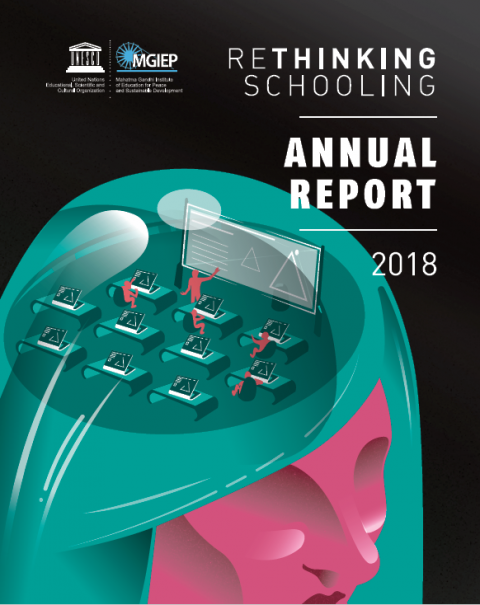 Rethinking schooling: annual report 2018 Année de publication: 2019 Auteur institutionnel: Mahatma Gandhi Institute of Education for Peace and Sustainable Development (MGIEP) Calls to gear up schools for the 21st century are ubiquitous today. Some Asian education systems are held up as models for an innovation-led utopian future. Across much of Asia, however, neither the reality of schooling nor the patterns of development with which it is associated give cause for blithe optimism. This study is informed by UNESCO’s commitment to realizing the Sustainable Development Goals (SDGs) through educational reform worldwide. Since its inception, UNESCO has championed a humanistic vision of education (UNESCO, 2015)—a vision today encapsulated in SDG 4.7. These ideals need to be strongly restated and defended in an era when educational debate has come to be framed by a narrowly economistic and instrumentalist agenda. Deriving urgent significance from this broader context, the Rethinking Schooling report analyses how far the ideals of SDG 4.7 are embodied in policies and curricula across 22 Asian countries (UNESCO MGIEP, 2017a). The report seeks to develop benchmarks against which future progress can be assessed. It also argues forcefully that the fundamental purposes of schooling need to be reconfigured, if the ideals to which the global community has subscribed are actually to be realized.
  Migration: la solidarité internationale contre le nationalisme xénophobe Année de publication: 2018 Auteur: Tina Robiolle Moul Le sommet qui vient de se tenir à Bruxelles les 28 et 29 juin, confirme l’entêtement des dirigeant·e·s européen·ne·s dans une politique du pire qui, loin d’être le fruit de maladresses face à l’idée d’une invasion imaginaire de personnes étrangères, s’apparente à une stratégie explicite de coercition des populations en adoptant sans réserve les positions de l’extrême droite. La politique migratoire européenne, à l’image de celle des pays membres, reste aveugle à une compréhension plus globale des migrations qui est celle de la solidarité internationale.
  مؤتمر ومعرض التنمية المستدامة Année de publication: 2018 Auteur institutionnel: Arab Internatiional يأتي تنظيم المؤتمر دعماً لتوجيهات السيد الرئيس عبد الفتاح السيسي لتحقيق رؤية مصر 2030في إستراتيجية التنمية المستدامة بما يحقق إقتصاد تنافس متوازن ومتنوع للإرتقاء بجودة حياه المصريين عن طريق إستثمار عبقرية المكان والإنسان مع الأعتماد علي الإبتكار والمعرفه والعدالة الإجتماعية .
 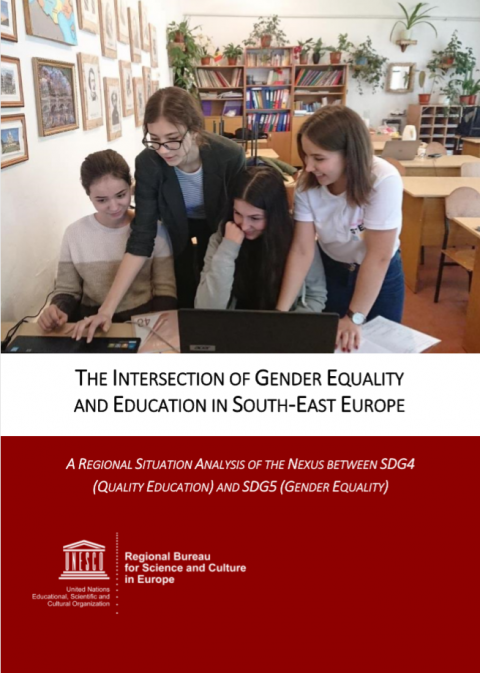 The Intersection of gender equality and education in South-East Europe: a regional situation analysis of the Nexus between SDG4 (Quality Education) and SDG5 (Gender Equality) Année de publication: 2019 Auteur institutionnel: UNESCO Venice This report focuses on highlighting both progress and persistent challenges.It does so by analyzing the current situation of gender equality in education, including gender parity in participation, education quality, and outcomes, aswell as issues related to gender equality in which education plays an important role, suchas policies that disproportionately affect women, early and unintended pregnancy, child marriage, and human trafficking. It relies on the most recent available data from the UNESCO Institute of Statistics (UIS), as well as supplemental data including from UNICEF, UN Women, and theOrganization for Economic Cooperation and Development(OECD), to descriptively analyze the rates for females and males, considering also progress over the last decade, and to identify where progress in gender equality has been made and whereactions are needed to ensure gender equality in and through education.