
Ressources
Explorez une large gamme de ressources sur le GCED afin d’approfondir votre compréhension et de renforcer vos activités de recherche, de plaidoyer, d’enseignement et d’apprentissage.
685 résultats trouvés
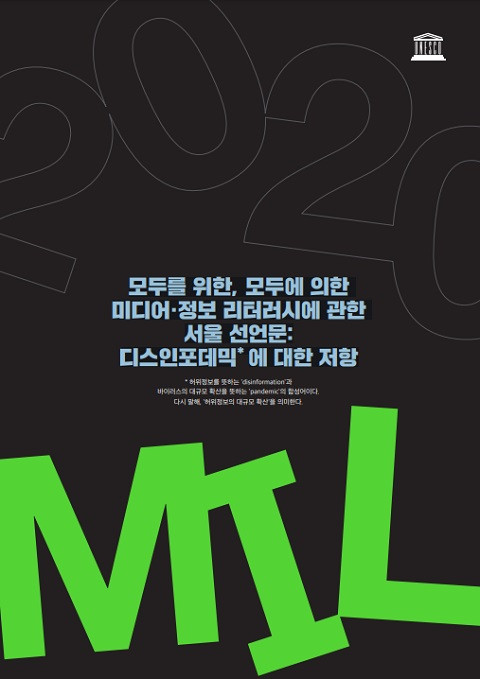 Seoul Declaration on Media and Information Literacy for Everyone and by Everyone: A Defence Against Disinfodemics Année de publication: 2020 Auteur institutionnel: UNESCO On the 10th anniversary of Global Media and Information Literacy Week, stakeholders from all over the world gave a resounding affirmation as to the urgency to strengthen people’s media and information literacy competencies. The number of celebratory events increased from one hundred events in 2019 to over three hundred events in 2020.The outcomes of the deliberations in the Feature Conference and Youth Agenda Forum have been immortalized in the Seoul Declaration on Media and Information Literacy for Everyone and by Everyone: A Defence against Disinfodemics. This Seoul Declaration benefited from a consultation with close to one thousand registered participants.Through the Seoul Declaration, partners and participants called for media and information literacy for all. They:Emphasized that “media and information literacy (MIL) is a core competency for addressing the disinfodemic, and that MIL also contributes to access to information, freedom of expression, protection of privacy, prevention of violent extremism, promotion of digital security and combating hate speech and inequality”.Recognized “UNESCO’s effort to promote a Global MIL Cities Framework to stimulate creative learning about MIL in city spaces and the involvement of non-traditional actors in promoting MIL”.Called on duty bearers at the national to city levels to “commit to advancing ‘Media and Information Literacy for Everyone and by Everyone’ through policy and resource allocation across all relevant areas, including education, health, elections, child protection, climate, gender equality, governance and regulation, to mention some examples”.Urged technological intermediaries to “play an accountable role, through institutionalized multi-stakeholder systems, as part of the social endeavor to tackle disinformation and to build communities that are media and information literate”.Requested UNESCO, in cooperation with other UN Agencies, to “maintain a focus on inclusion of disadvantaged groups in MIL engagements, and to continue to foster gender equality in relation to MIL.” 모두를 위한, 모두에 의한 미디어·정보 리터러시에 관한 서울 선언문: 디스인포데믹에 대한 저항 Année de publication: 2020 Auteur institutionnel: 유네스코 2020년 글로벌 미디어·정보리터러시(MIL) 주간 대표회의 및 청년포럼의 결과문서로 채택된 서울선언문이다. 본 선언문에서는 MIL의 중요성을 강조하고, 각각의 이해관계자가 MIL 역량 증진을 위해 실천할 수 있는 구체적인 행동을 담고 있다.
 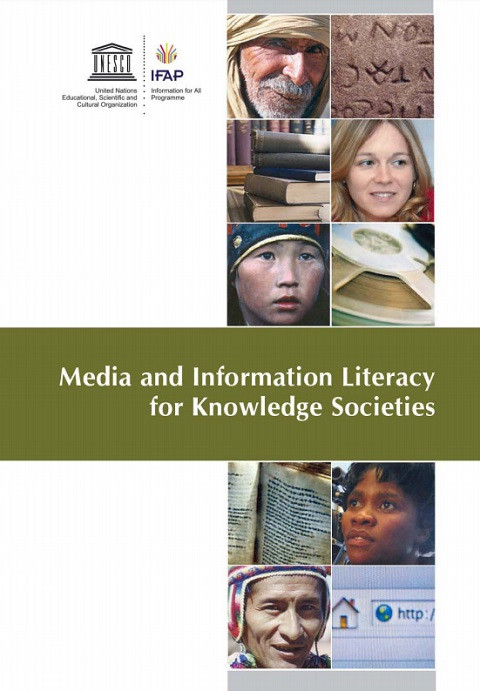 Media and Information Literacy for Knowledge Societies Année de publication: 2013 Auteur institutionnel: Interregional Library Cooperation Centre | UNESCO This book includes communications by the participants and other materials of the International Conference on Media and Information Literacy for Knowledge Societies (Moscow, Russian Federation, 24–28 June, 2012), that offered a unique opportunity to identify the key existing challenges in the field, to outline policies and professional strategies for the advocacy of media and information literacy (MIL), to promote best practices and strengthen international cooperation among various stakeholders. It also contains the Media and Information Literacy Competencies Catalogue prepared by The Modern Poland Foundation (Warsaw, Poland).
 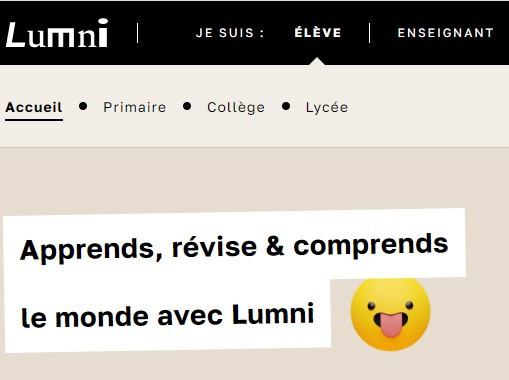 Lumni Auteur institutionnel: Institut national de l'audiovisuel (INA) | France Télévisions Lumni est l’offre de tous les acteurs de l’audiovisuel public français au service de l’éducation pour les élèves et les enseignants. Cette offre donne accès à la culture, au savoir et à la connaissance pour tous les enfants de 3 à 20 ans et couvre l’ensemble des disciplines scolaires de la maternelle à la terminale. Tous les programmes sont indexés par niveau, matière et thématique.Avec plus de 12 000 vidéos, audios, jeux, dossiers, ce catalogue propose :• aux élèves, seuls ou accompagnés, de développer leur culture générale, de prolonger leurs cours, de comprendre le monde en apprenant autrement et de devenir des citoyens éclairés capables de décrypter l’actualité ;• aux enseignants, d’enrichir et de préparer leurs cours ;Avec une proposition éditoriale adaptée à chaque univers, Lumni enrichit régulièrement son offre avec des séries webnatives, des cours, des jeux, des quiz, ainsi que des programmes et des opérations à forte valeur éducative. Lumni is the educational offering for students and teachers from all French public broadcasters. This offer provides access to culture, knowledge and learning for all children aged 3 to 20, and covers all school subjects from kindergarten to the end of secondary school. All programs are indexed by level, subject and theme.With more than 12,000 videos, audios, games and dossiers, this catalog offers:• students, alone or accompanied, to develop their general knowledge, extend their lessons, understand the world by learning differently, and become enlightened citizens capable of deciphering current events;• teachers, to enrich and prepare their lessons;With an editorial proposal adapted to each universe, Lumni regularly enriches its offer with webnative series, courses, games, quizzes, as well as programs and operations with high educational value.
 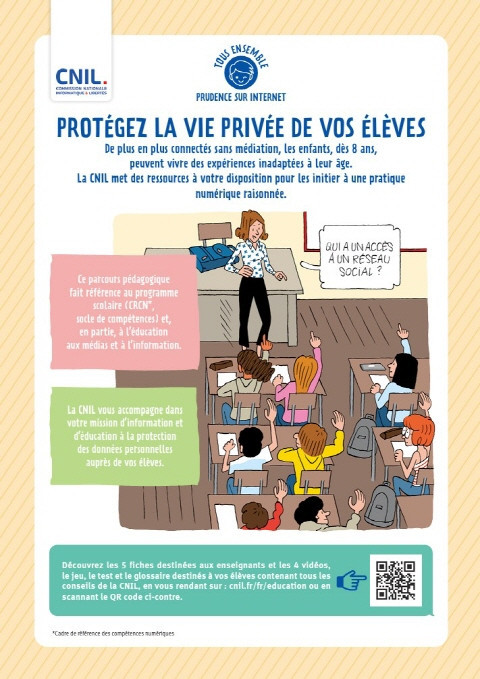 Protégez la vie privée de vos élèves Année de publication: 2022 Auteur institutionnel: Commission nationale de l'informatique et des libertés (CNIL) La CNIL propose ce dossier pédagogique pour accompagner les enseignants dans leur mission d’information et d’éducation à la protection des données personnelles auprès de leurs élèves. Sous la forme d’un livret, découvrez cinq fiches adaptées au programme scolaire des cycles 2 et 3 (6 à 10 ans). Chacune présente le déroulé d’une séance de travail en classe en plusieurs temps dont un consacré au jeu. The CNIL offers this educational pack to support teachers in their mission to inform and educate their students about personal data protection. In the form of a booklet, discover five fact sheets adapted to the school curriculum for cycles 2 and 3 (ages 6 to 10). Each one outlines a class work session in several stages, one of which is devoted to games.