
Ressources
Explorez une large gamme de ressources sur le GCED afin d’approfondir votre compréhension et de renforcer vos activités de recherche, de plaidoyer, d’enseignement et d’apprentissage.
1,445 résultats trouvés
 Conférence mondiale de l'UNESCO sur l'éducation en vue du développement durable, 31 Mars-2 Avril 2009, Bonn, Allemagne: actes Année de publication: 2009 Auteur institutionnel: German Federal Ministry of Education and Research (BMBF) | German Commission for UNESCO As the United Nations Decade of Education for Sustainable Development (DESD) approached its midpoint, the “UNESCO World Conference on Education for Sustainable Development – Moving into the Second Half of the UN Decade” was held from 31 March to 2 April 2009 in Bonn, Germany. It brought together 900 participants from 147 countries, among them 49 Ministers and Deputy-Ministers. Participants included representatives of UNESCO Member States, UN agencies, civil society organizations, education institutions, youth, and the private sector, as well as individual experts. The Conference was organized by UNESCO and the German Federal Ministry of Education and Research, in cooperation with the German Commission for UNESCO. The programme was developed in consultation with an international advisory group.
  IIEP-UNESCO 12th Medium-Term Strategy: 2026–2029 Année de publication: 2026 Auteur institutionnel: UNESCO International Institute for Educational Planning (IIEP) The 2026-2029 Medium-Term Strategy of the UNESCO International Institute for Educational Planning provides a vision for transforming educational planning into tangible results for education systems across the globe. Building on more than 60 years of experience, the Strategy puts the focus not only on policy and plan design, but on collective and agile implementation.
  Media Literacy in the Library: A Guide for Library Practitioners Année de publication: 2020 Auteur institutionnel: American Library Association (ALA) | Institute of Museum and Library Services As information providers and hubs for lifelong learning, libraries have always been resources for helping communities develop media literacy skills. Now, in the midst of a global pandemic, and in an age when we increasingly rely on digital media for information and communication, these critical thinking skills are more important than ever. The American Library Association (ALA), working with talented thought leaders across the library and media literacy sectors, has created Media Literacy in the Library: A Guide for Library Practitioners to help library workers prepare for day-to-day interactions like the imagined reference desk one above.In this guide, we offer resources and ideas to plan programs and activities to teach media literacy skills to adults and also to integrate these skills into programming you already offer at your library. This guide has been created for out-of-school adult audiences, who library workers will generally meet in a public library context.
  Access and Opportunity for All: How Libraries Contribute to the United Nations 2030 Agenda Année de publication: 2020 Auteur institutionnel: International Federation of Library Associations and Institutions (IFLA) The inclusion of libraries and access to information in national and regional development plans will contribute to meeting the global United Nations 2030 Agenda for Sustainable Development.In support of this goal, IFLA has published a booklet of examples and recommendations for policymakers demonstrating the contribution of libraries to the UN Sustainable Development Goals (SDGs).The booklet includes stories from all types of libraries in many countries around the world.
  How to Engage Citizens with the Sustainable Development Goals Année de publication: 2020 Auteur institutionnel: Finnish Development NGOs Fingo The purpose of this booklet is to share reflections, successes and learning outcomes from the FRAME, VOICE, REPORT! (FVR) project.It can be used to find inspiration from other civil society organisations (CSOs) working on the same topics and themes you do, but also as a source for ideas for new ways of looking at old issues.This booklet covers both the more theoretical approaches and concrete cases from CSOs across Europe. These cases are examples of the many projects funded by the FVR.The project had its roots in the previous successes and tried and tested approaches of the partner organisations. The aim of FVR! was to secure resources and develop the value-based, high quality work of civil society organisations. The second aim was to enable smaller organisations to learn about EU project funding and to build capacity on how to conduct high quality global citizenship education and development communications. Finally, the overarching aim of the project was to engage EU citizens with the SDGs. Fostering safer and resilient communities: a natural disaster preparedness and climate change education program Année de publication: 2009 Auteur institutionnel: UNESCO Jakarta The Asia and the Pacific region is vulnerable to many natural disaster and expected impacts from climate change. In 2006, 74% of people killed by natural disasters were in Asia, with Afghanistan, India, Indonesia, Pakistan, the Philippines, and Vietnam among the countries most badly affected. Natural disasters such as windstorms, floods, droughts, earthquakes in combination with human-induced conditions such as deforestation, pollution, soil erosion collectively contribute to serious challenges for communities and governments. Climate change impacts are imminent and inevitable. The consensus among natural and social scientists, economists, and policymakers is that climate change is the most important challenge that this planet faces. It is pervasive, touching on every facet of the environment and human life including the environment, economy, transportation, communication, food production, and health. The temporal and geographic scale is wide. The projected economic, health, and societal costs put forth by experts are extraordinary. For example, the total economic cost of climate change threats could be an annual loss of 6-7% of Southeast Asian countries’ GDP by the end of the century, and the Pacific sub-region will see a sea-level rise of 0.19-0.58 meter by 2100 severely changing the lives of more than 50% of the people that live within 1.5 km of the shoreline leading to relocation, water and power shortages, and submerged infrastructure. Climate change impacts in Asia and the Pacific is particularly serious because of the fact that: 1) over 60% of the global population reside in Asia and the Pacific; 2) it has the most extensive coastline of any geographic region; and, 3) many of the world’s largest cities are located along Asian coasts. The impact of climate change in sea level rise would impact small island states such as the Maldives and Kiribati, and many of Asia’s largest coastal cities, such as Jakarta, Bangkok, Manila, Shanghai, and Ho Chi Minh City. Tens of millions of people in Asia may have to be resettled. Further, the expected greater intensity of cyclones and typhoons could have a larger impact than before on Bangladesh, China, India, Vietnam, and the Philippines, whose coastal areas already encounter among the world’s worst weather-related disasters year after year. Parts of many countries in Asia, including Northwestern India, Western China, and almost all of Pakistan, are already suffering from shortages of water, as well as land degradation and desertification, which will be further exacerbated by climate change. The World Conference on Disaster Reduction held in January 2005 in Kobe, Japan, adopted the Framework for Action 2005-2015: Building the Resilience of Nations and Communities to Disasters (referred as the “Hyogo Framework for Action” – HFA). The framework emphasizes the need to understand the linkages between disaster risk reduction and climate change adaptation, and that stakeholders work toward reducing disaster vulnerabilities of communities by helping them build their capacity to deal with disasters. Favoriser des collectivités sûres et solides: un programme d'éducation à la préparation aux catastrophes naturelles et le changement climatique Année de publication: 2009 Auteur institutionnel: UNESCO Jakarta L'Asie et la région du Pacifique est vulnérable à de nombreuses catastrophes naturelles et les impacts attendus du changement climatique. En 2006, 74% des personnes tuées par des catastrophes naturelles ont été en Asie, avec l'Afghanistan, l'Inde, l'Indonésie, le Pakistan, les Philippines et le Vietnam parmi les pays les plus durement touchés. Les catastrophes naturelles telles que les tempêtes, les inondations, les sécheresses, les tremblements de terre en combinaison avec des conditions d'origine humaine telles que la déforestation, la pollution, l'érosion des sols contribuent collectivement aux défis graves pour les communautés et les gouvernements. les impacts du changement climatique sont imminente et inévitable. Le consensus entre les sciences naturelles et sociales, les économistes et les décideurs est que le changement climatique est le défi le plus important que cette planète est confrontée. Il est omniprésent, touchant à toutes les facettes de l'environnement et de la vie humaine, y compris l'environnement, l'économie, le transport, la communication, la production de l'alimentation et de la santé. L'échelle temporelle et géographique est large. La projection économique, la santé et les coûts sociaux mis en avant par les experts sont extraordinaires. Par exemple, le coût économique total des menaces du changement climatique pourrait être une perte annuelle de 6-7% du PIB des pays d'Asie du Sud-Est de la fin du siècle, et la sous-région du Pacifique verra une élévation du niveau de la mer de 0.19- 0,58 mètre d'ici 2100 modifiant gravement la vie de plus de 50% des personnes qui vivent à moins de 1,5 km de la côte menant à des pénuries de réinstallation, de l'eau et d'énergie, et l'infrastructure submergée. les impacts du changement climatique en Asie et dans le Pacifique est particulièrement grave en raison du fait que: 1) plus de 60% de la population mondiale réside en Asie et dans le Pacifique; 2) il a le littoral le plus étendu de toute région géographique; et 3) plusieurs des plus grandes villes du monde sont situés le long des côtes d'Asie. L'impact du changement climatique en élévation du niveau marin aurait un impact sur les petits États insulaires comme les Maldives et Kiribati, et bon nombre des plus grandes villes côtières d'Asie, telles que Jakarta, Bangkok, Manille, Shanghai, et Ho Chi Minh-Ville. Des dizaines de millions de personnes en Asie peuvent être réinstallés. En outre, la plus grande intensité attendue des cyclones et typhons pourrait avoir un impact plus important que jamais sur le Bangladesh, la Chine, l'Inde, le Vietnam et les Philippines, dont les zones côtières déjà rencontrer parmi les plus liés aux conditions météorologiques catastrophes année du monde après année. Pièces de nombreux pays d'Asie, y compris le Nord-Ouest de l'Inde, la Chine occidentale, et la quasi-totalité du Pakistan, souffrent déjà d'une pénurie d'eau, ainsi que la dégradation des terres et la désertification, qui sera encore aggravé par le changement climatique. La conférence mondiale sur la prévention des catastrophes, tenue en Janvier 2005 à Kobe, au Japon, a adopté le Cadre d'action 2005-2015: Renforcer la résilience des nations et des collectivités face aux catastrophes (dénommé le «Cadre d'action de Hyogo» - HFA). Le cadre met l'aCECnt sur la nécessité de comprendre les liens entre la réduction des risques et adaptation au changement climatique, et que les parties prenantes travaillent en vue de réduire la vulnérabilité aux catastrophes des communautés en les aidant à renforcer leur capacité à faire face aux catastrophes.
 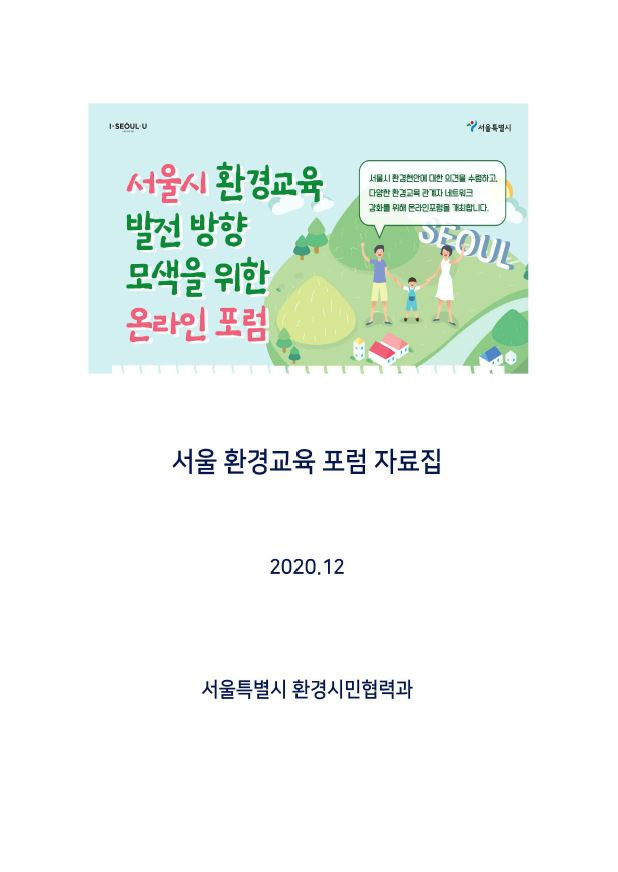 서울시 환경교육 발전 방향 모색을 위한 온라인 포럼: 서울 환경교육 포럼 자료집 Année de publication: 2020 Auteur: 장미정 | 권보경 | 박수진 | 안창연 | 이혜진 | 지혜성 | 최지선 Auteur institutionnel: 서울시 환경시민협력과 | 모두를위한환경교육연구소 이 자료집은 <서울시 환경교육 발전 방향 모색을 위한 온라인 포럼>의 일환으로 제작되었습니다. 포럼 동영상은 유튜브(www.youtube.com)에서 ‘서울시 환경교육 발전 방향 모색을 위한 온라인 포럼’을 검색하면 보실 수 있습니다. [자료출처: (사)환경교육센터]
  문화다양성협약 국내 이행을 위한 논의: 유튜브에서 AI까지, 21세기 한국에서의 문화다양성 Année de publication: 2020 Auteur: 김재인 | 염신규 | 이광석 | 이동연 | 이상욱 | 홍성수 | 황승흠 Auteur institutionnel: 대한민국 문화체육관광부 | 한국문화예술위원회 | 유네스코한국위원회 「문화다양성협약 국내 이행을 위한 논의 - 유튜브에서 AI까지, 21세기 한국에서의 문화다양성」는 모두 세 차례에 걸쳐 진행된 전문가회의에서 각 분야 전문가들이 발표하고 토론한 내용을 담은 종합보고서입니다. 올해는 문화다양성협약의 이행과 관련된 이슈들 중 특히 디지털플랫폼의 급부상, 인공지능 기술의 급격한 발달에 초점을 두어 논의하는 한편, 우리들의 일상을 송두리째 바꿔놓은 코로나19가 낳은 불안과 공포, 이로 인한 적대감이 초래한 소외와 고립, 혐오와 갈등의 문제를 짚어보았습니다. 전문가회의에서 나온 전문가들의 진단과 논의가 앞으로 한국사회에서 문화다양성협약 이행 관련 의제를 주도하는 데 있어서 필요한 비전과 전략 수립에도 기여하기를 기대합니다.
  Towards More Gender Equality in Sport: Recommendations and Action Plan From the High Level Group on Gender Equality in Sport (2022) Année de publication: 2022 Auteur institutionnel: European Commission | European Union (EU) Gender equality is a fundamental European Union (EU) principle. Enshrined in the Treaties, it is something the EU is actively trying to achieve – most recently through its Gender Equality Strategy 2021-2025. The Strategy aims to give women, men, girls and boys, in all their diversity, the freedom to pursue their chosen path in life and equal opportunities to thrive and to participate in and lead European society. Looking back at the steps already taken, the ‘Gender equality in sport – Proposal for strategic actions 2014-2020’ has certainly led to achievements, but the pace of reforms needs to be accelerated. Firstly, the principle of gender equality now underpins all actions funded under Erasmus+ Sport and projects supporting women’s sport are actively encouraged. Secondly, awareness raising is at the core of EU action in this field, notably through studies or discussions, such as within the Commission Expert Group on Good Governance. Finally, initiatives such as the annual #BeInclusive EU Sport Awards recognise those organisations using sport to increase social inclusion, including gender equality. In 2020, Commissioner Gabriel announced the setting up of an expert group with the aim of discussing the way forward and proposing future actions in the area of gender equality in sport to the European Commission, EU Member States and sports organisations. The work of the experts will lead to the implementation of concrete actions at local, national and European level. This report is the result of the work of the European Commission High-Level Group (HLG) on Gender Equality in Sport. The 15 members of the HLG were appointed in December 2020. Work began in February 2021 and was completed in December 2021. Meetings focused on six areas of engagement identified by the experts. Scientists and practitioners shared findings of their research and good practices. Each meeting was followed by working sessions to summarise the presentations and formulate recommendations.