
Ressources
Explorez une large gamme de ressources sur le GCED afin d’approfondir votre compréhension et de renforcer vos activités de recherche, de plaidoyer, d’enseignement et d’apprentissage.
950 résultats trouvés
 دور التعليم في تعزيز ثقافة التعايش السلمي وتكريس قيم المواطنة في سياق مجتمع ما بعد الحداثة Année de publication: 2019 Auteur: Lilia Bensouilah Auteur institutionnel: Research & Development of Human Resources Center REMAH تركز الورقة على تحليل دور التعليم وبحث المجهودات العالمية والمساعي الدولية في سياق مجتمعي لما بعد الحداثة نحو تعزيز ثقافة التعايش السلمي وتكريس قيم المواطنة بما يتوافق مع المنظور الحقوقي الإنساني، وما ينبثق عنه من احترام وتقبل لتعددية واختلاف المذاهب والأديان والأيديول وجيات والثقافات بعيدا عن كل مظاهر التعصب الفكري المذهبي والعرقي والذي يمكن أن يهيأ بيئة محفزة لنشوب النزاعات المسلحة والصراعات المدمرة المنتهكة الكيان الحقوقي للبشرية قاطبة.
  Intolerance and Its Relationship to Extremism and Violence Année de publication: 2017 Auteur: Jad Al-Karim Al-Jabaei | Aladdin Zaatari | Karim Abu Halawa Auteur institutionnel: Damascus Center for Research and Studies This document is a set of research papers discussing intolerance and its relationship to extremism and violence. In this production, the researchers tried to shed light on one of the issues facing societies, which is intolerance. التعصب وعلاقته بالتطرف والعنف Année de publication: 2017 Auteur: Jad Al-Karim Al-Jabaei | Aladdin Zaatari | Karim Abu Halawa Auteur institutionnel: Damascus Center for Research and Studies مجموعة من الأوراق البحثية تناقش التعصب وعلاقته بالتطرف والعنف. حاول الباحثون في هذا الانتاج تسليط الضوء على واحد من القضايا التي تواجه المجتمعات وهو التعصب.
  The Role of the Teacher in Spreading the Culture of Peace among Secondary School Students in Riyadh Année de publication: 2015 Auteur: Ali bin Saad Al-Qahtani Auteur institutionnel: Fayoum University The study aimed to identify the role of the teacher in spreading the culture of peace among secondary school students in the city of Riyadh, and to clarify the statistically significant differences among the sample members in relation to the role of the teacher in spreading the culture of peace among secondary school students in Riyadh from the point of view of students and teachers. The study population included all day public high school students and teachers in the city of Riyadh, which numbered (51044) students and (3564) teachers. دور المعلم في نشر ثقافة السلام لدى طلاب المرحلة الثانوية بمدينة الرياض Année de publication: 2015 Auteur: Ali bin Saad Al-Qahtani Auteur institutionnel: Fayoum University هدفت الدراسة إلى التعرف على دور المعلم في نشر ثقافة السلام لدى طلاب المدارس الثانویة في مدینة الریاض، وتوضیح الفروق ذات الدلالة الإحصائیة أفراد العینة بالنسبة لدور المعلم في نشر ثقافة السلام لدى طلاب المدارس الثانویة بالریاض من وجهة نظر الطلاب والمعلمین. وشمل مجتمع الدراسة جمیع طلاب ومعلمي المرحلة الثانویة العامة الحكومیة النهاریة بمدینة الریاض، والبالغ عددهم ( ٥١٠٤٤ ) طالبًا و( ٣٥٦٤ ) معلمًا، وطبقت الدراسة على عینة عشوائیة عنقودیة، تكونت من ( ٦٠٠ ) طالبًا، و( ٣٦٠ ) معلمًا.
  Inaugural Meeting of the GCED Actors' Platform: Final Report Année de publication: 2020 Auteur institutionnel: APCEIU This final report gives an overview of discussions and outcomes from the “Inaugural Meeting of the GCED Actors’ Platform” on 2 September 2019 in Seoul, Republic of Korea, held back-to-back with the 4th International Conference on GCED (3-4 September 2019, Seoul) In line with the call for closer collaboration on GCED inter-regionally, the GCED Actors’ Platform was launched by UNESCO Headquarters and APCEIU in 2019. Convening regional coordinators and different partners working on GCED, the “Inaugural Meeting of the GCED Actors’ Platform” provided an open space for the participants to discuss ways to coordinate activities and promote synergies.The regional representatives have imparted their own experiences and challenges on the ground and shared best practices of facilitating GCED.
 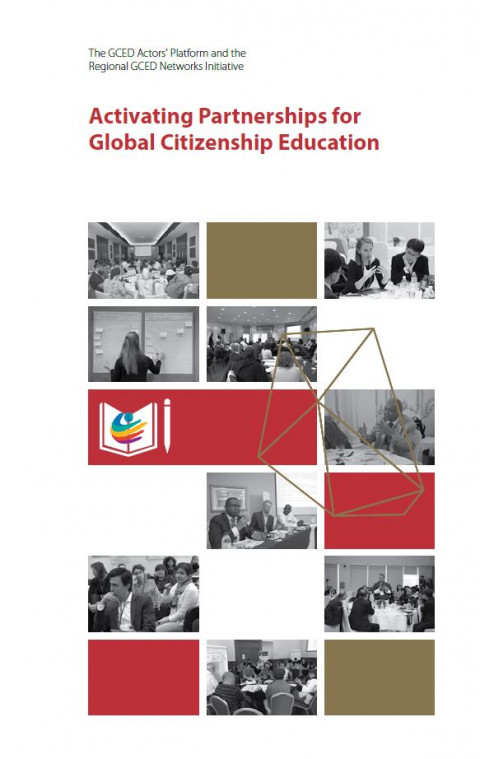 The GCED Actors' Platform and the Regional GCED Networks Initiative: Activating Partnerships for Global Citizenship Education Année de publication: 2020 Auteur institutionnel: APCEIU This brief publication introduces and summarizes the flagship GCED Network initiatives supported by APCEIU implemented globally and regionally.UNESCO Headquarters and APCEIU co-convened the launch of the GCED Actors’ Platform in which gathered key partners across the globe and representing five Regional GCED Networks. These five Regional GCED Networks include Sub-Saharan Africa, Arab States, Asia-Pacific, Europe and North America, and Latin America and the Caribbean are formed to identify regional priorities and implement regional strategies to promote GCED. The publication also showcases successful independent activities by organizations part of the GCED Network initiative.
  GCED Curriculum Development and Integration Project (Lebanon): 2021 Final Report Année de publication: 2021 Auteur institutionnel: Center for Educational Research and Development (CRDP) | مركز آسيا والمحيط الهادي للتربية من أجل التفاهم الدولي (APCEIU) This resource is a compiled documentation of the final outcomes of the Center for Educational Research and Development (CRDP), Lebanon and APCEIU’s joint partnership to develop the GCED curriculum across both primary and secondary school levels. The report includes the materials created and used to evaluate, monitor, and execute the GCED curriculum, as well as the documentation of the process of its creation. It is written in both English and Arabic.In the compilation, you may find:- Report on the Implementation of the Project Stages- Digital Activities for GCED Integration in the Civics and National Education Curriculum: Grade 1 - 12 (ARA)- Digital Activities for GCED Integration in the Civics and National Education Curriculum: Grade 1 - 12 (ENG)- Teacher’s Guide: Grade 1 - 12 (ARA)- Teacher’s Guide: Grade 1 - 12 (ENG)- Training of Trainers (TOT): TOT Materials (ENG; ARA)- The Project of Training the Trainers on Global Citizenship Education and Integrating it into the Pre-university Educational Curricula: Preamble (ENG)- Technical Cards (ENG; ARA)
 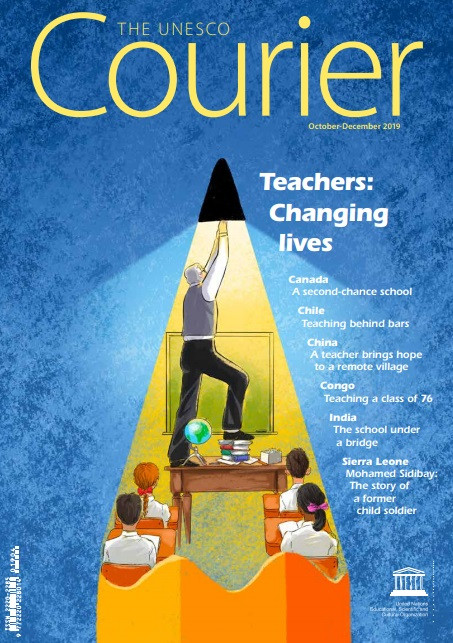 Teachers: changing lives (The UNESCO Courier no. 4, October-December 2019) Année de publication: 2019 Auteur institutionnel: UNESCO Certainly, everyone recognizes the key role teachers play. On a personal level, we can all name at least one teacher who made a difference – sometimes to such an extent that it redirected our whole lives. At the international level, the United Nations Sustainable Development Goals (SDGs), Goal 4 in particular, recognize the importance of teachers in the implementation of the Sustainable Development Agenda by 2030. Yet, the profession is being undermined. The development of cognitive neuroscience and the many applications of new technologies in the field of education are forcing the profession to adapt and reinvent itself. Ces profs qui changent le monde (Le Courrier de l'UNESCO 4, octobre-décembre 2019) Année de publication: 2019 Auteur institutionnel: UNESCO Certes, tout le monde reconnaît le rôle clé que jouent les enseignants. À titre personnel, chacun peut citer le nom d’au moins un professeur qui a compté, parfois au point de réorienter une vie entière. Sur le plan international, les Objectifs de développement durable (ODD) des Nations Unies, en particulier l’Objectif no 4, reconnaissent l’importance des enseignants dans la mise en œuvre du Programme de développement durable à l’horizon 2030. Pourtant, la profession est mise à mal. Le développement des neurosciences cognitives, les multiples applications des nouvelles technologies dans le domaine de l’éducation obligent la profession à s’adapter, se réinventer.