
Ressources
Explorez une large gamme de ressources sur le GCED afin d’approfondir votre compréhension et de renforcer vos activités de recherche, de plaidoyer, d’enseignement et d’apprentissage.
3,790 résultats trouvés
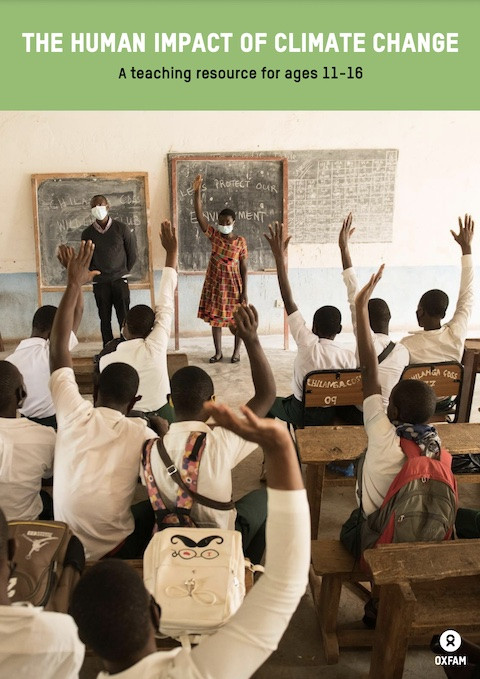 The Human Impact of Climate Change: A Teaching Resource for Ages 11-16 Année de publication: 2021 Auteur institutionnel: Oxfam GB These activities for ages 11-16 explore the human impact of the climate emergency and provide new spaces, approaches and opportunities for climate education and social action. This is in response to the call to action by Teach the Future (2020) who presented research on the current state and future of climate education in the UK. Their report discovered an overwhelming demand for climate education in schools alongside low levels of teacher knowledge about how to effectively deliver climate education and a narrow range of curriculum areas where it is taught. This resource frames the climate emergency as a human rights and people-centred issue and supports teachers to promote a sense of agency and empowerment within young people. This in turn is recognised as one strategy to help young people manage eco-anxiety, as well as disillusionment and disengagement with climate issues. This resource is suitable as both a curriculum resource and to inform social action by young people (for example, in GCSE Citizenship Studies)
  톡(Talk)쏘는 다문화와 세계시민교육(세계시민교육은 무엇인가) Année de publication: 2022 Auteur institutionnel: 중앙선거관리위원회 톡(Talk)쏘는 다문화와 세계시민교육한국선거방송과 함께 알아보는 선거이야기'세계시민교육은 무엇인가?'
  Global Education to Improve the World: How to Promote Citizenship from School Année de publication: 2021 Auteur: Fernando Reimers Giving priority to global education would help make what is learned in school relevant, more current and attractive for both male and female students and their educators. This video offers an overview of this topic and the multidimensional theoretical model of global education that places teachers, administrators and other members of the educational community at the center of the definition of what the education of global citizens should be and how should develop. Its objective is to provide guidance on how to educate students with a global mindset so that they are competent and responsible when acting in the face of the global challenges of their time. Educación global para mejorar el mundo: Como impulsar la ciudadania desde la escuela Année de publication: 2021 Auteur: Fernando Reimers Dar prioridad a la educación global ayudaría a hacer relevante lo que se aprende en la escuela, más actual y atractivo tanto para las alumnas y los alumnos como para sus educadores. Este video ofrece una visión sobre este tema y el modelo teórico multidimensional de la educación global que sitúa a docentes, directivos y otros integrantes de la comunidad educativa en el centro de la definición de lo que debería ser la educación de ciudadanas y ciudadanos globales y cómo debería desarrollarse. Su objetivo es dar orientaciones acerca de cómo educar al alumnado con una mentalidad global para que sea competente y responsable a la hora de actuar ante los desafíos mundiales de su tiempo.
  Global Citizenship Année de publication: 2020 Auteur institutionnel: Educar Chile | Chile Foundation This video seeks to explain how nation-states have been transformed today, in relation to aspects such as citizenship in an increasingly interconnected world, the internationalization of the economy, and the relationship with other states and intergovernmental organizations. Ciudadanía global Année de publication: 2020 Auteur institutionnel: Educar Chile | Chile Foundation En este video se busca explicar cómo se han transformado los estados-nación en la actualidad, en relación con aspectos como la ciudadanía en un mundo cada vez más interconectado, la internacionalización de la economia y la relación con otros estados y organismos intergubernamentales.
 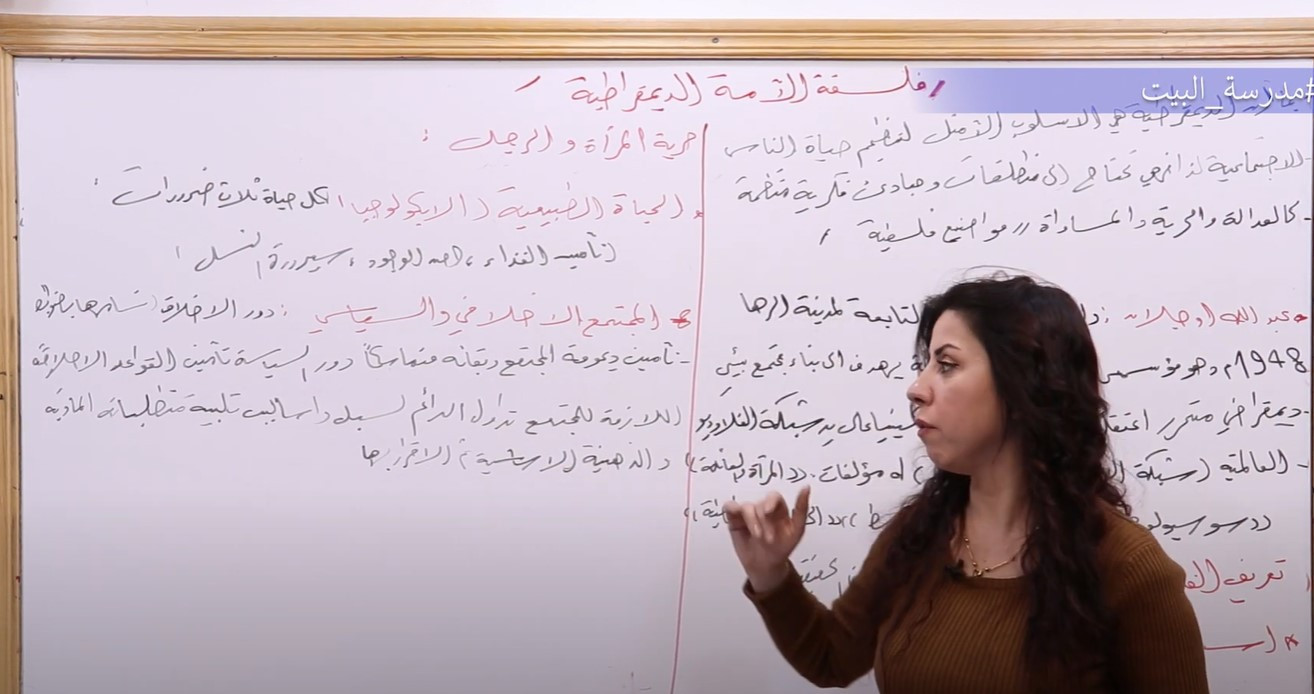 Democratic Nation Philosophy Année de publication: 2021 Auteur: Roken Darweesh Auteur institutionnel: Dibistana Malê In this video, the teacher reviews a lesson entitled "The Philosophy of a Democratic Nation". This lesson is for grade 12 in North and East Syria. The video is produced by an educational channel affiliated with the Education Authority in North and East Syria
  مفهوم التربية الإعلامية في كتب التربية المدنية والتربية الوطنية للمرحلة الأساسية في المنهاج الفلسطيني Année de publication: 2009 Auteur: Laila Albitar | Alya Alasali Auteur institutionnel: An-Najah National University حققت هذه الدراسة أهدافها في إجابتها على ثلاث أسئلة للتعرف على مصادر اللإعلام التي استعرضتها كتب التربية المدنية والتربية الوطنية، والوظائف الإعلامية التي تناولتها تلك الكتب، و الدور التي قامت به التربية الاعلامية المتضمنه في هذه الكتب لإعداد شخصية المتعلم واكسابه المهارات الإعلامية.اذ اظهرت النتائج تركيز على الاهتمام بمصادر الاعلام المقروءة في كتب التربية المدنية لصفوف السابع والثامن والتاسع، والمصادر المرئية في كتب التربية الوطنية لصفوف الخامس والسادس والسابع الاساسية. وهذه النتائج تشير الى تناول كتب التربية المدنية وكتب التربية الوطنية للتربية الاعلامية ليس ممنهجا Media Education in the Primary Stage Textbook of Palestinian Curricula: Civic and National Education Année de publication: 2009 Auteur: Laila Albitar | Alya Alasali Auteur institutionnel: An-Najah National University The study achieved its purposes in answering three questions aims at identifying the source of Media with in Civic Education and National Education and also identifying the role of Media Education presented in personalities and equipments with the media skills. This was achieved through content analysis for Media sources and its function through finding frequencies and percentages.The results showed that the focus was on readable media sources in Civic Education books for seventh, eights, and ninth grades and visual sources in National Education books for fifth, sixth, and seventh primary grades. The results indicated that the Civic Education and National Education books dealt with Media Education in a non scientific way.
 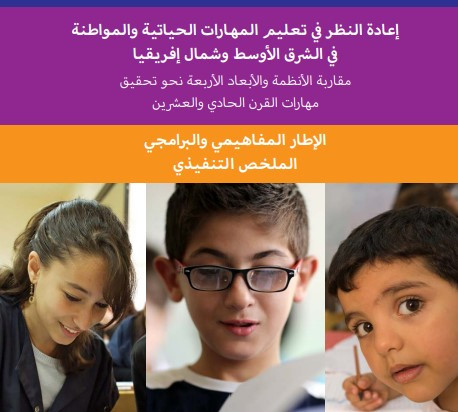 تعليم المهارات الحياتية والمواطنة في الشرق الأوسط وشمال أفريقيا Année de publication: 2016 Auteur institutionnel: UNICEF Middle East and North Africa يستدعي وضع التعلم في منطقة الشرق الأوسط وشمال إفريقيا رؤية تعليم شاملة ومستمرة مدى الحياة وقائمة على الحقوق، ومن شأنها أن تزيد من قدرات جميع الأطفال والشباب في المنطقة. يهدف إطار العمل إلى تزويدهم بشكل أفضل لإنتاج معنى من المعرفة ولمواجهة التحولات من مرحلة الطفولة للبلوغ، ومن مرحلة التعليم للعمل، ومن التنمية غير المدروسة للمواطنة المسؤولة والفعالة.الأمر الذي يدفع مبادرة تعليم المهارات الحياتية والمواطنة (LSCE) في منطقة الشرق الأوسط وشمال إفريقيا ، التي انطلقت خلال عام 2015 بهدف دعم بلدان المنطقة - من الناحية المفاهيمية والبرنامجية والفنية - لتحسين التعلم واستثمار هذا التعلم بشكل أفضل في الفرد والمجتمع والتنمية الاقتصادية.وقد تم تحديد مجموعة تتكون من اثنتي عشر مهارة حياتية رئيسة - وهي الأكثر أهمية في السياق الإقليمي- باستخدام نموذج التعلم رباعي الأبعاد: “التعلم أن تعرف” (البعد المعرفي) و”التعلم أن تفعل” (البعد الأدواتي)، و”التعلم أن تكون” (البعد الفردي)و”التعلم من أجل العيش معًا” (بُعد التعلم الاجتماعي والمواطنة).تدوم المهارات الحياتية الاثني عشر الأساسية مدى الحياة وتعتمد على الأدلة التي تؤكد أهمية اكتساب المهارات في سن مبكرة. علاوة على ذلك، يتم اكتساب المهارات الحياتية الأساسية الاثني عشر واستدامتها من خلال جميع أشكال التعلم في النظم التي تعترف بمسارات متعددة للتعلم، رسمية وغير رسمية.