
Ressources
Explorez une large gamme de ressources sur le GCED afin d’approfondir votre compréhension et de renforcer vos activités de recherche, de plaidoyer, d’enseignement et d’apprentissage.
1,473 résultats trouvés
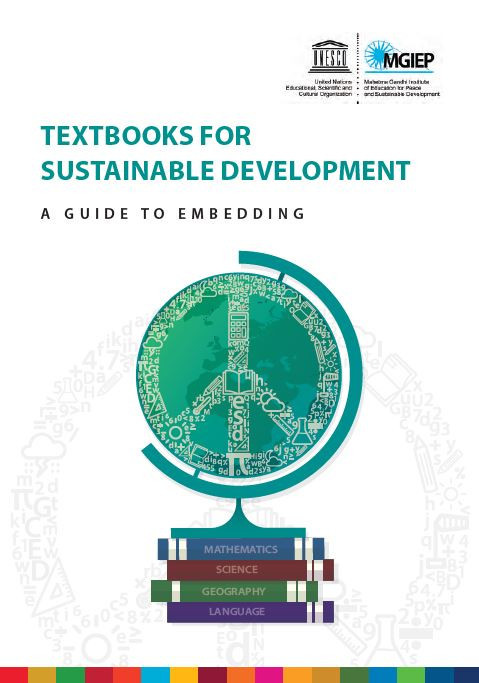 Учебные пособия по устойчивому развитию. Руководство по внедрению Année de publication: 2017 Auteur institutionnel: UNESCO | Mahatma Gandhi Institute of Education for Peace and Sustainable Development (MGIEP) Данное руководство представляет подход по внедрению образования для устойчивого развития в учебные дисциплины, основываясь на опыте Германии, а также объединяя другие существующие усилия. В июне 2016 года Институт Махатмы Ганди по образованию в интересах мира и устойчивого развития ЮНЕСКО, при поддержке Engagement Global gGmbH, собрал в г. Бангалор, Индия, 30 международных экспертов по математике, естественным наукам, языкам, географии и образованию для устойчивого развития. Эти эксперты участвовали в разработке данного руководства.Данная публикация разработана в качестве руководства для заинтересованных сторон – министерств образования, органов, разрабатывающих государственные образовательные стандарты и учебные планы, авторов и издателей учебников в помощь и поддержку в создании ими учебных материалов нового поколения. Такие учебники станут очевидным отступлением от механической передачи информации и методических знаний, лишенных смысла и контекстуальной значимости. Они также поддержат новое видение обучения и будут способствовать укреплению компетенции и возможностей молодежи в создании более мирных и устойчивых обществ. Ключевыми целями этого амбициозного руководства являются развитие таких компетенции, как критическое и систематическое мышление, правильное восприятие разнообразия, сопереживание и приверженность изменениям.
  Educação 2030 Declaração de Incheon Rumo a uma educação de qualidade inclusiva e equitativa e à educação ao longo da vida para todos Année de publication: 2016 Auteur institutionnel: UNESCO | United Nations Development Programme (UNDP) | UN. Office of the United Nations High Commissioner for Refugees (UNHCR) | United Nations Children's Fund (UNICEF) | United Nations Entity for Gender Equality and the Empowerment of Women (UN Women) | United Nations Population Fund (UNFPA) This framework — painstakingly drafted over many months with input from governments, international agencies, civil society and experts — provides guidance for implementing the education commitments made in the 2030 Agenda for Sustainable Development at a national, regional and global level. In particular: it aims at mobilizing all countries and partners around Sustainable Education Goal 4 and its targets; it proposes ways of implementing, coordinating, financing and monitoring the new commitments; and it proposes indicative strategies which countries may wish to draw upon in developing their plans, taking into account different national realities, capacities and levels of development and respecting national policies and priorities. UNESCO GCED eNewsletter Issue 3 Année de publication: 2016 Auteur institutionnel: UNESCO Feature: Expanding partenrships around Global Citizenship EducationUNESCO – IEA partnershipPresident Park Geun-hye announces initiatives to widen prtnership with UNESCOUNESCO and the United States promote education to prevent violent extremismUNESCO signs partnership with Asia Society to advance Global Citizenship EducationInternational Mother Language DayUNESCO Category 2 Institute on mother languages established in BangladeshUCLA establishes new UNESCO Chair in Global Learning and Global Citizenship EducationWorkshop in Abidjan focuses on learning to live together through history educationLeading French network of rural vocational institutions puts Global Citizenship Education firstSub-regional Workshop on Global Citizenship Education in Central AsiaRabat Conference on Democratic Citizenship and Human Rights Education: Trends and Innovation from CSOsConference on Global Citizenship Education in SudanConference on Global Citizenship Education in SharjahFocus on: ongoing UNESCO school initiative: the Happy Schools ProjectCurriculum development and review for democratic citizenship and human rights educationKey TweetsUpcoming Events
 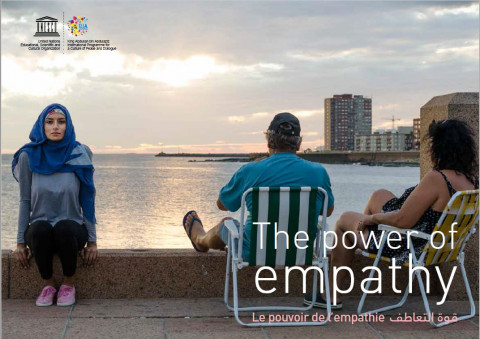 The Power of Empathy Année de publication: 2017 Auteur institutionnel: UNESCO This photobook is a tribute to the power of empathy and solidarity felt and expressed by young people. Its photographs and stories were selected from the response to the global youth contest “If I were…”, launched by UNESCO on social media in Arabic, English, French and Spanish in early 2017. UNESCO received some 837 submissions, from 117 countries, covering a wide variety of issues and experiences.Despite the gravity of the themes addressed in these beautiful pictures, hope emerges from the testaments of the young photographers which demonstrate not only a sensitivity to the situations of “others”, but, moreover, a resolve to help people recover and protect their rights and dignity. Le Pouvoir de l'empathie Année de publication: 2017 Auteur institutionnel: UNESCO This photobook is a tribute to the power of empathy and solidarity felt and expressed by young people. Its photographs and stories were selected from the response to the global youth contest “If I were…”, launched by UNESCO on social media in Arabic, English, French and Spanish in early 2017. UNESCO received some 837 submissions, from 117 countries, covering a wide variety of issues and experiences.Despite the gravity of the themes addressed in these beautiful pictures, hope emerges from the testaments of the young photographers which demonstrate not only a sensitivity to the situations of “others”, but, moreover, a resolve to help people recover and protect their rights and dignity. Cet ouvrage de photos rend hommage au pouvoir de l’empathie et aux sentiments de solidarité ressentis et exprimés par des jeunes. Les photographies et les textes qu’il contient ont été sélectionnés dans le cadre du concours mondial de la jeunesse « Et si j’étais… », lancé sur les réseaux sociaux de l’UNESCO en anglais, en arabe, en espagnol et en français, début 2017. L’UNESCO a reçu 837 candidatures de 117 pays, couvrant un large champ de questions et d’expériences. Malgré la gravité des thèmes abordés par chacune de ces superbes images, l’espoir se fait jour à mesure que les témoignages des jeunes photographes révèlent non seulement leur sensibilité à l’égard de la situation d’autrui, mais surtout une volonté d’aider les autres à recouvrer et à protéger leurs droits, leur dignité et la justice The Power of Empathy Année de publication: 2017 Auteur institutionnel: 유네스코 This photobook is a tribute to the power of empathy and solidarity felt and expressed by young people. Its photographs and stories were selected from the response to the global youth contest “If I were…”, launched by UNESCO on social media in Arabic, English, French and Spanish in early 2017. UNESCO received some 837 submissions, from 117 countries, covering a wide variety of issues and experiences.Despite the gravity of the themes addressed in these beautiful pictures, hope emerges from the testaments of the young photographers which demonstrate not only a sensitivity to the situations of “others”, but, moreover, a resolve to help people recover and protect their rights and dignity.
  Human rights education in the school systems of Europe, Central Asia and North America: a compendium of good practice Année de publication: 2009 Auteur institutionnel: Council of Europe | UNESCO | UN. Office of the United Nations High Commissioner for Human Rights (UN. OHCHR) | OSCE. Office for Democratic Institutions and Human Rights (ODIHR) “Human Rights Education in the School Systems of Europe, Central Asia and North America: A Compendium of Good Practice” is a compilation of 101 examples of good practice in human rights education in primary schools, secondary schools and teacher training institutions in the Organization for Security and Co-operation in Europe (OSCE) area, which is also covered by the United Nations Educational, Scientific and Cultural Organization (UNESCO), the Office of the United Nations High Commissioner for Human Rights (OHCHR) and, partially, the geographical mandate of the Council of Europe (CoE).The term “human rights education” is often used in this resource in a broader sense, to also include educationfor democratic citizenship and education for mutual respect and understanding, which are all based on internationally agreed human rights standards. These three areas are seen as interconnected and essential within educational systems in order to prepare youth to be active, responsible and caring participants in their communities, as well as at the national and global levels.Human rights education has been defined as education, training and information aimed at building a universal culture of human rights. A comprehensive education in human rights not only provides knowledge about human rights and the mechanisms that protect them, but also imparts the skills needed to promote, defend and apply human rights in daily life. Education for democratic citizenship focuses on educational practices and activities designed to help young people and adults to play an active part in democratic life and exercise their rights and responsibilities in society. Education for mutual respect and understanding highlights self-respect, respect for others, and the improvement of relationships between people of differing cultural traditions.This book aims to support quality teaching in these areas and to inspire educational policymakers (those working in education ministries and local school boards) and administrators, teachers, teacher trainers, non-formal educators and all other interested actors, as well as to facilitate networking and the exchange of experience among education professionals.
 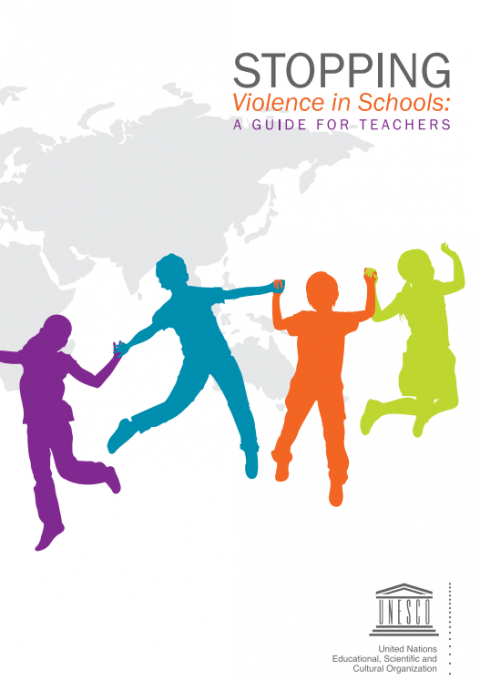 Stopping violence in schools: a guide for teachers Année de publication: 2014 Auteur institutionnel: UNESCO “Stopping Violence in Schools: A Guide for Teachers” examines various forms of violence that take place in schools, and offers practical suggestions as to what teachers can do to prevent them. Ten action areas are proposed, each with specific examples that teachers can adapt to address and prevent violence. Excerpts from relevant international normative instruments as well as a list of links to online resources for stopping violence in schools are annexed at the end of the book. En finir avec la violence à l'école: guide à l'intention des enseignants Année de publication: 2014 Auteur institutionnel: UNESCO “Stopping Violence in Schools: A Guide for Teachers” examines various forms of violence that take place in schools, and offers practical suggestions as to what teachers can do to prevent them. Ten action areas are proposed, each with specific examples that teachers can adapt to address and prevent violence. Excerpts from relevant international normative instruments as well as a list of links to online resources for stopping violence in schools are annexed at the end of the book. Poner fin a la violencia en la escuela: guía para los docentes Année de publication: 2014 Auteur institutionnel: UNESCO “Stopping Violence in Schools: A Guide for Teachers” examines various forms of violence that take place in schools, and offers practical suggestions as to what teachers can do to prevent them. Ten action areas are proposed, each with specific examples that teachers can adapt to address and prevent violence. Excerpts from relevant international normative instruments as well as a list of links to online resources for stopping violence in schools are annexed at the end of the book.