
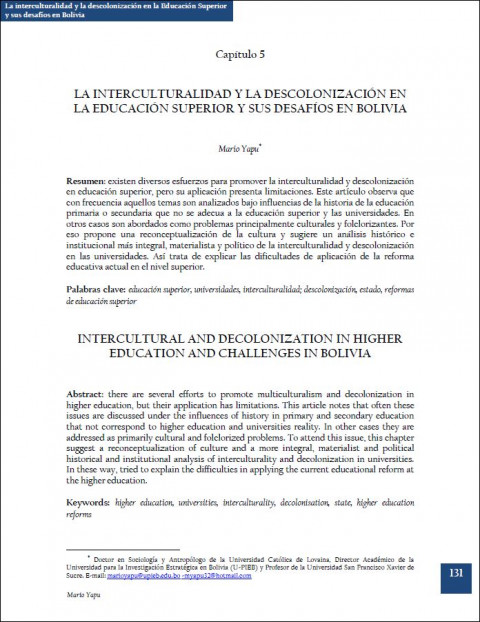
Intercultural and Decolonization in Higher Education and Challenges in Bolivia
- 저자
- Mario Yapu
- 단체 저자
- CELEI Chile
- ISBN
- ISBN 978-956-358-817-0
- 형태사항
- p. 131-152
- 원래 언어
- 스페인어
- 발행 연도
- 2016
There are several efforts to promote multiculturalism and decolonization in higher education, but their application has limitations. This article notes that often these issues are discussed under the influences of history in primary and secondary education that not correspond to higher education and universities reality. In other cases they are addressed as primarily cultural and folclorized problems. To attend this issue, this chapter suggest a reconceptualization of culture and a more integral, materialist and political historical and institutional analysis of interculturality and decolonization in universities. In these way, tried to explain the difficulties in applying the current educational reform at the higher education.
관련 자료
-
 Study on the Historical Impact of the 1974 Recommendation concerning Education for International Understanding, Cooperation and Peace and Education relating to Human Rights and Fundamental Freedoms
 -
 IIEP-UNESCO 12th Medium-Term Strategy: 2026–2029
 -
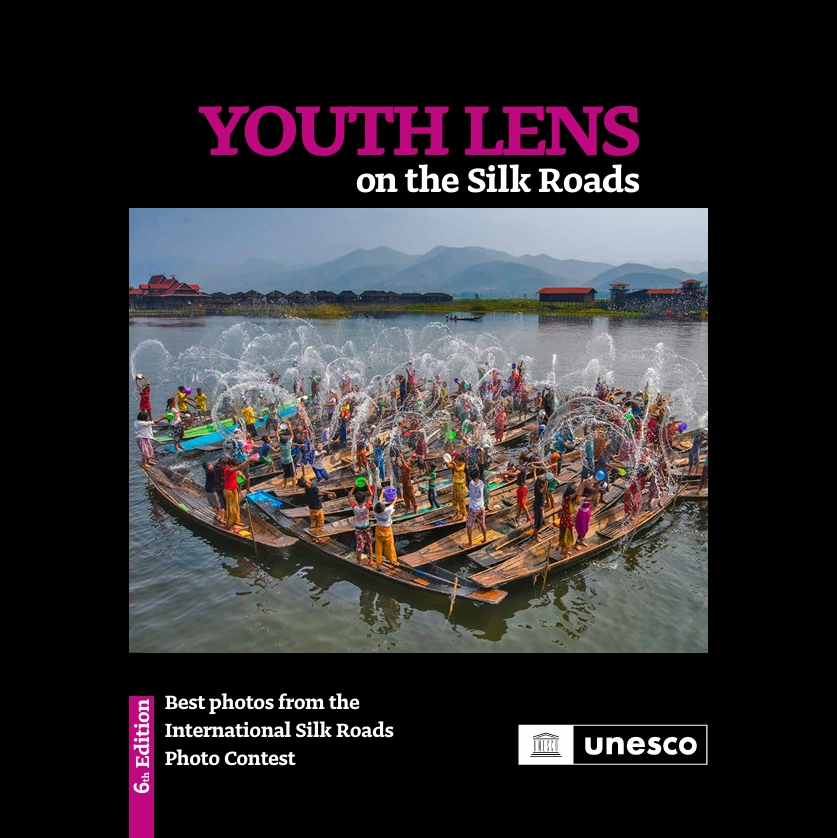 Youth Lens on the Silk Roads: Best Photos from the International Silk Roads Photo Contest; 6th Edition
 -
 More than Welcome: Intercultural Integration of Migrants in and Through Higher Education