
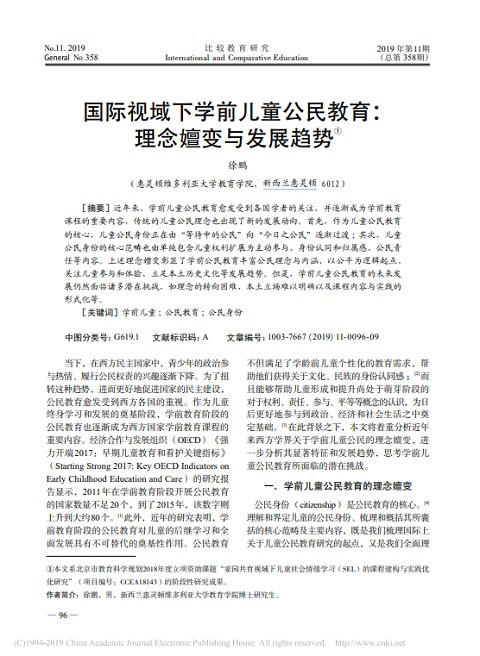
Preschool Children's Citizenship Education in Global Context: The Transformation of Ideas and Development Trends
In recent years, preschool children’s citizenship education has been emphasized globally and gradually becomes a main content in early childhood curriculum. Traditional ideas on early age citizens see some new changes. As the core of early age children’s citizenship education, children’s citizenship is gradually transferred from citizens in waiting to citizens today, including right, active participation, identity and sense of belonging, and collective responsibility. The above transformation highlights global trends such as enriching ideas and contents on citizenship, regarding equity as the logic starting point, paying attention to young children’s participation and experience, and being rooted in indigenous context and culture. In the meantime, potential challenges still exist for the future development of young children's citizenship, such as the difficulty of transferring ideas, ambiguous standing point and the tokenism of curriculum content and practice.
관련 자료
-
 IIEP-UNESCO 12th Medium-Term Strategy: 2026–2029
 -
 Advancing Intergenerational Learning: Identifying Challenges and Opportunities for Older Adults; Integrated Case Study Report
 -
 Digital Empowerment for Lifelong Learning and Transformative Andragogy (DELTA) for Adult Educators: Introduction to the DELTA Framework and Resources
 -
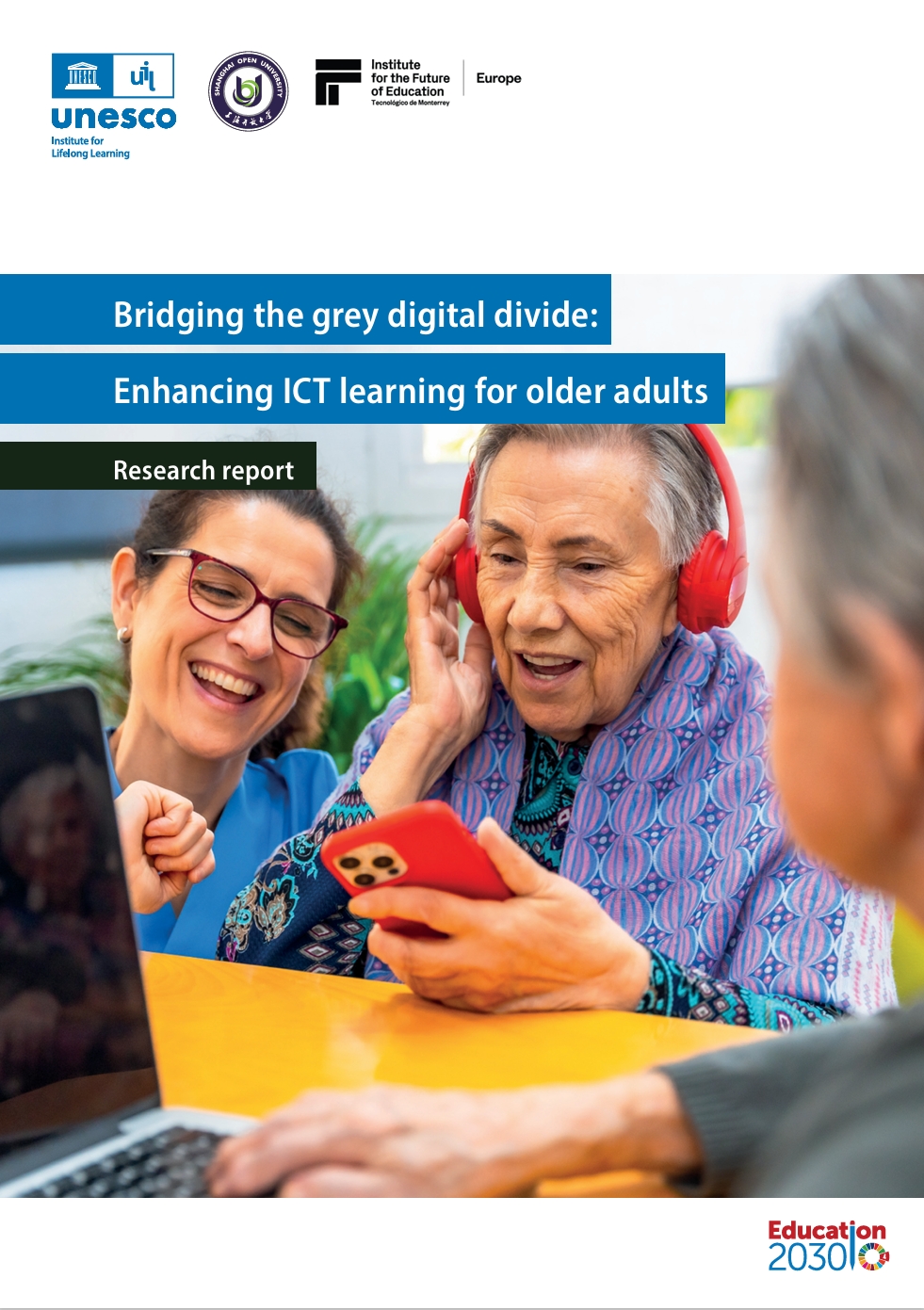 Bridging the Grey Digital Divide: Enhancing ICT Learning for Older Adults; Research Report