
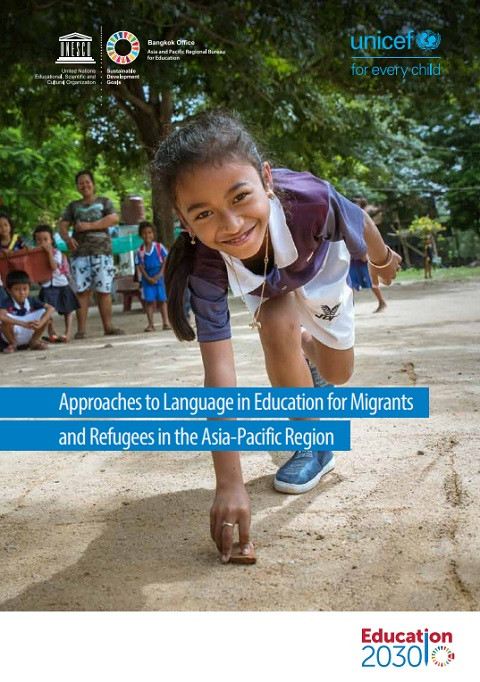
Approaches to Language in Education for Migrants and Refugees in the Asia-Pacific Region
- ISBN
- ISBN 978-92-9223-652-6 (print); ISBN 978-92-9223-653-3 (electronic)
- 형태사항
- 30 p.
- 원래 언어
- 영어
- 발행 연도
- 2020
UNESCO Bangkok commissioned this paper to examine strategies for addressing the needs of refugee, migrant and internally displaced children in the Asia-Pacific region. This document aims to create a stronger knowledge base to support Member States as they formulate education policies that are responsive to the needs of such children.
This document aims to:
- Examine how linguistic diversity and human mobility intersect and impact minority, migrant and refugee children’s access to quality, inclusive education
- Link policy priorities to promising practices, based on international frameworks and lessons learned from successful programmes
- Recommend steps for improving language-in-education policies and their implementation.
To do this, this paper examines:
- Global and regional trends in migration
- The impact of migration on children’s education
- Linguistic diversity and its implications for language-in-education policies and practices
- Research and resources that support inclusive quality education for migrant and refugee children.
관련 자료
-
 Youth Lens on the Silk Roads: Best Photos from the International Silk Roads Photo Contest; 6th Edition
 -
 UNESCO Framework for Culture and Arts Education: Implementation Guidance
 -
 The Representation of Jews, Judaism and Antisemitism in School Textbooks and Curricula in Europe
 -
 Strategies to Counter Antisemitism: A Handbook for Educators