
자료
세계시민교육에 대한 이해를 넓히고 연구, 옹호 활동, 교수, 학습 등을 향상시킬 수 있는 다양하고 유용한 자료를 찾아보세요.
2,782 건의 결과가 검색되었습니다
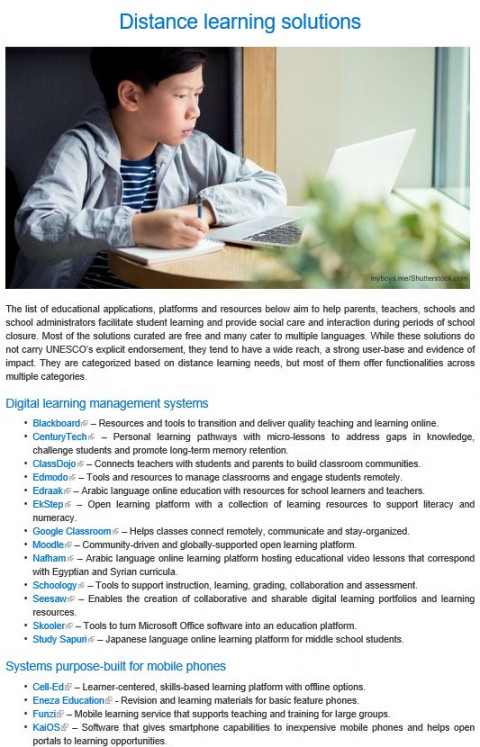 حلول للتعلّم عن بعد 발행 연도: 2020 단체 저자: منظمة الأمم المتحدة للتربية والعلم والثقافة (UNESCO) الغرض من قائمة التطبيقات والمنصات والموارد التعليمية الواردة أدناه، مساعدة الأهل والمعلمين والمدارس ومديريها على تيسير عملية تعلّم الطلاب وتقديم الرعاية الاجتماعية والتفاعل الاجتماعي لهم في أثناء فترة إغلاق المدارس. ومعظم الحلول المختارة مجانية، ويقدم العديد منها محتوى متاحاً بعدة لغات. ولا تحظى هذه الحلول بدعم صريح من اليونسكو، بيد أنها تصل إلى عدد كبير من الأشخاص، ولها قاعدة مستخدمين واسعة، وتأثيرها مثبت. وتُصنّف هذه الحلول في فئات تبعاً لاحتياجات الدارسين، ولكن معظمها يحتوي على خصائص مأخوذة من فئات مختلفة.
  UNESCO: Promise of Gender Equality; Key Actions of 2018 and 2019 발행 연도: 2020 단체 저자: UNESCO This is the first UNESCO Annual Report on Gender Equality that highlights the key initiatives implemented in 2018-2019. The advancement of gender equality through education, the sciences, culture, information and communication, at the heart of UNESCO’s mandate, aims to equip both women and men to address the challenges of sustainable development in a fast-changing world. UNESCO: La Promesse de l’Egalité des genres; Actions clés de 2018 - 2019 발행 연도: 2020 단체 저자: Organisation des Nations Unies pour l'éducation, la science et la culture (UNESCO) Ceci est le premier rapport annuel de l’UNESCO sur l’égalité des genres qui met en lumière quelques-unes des initiatives clés mises en place en 2018 - 2019. Les progrès en matière d’égalité des genres par l’éducation, les sciences, la culture, l’information et la communication, au cœur des activités de l’UNESCO, visent à donner aux femmes et aux hommes les moyens de relever les défis du développement durable dans un monde en perpétuelle mutation.
  Teacher’s Guide for Culture and Arts Activities in Schools 발행 연도: 2019 저자: Beatrice Polato | Xavier Verhoest 단체 저자: Comitato Internazionale per lo Sviluppo dei Popoli (CISP) | European Union (EU) | UNESCO | UK aid This guide was designed as a curriculum to be used by teachers and mentors who facilitate modules and sessions aiming at involving school children in the study of cultural heritage, peace, inclusion and gender equity through artistic expressions. It has been tested and used by teachers in 24 schools in Somalia between 2018 and 2019, involving a total of 48 teachers and about 700 children. It contains text in Somali for activities.
 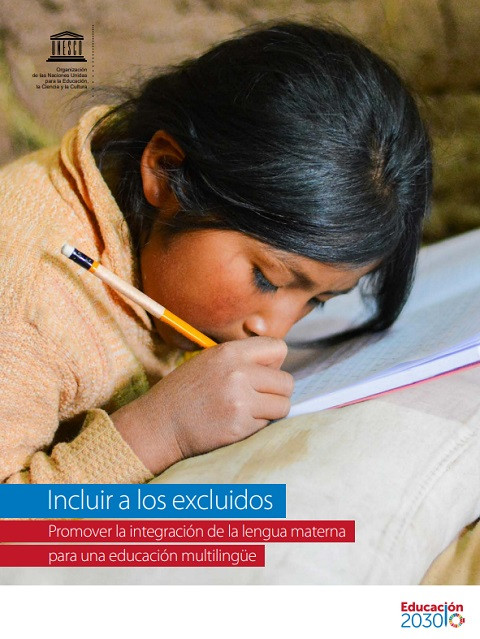 Including the Excluded: Promoting the Integration of the Mother Tongue for a Multilingual Education 발행 연도: 2020 단체 저자: UNESCO This publication presents the advantages of including the mother tongue and promoting multilingual education, as well as guidelines for achieving it. Incluir a los excluidos: Promover la integración de la lengua materna para una educación multilingüe 발행 연도: 2020 단체 저자: Organización de las Naciones Unidas para la Educación, la Ciencia y la Cultura (UNESCO) Esta publicación presenta las ventajas de incluir la lengua materna y promover una educación multilingue, así como orientaciones para lograrlo.
  Son Atlas: atlas du droit à l’éducation des filles et des femmes 발행 연도: 2019 단체 저자: Organisation des Nations Unies pour l'éducation, la science et la culture (UNESCO) Son Atlas, l’atlas en ligne du droit des filles et des femmes à l’éducation, a été développé dans le cadre de la campagne de l’UNESCO Son éducation, notre avenir, qui vise à accélérer les efforts en faveur de l'éducation des filles et des femmes en s’appuyant sur des engagements politiques et financiers. Son Atlas vise à mieux faire connaître les constitutions, législations et réglementations nationales relatives aux droits à l’éducation des filles et des femmes afin d’encourager les pays à améliorer leurs cadres juridiques et politiques.
  Dialogue: diversité culturelle et mondialisation, l'expérience arabo-japonaise, actes 발행 연도: 2005 단체 저자: Organisation des Nations Unies pour l'éducation, la science et la culture (UNESCO) The symposium on “Cultural Diversity and Globalization: the Arab-Japanese Experience, a Cross-Regional Dialogue”, organized on 6 - 7 May 2004 at UNESCO in Paris with the purpose of promoting dialogue and cooperation between the Arab world and Japan, gave its participants an opportunity to lay the groundwork for thinking about the key concepts enshrined in the UNESCO Universal Declaration on Cultural Diversity adopted by the General Conference at its 31st session, on 2 November 2001. Documento final de la consulta técnica sobre educación para la ciudadanía mundial: Educación para la ciudadanía mundial: una perspectiva emergente 발행 연도: 2013 단체 저자: Organización de las Naciones Unidas para la Educación, la Ciencia y la Cultura (UNESCO) This document draws on inputs to, and common perspectives emerging from, a Technical Consultation on Global Citizenship Education organized by UNESCO and the Republic of Korea (i.e., the Ministries of Foreign Affairs and of Education, and the Asia-Pacific Centre of Education for International Understanding) in Seoul on 9-10 September 2013 . Informing this draft document are: a) responses from the expert participants to a questionnaire circulated by UNESCO in advance of the consultation; b) presentations from experts during the consultation; c) discussions during the consultation; and d) reference material contributing to, and prepared for, the consultation. The final draft of this document was prepared by UNESCO’s Division of Education for Peace and Sustainable Development at Headquarters in Paris, with the assistance of a drafting team.
  Fighting racism and discrimination: identifying and sharing good practices in the International Coalition of Cities 발행 연도: 2012 단체 저자: UNESCO Since the establishment of the International Coalition, UNESCO has headed the regional scientific committees. In this role, UNESCO receives reports from cities in fulfilment of formal or informal requirements of their membership. These reports showcase the efforts of cities showcase the efforts of cities in addressing the Ten Point Plan of commitments for their respective region. UNESCO undertakes its efforts based on the information provided by the city in its report. First, it provides feedback to the cities on their efforts. The report identifies promising practices and highlights areas where additional work can be undertaken. Second, the reports from cities provide information that can be used for a variety of purposes including the publication of this report of good practices in anti-discrimination. The contents of this report reflect the information shared by Member Cities and as current Member Cities become increasingly active and new ones join the Coalition, the collection of good practices will undoubtedly expand.The purpose of this good practices report is two-fold. First, it draws together a collection of good practices in anti-discrimination of Member Cities so that they can inspire and inform the policies and practices of other cities. Second, the report uses major themes related to the different roles and domains of cities to inform and indeed, encourage critical reflection on anti-discrimination work in these areas. Several key objectives underlie the report:• Reflect on the different roles and capacities of cities and provide a framework to understand and assess their policies and practices;• Present, in one publication, examples of a wide variety of good practices; Provide a useful resource on anti-discrimination for stakeholders including city staff and representatives, community organisations, researchers, as well as interested individuals and groups; • Contribute to the successful networking of cities underway through the coalition;• Highlight the fact that even if there are challenges to engaging in anti-discrimination work, and that city representatives may feel limited, there are multiple actions that they can undertake.