
자료
세계시민교육에 대한 이해를 넓히고 연구, 옹호 활동, 교수, 학습 등을 향상시킬 수 있는 다양하고 유용한 자료를 찾아보세요.
1,447 건의 결과가 검색되었습니다
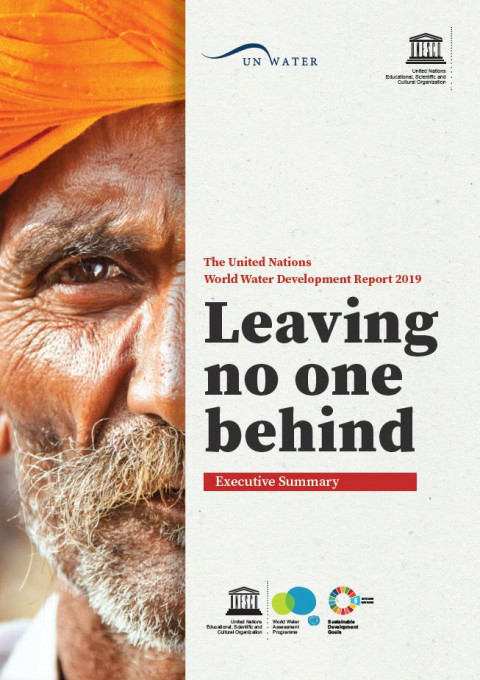 [요약보고서] 2019년 UN 세계물개발보고서: 누구도 소외되지 않는 사회; 요약보고서 발행 연도: 2019 저자: Richard Connor | Stefan Uhlenbrook | Engin Koncagül 단체 저자: UNESCO World Water Assessment Programme (WWAP) 여러 그룹의 사람들은 다양한 이유로 ‘소외’되고 있다. 차별, 배제, 소외, 집권층 권력의 불균형 및 경제적 불평등은 안전한 식수 및 위생에 대한 인권을 달성하고, 2030 아젠다의 물 관련 목표를 실현하는 데 있어 걸림돌이 된다. 설계가 잘못되고, 부적절하게 구현된 정책, 비효율적이고 부당한 재정 자원 사용과 더불어 정책 격차는 안전한 식수 및 위생 시설 접근에 대한 불평등을 지속시킨다. 배제와 불평등 문제가 정책과 실행에서 분명하고, 신속하게 고려되지 않는다면, 물조정 노력 (water interventions)은 물을 가장 필요로 하고 혜택을 가장 많이 받을 수 있는 사람들에게 계속해서 그 효과를 주지 못할 것이다.수자원 관리를 개선하고 모든 사람에게 안전하고 경제적인 식수 및 위생 시설을 제공하는 것은 빈곤 퇴치, 평화롭고 번영하는 사회 형성, 지속 가능한 발전을 위한 ‘누구도 소외되지 않는 사회’ 구축에 필수적이다. 이러한 목표는 공동의 의지가 있는 한 전적으로 달성 가능할 것이다. [Pабочее резюме] Всемирный доклад Организации Объединенных Наций о состоянии водных ресурсов, 2019 г. : Не оставляя никого в стороне, рабочее резюме 발행 연도: 2019 저자: Richard Connor | Stefan Uhlenbrook | Engin Koncagül 단체 저자: UNESCO World Water Assessment Programme (WWAP) Представители различных групп «бывают забыты» по разным причинам. Дискриминация, отчуждение, маргинализация, укоренившаяся асимметричность в распределении власти, материальное неравенство – все это относится к числу основных препятствий на пути соблюдения права человека на безопасную питьевую воду и санитарию для всех, а также реализации связанных с водными ресурсами целей, поставленных в Повестке-2030.Плохо разработанная и неумело осуществляемая политика, бесхозяйственное и нецелевое использование финансовых ресурсов, а также пробелы в политике подпитывают сохранение неравенства в сфере доступа к водным ресурсам и санитарии. Если для решения проблем отчуждения и неравенства в политике и на практике не будут приниматься конкретные и ответственные меры, связанные с водными ресурсами мероприятия по-прежнему не будут отвечать интересам наиболее нуждающихся слоев и тех, кто должен быть их основными бенефициарами.Совершенствование управления водными ресурсами и обеспечение всеобщего доступа к безопасной и финансово доступной питьевойводе и санитарии имеет существенно важное значение для искоренения нищеты, созидания мирных и процветающих обществ и обеспечения такого положения, при котором «никто не будет забыт» на пути, ведущем к устойчивому развитию. При наличии коллективной воли эти цели вполне достижимы. 2019年联合国世界水发展报告 : 不让任何人掉队; 执行摘要 발행 연도: 2019 저자: Richard Connor | Stefan Uhlenbrook | Engin Koncagül 단체 저자: UNESCO World Water Assessment Programme (WWAP) 不同群体的人,都因为不同的原因而“掉队”。受歧 视、被排除在外、被边缘化、权力不对等根深蒂固,以及物 质上的不平等是保障人人获得安全饮用水和卫生设施这一人 权、实现2030年可持续发展议程与水相关目标的主要障碍之 一。政策设计不合理、落实不到位、资金不足和使用不当及 政策缺位加剧了获取安全饮用水和卫生设施的不均等。除非 在政策和实践层面旗帜鲜明、积极有效地应对被排除在外、不平等的现状,否则与水相关的解决方案仍将以失败告终,无法触及最需要和最能受益的人群。改善水资源管理,确保人人获得安全、可负担的饮用水 和卫生服务是消除贫困、构建和平繁荣的社会、确保实现可 持续发展路上“不让任何人掉队”的重要条件。只要同心协 力,这些目标一定可以实现。
  2018년도 SDG4-교육2030 협의체 운영보고서 발행 연도: 2019 단체 저자: 유네스코한국위원회 2018년도 교육부, 유네스코한국위원회와 9개 교육전문기관(한국교육과정평가원, 유아정책연구소, 한국대학교육협의회, 한국직업능력개발원, 한국여성정책연구원, 국가평생교육진흥원, 유네스코 아시아태평양 국제이해교육원, 한국교육학술정보원, 한국교육개발원) 으로 구성된 SDG 4-교육2030 협의체 운영(회의, 포럼 등) 내용을 담은 보고서이다.
  2018 유네스코 평화누리 활동보고서 발행 연도: 2018 단체 저자: 유네스코한국위원회 ‘유네스코 평화누리 사업’은 2013년 ‘유네스코 볼론티어 프로젝트’라는 이름으로, 대학생들의 사회 참여를 높이고 역량을 강화하기 위해 시작되었다. 2018년 에는 유엔 지속가능발전목표의 17개 목표를 주제로, 청년들 스스로 자신들이 살아가는 지역사회 현장의 지속가능성을 위협하는 문제에 대한 개선방안을 기획하고 실행함으로써 청년들이 사회변화의 주체(agents of social innovation)로 성장할 수 있도록 지원하고 있다.유네스코한국위원회는 평화누리 사업을 통해 전국 대학(원)생 및 청년으로 구성된 동아리(5-20명)를 선발하여 소정의 활동지원금을 지원한다. 또한 유네스코 본부·한국위원회 관련 정보 및 공지 안내, 워크숍 및 활동보고회 개최, 각종 네트워크 활용 지원, 프로젝트 현장 지원 등 청년들의 성공적인 활동을 위해 함께 노력하고 있다.목표하는 활동 분야의 전문가나 대학 교수를 자문위원으로 위촉할 수 있고, 전체 인원 중 대표 및 부대표를 포함한 80%가 대학생이라면 기존·신설·연합·프로젝트 성 팀 모두 관계없이 지원 가능하다. 유네스코는 우리의 현재이자 미래인 청년들을 세계의 다양한 이슈에 대해 해결방안을 찾아내고 창의력을 이용해 변화를 만드는 필수적인 존재라고 보고 있으며 이에 유네스코한국위원회는 청년들이 사회문제에 보다 관심을 가지고 그들의 활동과 노력이 더 나은 사회를 만들 수 있도록 지지하고 지원하며 청년의 사회참여를 독려합니다. 많은 대학(원)생·청년들이 유네스코 평화누리 사업을 포함한 유네스코한국위원회의 청년 활동에 참여하여 유네스코의 이념에 함께 동참해주기를 바란다.
  Que valent les apprentissages en histoire, géographie et éducation à la citoyenneté ? : Colloque international des didactiques de l'histoire, de la géographie et de l'éducation à la citoyenneté 발행 연도: 2014 저자: Caroline Leininger | Angelina Ogier | Sylvain Genevois 단체 저자: Institut national de recherche pédagogique L’histoire et la géographie scolaires, de même que l’éducation à la citoyenneté, sont des domaines sensibles, liés au politique et au contexte social et sociétal dans lequel ils s’inscrivent. Si les recherches en didactique ont constaté dans les années 1990 une grande stabilité de l’histoire et la géographie scolaires, elles interrogent aujourd’hui plus spécifiquement les changements curriculaires et les recompositions qu’ils entraînent (thèmes des deux dernières éditions du colloque (Nantes, 2008, Lausanne 2009). Ces changements découlent de choix politiques et de savoirs universitaires, et redéfinissent le projet de ces disciplines et ses finalités. L'élève devient ainsi à l'issue de sa scolarité : un acteur de la société, un citoyen, un acteur économique, membre de communautés culturelles et politiques, un individu épanoui etc.Ce choix de finalités est aussi un choix de valeurs, explicites ou non dans les prescriptions, assumées ou non par les enseignants, par les élèves, les parents. Ce constat amène à questionner les articulations entre les apprentissages disciplinaires d’une part, et les apprentissages sociaux et politiques d’autre part. Les définitions de ces apprentissages, leur légitimité et leurs évaluations posent également question. Enseignants, décideurs, formateurs, didacticiens peuvent ainsi se demander ce que valent les apprentissages en histoire, en géographie et en éducation à la citoyenneté, tant du point de vue de leur reconnaissance disciplinaire et sociale que du point de vue des valeurs qui leur sont associées. Cet ouvrage cherche à questionner les articulations entre les apprentissages disciplinaires et les apprentissages sociaux et politiques.
  L’école apprend la citoyenneté (Congrès des personnels d’encadrement MLF/OSUI 2016) 발행 연도: 2017 단체 저자: Mission laïque française Le groupe scolaire Louis-Massignon à Bouskoura (Casablanca, Maroc) a accueilli du 9 au 11 mai 2016 près de 300 acteurs de l’enseignement français, représentants des établissements du réseau mlfmonde, du réseau de l’AFLEC, des académiespartenaires (Dijon, Paris, Poitiers et Reims), des représentants du MAEDI, du MENESR, de la DNE, de la DGESCO et de l’AEFE, des grands établissements de l’Éducation nationale (CNED, Canopé, ESENESR, CIEP), des représentants de l’organisation du baccalauréat international, de l’Unesco et de la société civile.Les mesures qui entrent en vigueur sur l’éducation à la citoyenneté concernent les «valeurs de la République».Parce que l’enseignement moral et civique est conçu et établi pour et dans un contexte strictement national, se pose dès lors la question d’une adaptation à l’usage de l’enseignement français à l’étranger qui ne soit pas en contradiction avec l’intention et l’esprit de cette partie du programme.
  Realization of the Sustainable Development Goals by, for and with Persons with Disabilities (UN Flagship Report on Disability and Development 2018) 발행 연도: 2018 단체 저자: United Nations (UN) Realization of the Sustainable Development Goals by, for and with persons with disabilities 'Disability and the 2030 Agenda for Sustainable Development' this report represents the first UN systemwide effort to examine disability and the Sustainable Development Goals (SDGs) of the 2030 Agenda for Sustainable Development at the global level. The report reviews data, policies and programmes and identifies good practices; and uses the evidence it reviewed to outline recommended actions to promote the realization of the SDGs for persons with disabilities. The report shows that despite the progress made in recent years, persons with disabilities continue to face numerous barriers to their full inclusion and participation in the life of their communities. It sheds light on their disproportionate levels of poverty, their lack of access to education, health services, employment, their under-representation in decision-making and political participation. This is particularly the case for women and girls with disabilities. Main barriers to inclusion entail discrimination and stigma on the ground of disability, lack of accessibility to physical and virtual environments, lack of access to assistive technology, essential services, rehabilitation and support for independent living that are critical for the full and equal participation of persons with disabilities as agents of change and beneficiaries of development. Data and statistics compiled and analysed in the present report indicate that persons with disabilities are not yet sufficiently included in the implementation, monitoring and evaluation of the SDGs.
 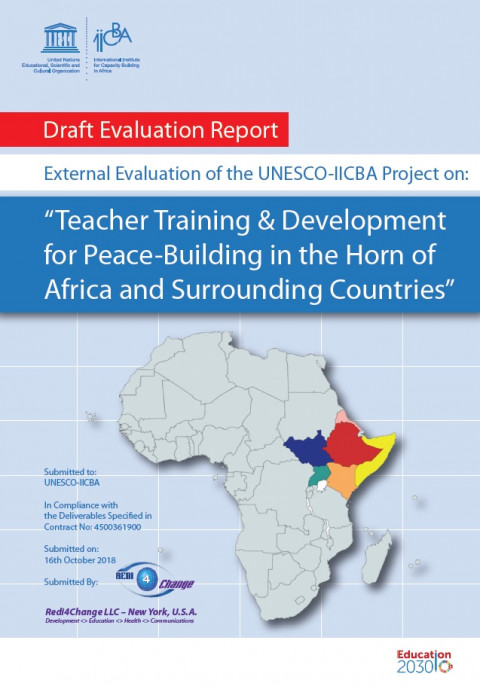 [Draft Evaluation Report] External Evaluation of the UNESCO-IICBA Project on: “Teacher Training & Development for Peace-Building in the Horn of Africa and Surrounding Countries” 발행 연도: 2018 단체 저자: UNESCO International Institute for Capacity-Building in Africa (IICBA) The project on “Teacher Training and Development for Peace-Building in the Horn of Africa and Surrounding Countries” was designed by UNESCO-IICBA and financed by the Government of Japan. The project benefitted six conflict-affected countries; Ethiopia, Eritrea, Somalia, Kenya, Uganda, and South Sudan by building on the mandate and niche expertise of UNESCO-IICBA in teacher education, as well as benefiting from the empathetic insights and financing of the Government of Japan.This evaluation report analyses the design, implementation, and consolidation of the project to assess the likelihood that it can facilitate peace education as an effective and integral part of the national education systems. The project’s short timeframe and modest financing mean that the evaluation could not credibly deal with its outcomes and impact; but efforts are made to gauge the uptake and sustainability of this project as a vehicle for promoting peace education and so help to prevent violent conflict and cultivate a culture of peace in the countries concerned.
  The United Nations World Water Development Report 2019: Leaving No One Behind 발행 연도: 2019 단체 저자: UNESCO World Water Assessment Programme (WWAP) The UNESCO World Water Assessment Programme brings together the work of numerous UN-Water Members and Partners to produce the United Nations World Water Development Report series.The annual editions focus on strategic water issues. UN-Water Members and Partners as well as other experts contribute the latest knowledge on a specific theme.The 2019 Report seeks to inform policy and decision-makers, inside and outside the water community, how improvements in water resources management and access to water supply and sanitation services are essential to overcoming poverty and addressing various other social and economic inequities.In an increasingly globalized world, the impacts of water-related decisions cross borders and affect everyone. Extreme events, environmental degradation, population growth, rapid urbanization, unsustainable and inequitable consumption patterns, conflicts and social unrest, and unprecedented migratory flows are among the interconnected pressures faced by humanity, often hitting those in vulnerable situations the hardest through their impacts on water.Addressing the inequalities faced by disadvantaged groups requires tailored solutions that take account of the day-to-day realities of people and communities in vulnerable situations. Properly designed and adequately implemented policies, efficient and appropriate use of financial resources, as well as evidence-based knowledge on water resources and water-related issues are also vital to eliminating inequalities in access to safe drinking water and sanitation.Titled ‘Leaving No One Behind ’, the report reinforces the commitments made by the UN member states in adopting the 2030 Agenda for Sustainable Development and in recognizing the human rights to safe drinking water and sanitation, both of which are essential for eradicating poverty and for building prosperous, peaceful societies.