
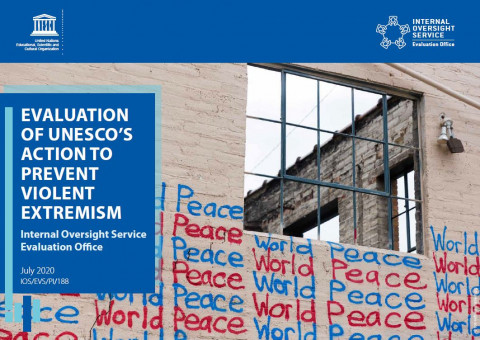
Evaluation of UNESCO’s Action to Prevent Violent Extremism
- Корпоративный автор
- UNESCO Internal Oversight Service (IOS)
- Колляция
- 46 p.
- Язык ресурса
- Английский
- Год публикации
- 2020
- Ключевые слова
- ViolencePreventing violent extremismPeacebuildingPVE
- Тип ресурса
- Международные нормативные документы / политика и адвокационные документыДоклады конференций и программ
- Уровень образования
- Неформальное образованиеДругое
- Регион
- Глобальный
- Место публикации
- Paris
The purpose of this evaluation was twofold. To provide evidence, ideas and insights on how UNESCO’s efforts on PVE in the period from 2015-2018 have contributed to enhancing UNESCO’s action and position in the PVE sphere in light of the decisions of Member States. And to provide evidence and formulate lessons learned and good practices on the intersectoral approach with the aim of informing what works and what does not work in intersectoral cooperation.
The evaluation found that UNESCO’s work on PVE was context specific and adjusted to respond to the needs of the countries and sub-regions where the work was being implemented.
UNESCO’s work is aligned with the agency’s mandate and expertise and makes the most of its strong relationships with government bodies and civil society actors. UNESCO’s work on PVE has led to positive results around the quality, use and effectiveness of guidance documents, around capacity building of UNESCO partners and stakeholders, and around the provision of expertise and policy advice both at national and global level. Using an intersectoral approach led to an increase in information sharing and coordination. However, this was not always translated to intersectoral implementation or delivery of PVE initiatives.
Связанные ресурсы
-
 Addressing Violent Pasts through Education: A Policy Guide
 -
 UNESCO Framework for Culture and Arts Education: Implementation Guidance
 -
 Mainstreaming the General History of Africa into Education Systems: The Curriculum Pathway
 -
 The Representation of Jews, Judaism and Antisemitism in School Textbooks and Curricula in Europe