
Ресурсы
Изучайте широкий спектр ценных ресурсов ВГГ, чтобы углубить своё понимание и повысить эффективность исследований, просветительской деятельности, преподавания и обучения.
Найдено: 1,951
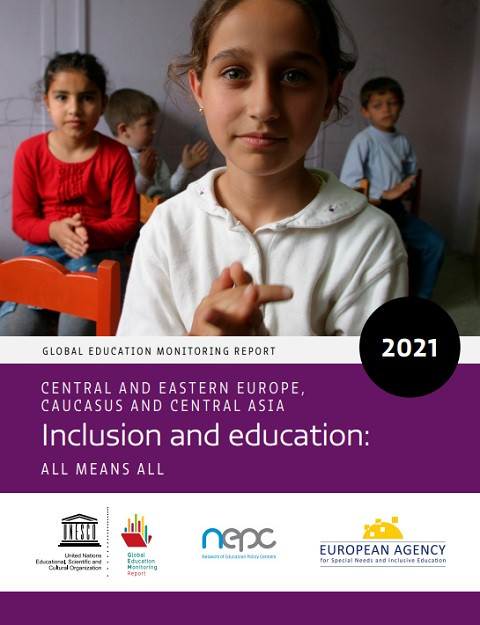 Global Education Monitoring Report, 2021, Central and Eastern Europe, Caucasus and Central Asia: Inclusion and Education; All Means All Год публикации: 2021 Организация-автор: Global Education Monitoring Report Team | European Agency for Special Needs and Inclusive Education | Network of Education Policy Centers Prepared by the Global Education Monitoring (GEM) Report, in partnership with the European Agency for Special Needs and Inclusive Education and the Network of Education Policy Centers, the regional report on inclusion and education in Central and Eastern Europe, the Caucasus and Central Asia offers a deep dive into the core challenges and key solutions. The region is working hard to overcome a legacy, whereby children with disabilities attended special schools, once wrongly regarded as an effective solution, segregated by type of disability, if not fully excluded from education.The report draws on in-depth profiles of 30 education systems in the region. It also presents the additional risks to inclusion now posed by the COVID-19 pandemic. Building on the 2020 Global Education Monitoring Report, it documents barriers facing learners, particularly where multiple disadvantages intersect. Its recommendations provide a systematic framework for identifying and dismantling these barriers, according to the principle that ‘every learner matters and matters equally’. Всемирный доклад по мониторингу образования 2021 г. : для всех означает для всех инклюзивность и образование; центральная и восточная европа,кавказ и средняя азия Год публикации: 2021 Организация-автор: Global Education Monitoring Report Team | European Agency for Special Needs and Inclusive Education | Network of Education Policy Centers В этом докладе описана огромная и географически разнородная территория, которую объединили в один регион схожие образовательные системыи подходы, сформированные во второй половине 20 века в рамках государственного социализма. Образование было доступно, гендерное неравенство и неравенство, связанное с местом проживания, было искоренено. Но образовательные системы подвергали дискриминации детей с особыми потребностями, которые посещали специальные школы. Это решение ошибочно считалось эффективным: ученики разделялись по типу инвалидности, а некоторые из них полностью исключались из системы образования.Начиная с 1989 года, регион старается преодолеть это тяжелое наследие и перейти к инклюзивному образованию, основанному на правах человека, подходу, который часто поддерживается международными организациями. В законодательство и образовательную политику было включено более широкое понимание инклюзии. Педагогическое образование и программы повышения квалификации учителей были пересмотрены и реструктурированы. Тем не менее, прогресс неравномерен. Многие изменения произошли на бумаге, в то время как глубинные убеждения и реальная практика практически не изменились. В то же время образовательные системы пытаются преодолеть негативные последствия политического и экономического кризисов, которые углубили неравенство и усилили социальную напряженность. Такие факторы как гендер, удаленное место проживания, бедность, этническая принадлежность, язык, миграция, принадлежность к числу перемещенных лиц, тюремное заключение, сексуальная ориентация, гендерная идентичность и религиозные и другие убеждения связаны с неравенством образовательных возможностей.Составленный группой по подготовке Всемирного доклада по мониторингу образования, в партнерстве с Европейским агентством по специальным потребностям и инклюзивному образованию и Сетью центров образовательной политики, этот доклад содержит подробные описания 30 образовательных систем региона. В докладе также представлены дополнительные риски для инклюзии, возникшие в результате пандемии COVID-19. Основываясь на Всемирном докладе ЮНЕСКО по мониторингу образования, этот документ фиксирует барьеры, с которыми сталкиваются учащиеся. Рекомендации, данные в докладе, предлагают систему для выявления и устранения этих барьеров, в основе которой лежит принцип «каждый ученик важен и важен одинаково».
 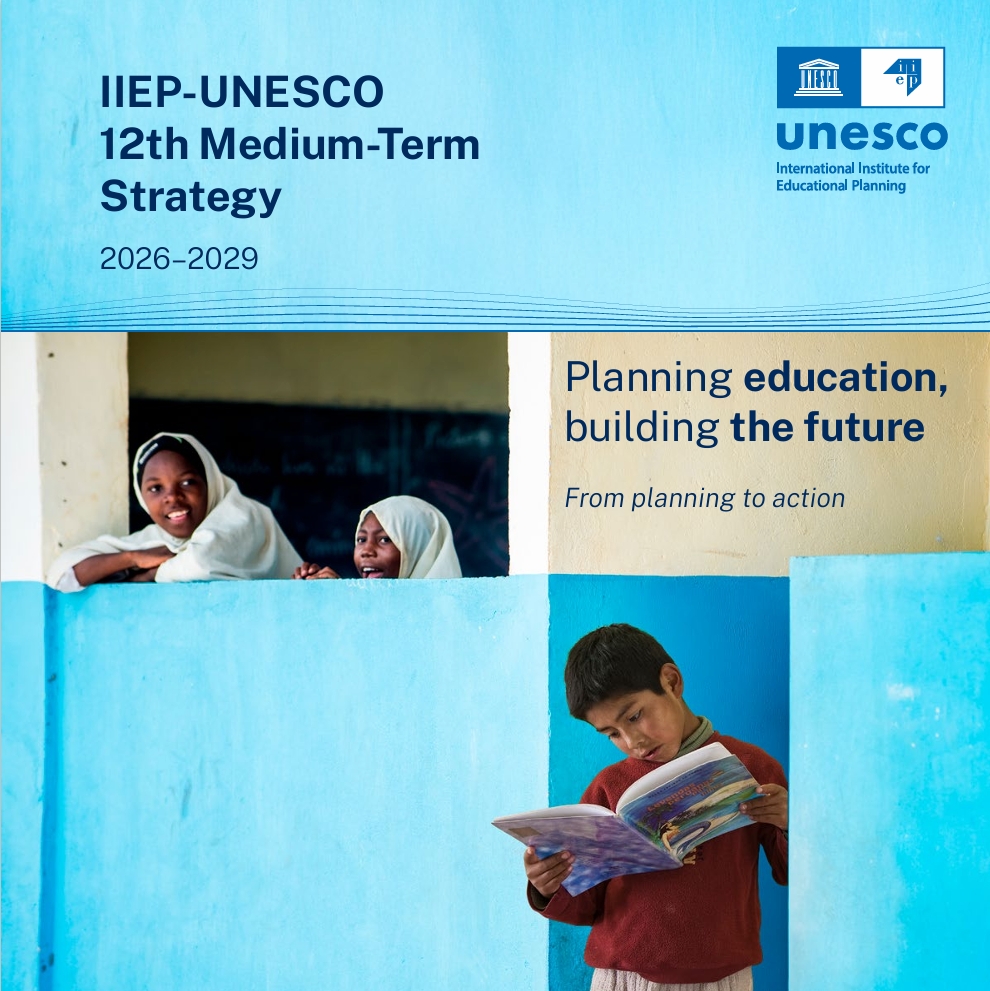 IIEP-UNESCO 12th Medium-Term Strategy: 2026–2029 Год публикации: 2026 Организация-автор: UNESCO International Institute for Educational Planning (IIEP) The 2026-2029 Medium-Term Strategy of the UNESCO International Institute for Educational Planning provides a vision for transforming educational planning into tangible results for education systems across the globe. Building on more than 60 years of experience, the Strategy puts the focus not only on policy and plan design, but on collective and agile implementation.
 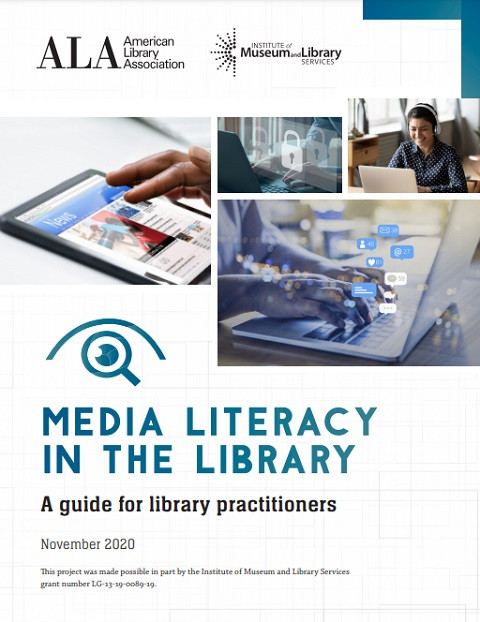 Media Literacy in the Library: A Guide for Library Practitioners Год публикации: 2020 Организация-автор: American Library Association (ALA) | Institute of Museum and Library Services As information providers and hubs for lifelong learning, libraries have always been resources for helping communities develop media literacy skills. Now, in the midst of a global pandemic, and in an age when we increasingly rely on digital media for information and communication, these critical thinking skills are more important than ever. The American Library Association (ALA), working with talented thought leaders across the library and media literacy sectors, has created Media Literacy in the Library: A Guide for Library Practitioners to help library workers prepare for day-to-day interactions like the imagined reference desk one above.In this guide, we offer resources and ideas to plan programs and activities to teach media literacy skills to adults and also to integrate these skills into programming you already offer at your library. This guide has been created for out-of-school adult audiences, who library workers will generally meet in a public library context.
  What is Media Literacy? Год публикации: 2017 Организация-автор: Media Literacy Now Intended as a tool for advocates, the video introduces the concept of media literacy as a key that unlocks meaning behind the messages that we see, and allows us to be more thoughtful and deliberate as we create our own messages such as those we create and share on social media.
 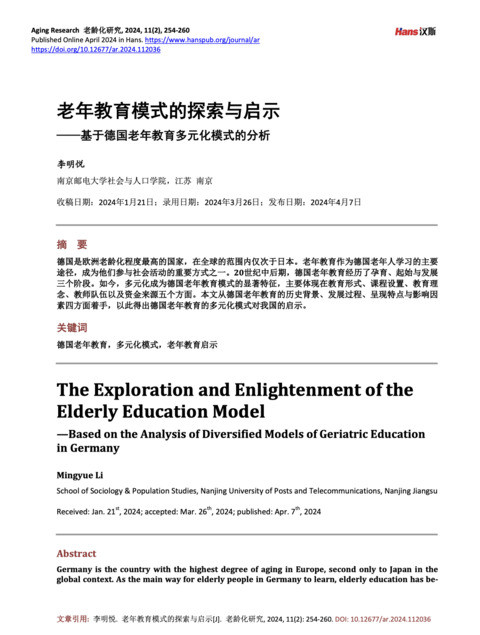 老年教育模式的探索与启示 : 基于德国老年教育多元化模式的分析 (老龄化研究 第11卷 第2期) Год публикации: 2024 Автор: 李明悦 Организация-автор: 汉斯出版社 德国是欧洲老龄化程度最高的国家,在全球的范围内仅次于日本。老年教育作为德国老年人学习的主要 途径,成为他们参与社会活动的重要方式之一。20世纪中后期,德国老年教育经历了孕育、起始与发展 三个阶段。如今,多元化成为德国老年教育模式的显著特征,主要体现在教育形式、课程设置、教育理 念、教师队伍以及资金来源五个方面。本文从德国老年教育的历史背景、发展过程、呈现特点与影响因 素四方面着手,以此得出德国老年教育的多元化模式对我国的启示。
 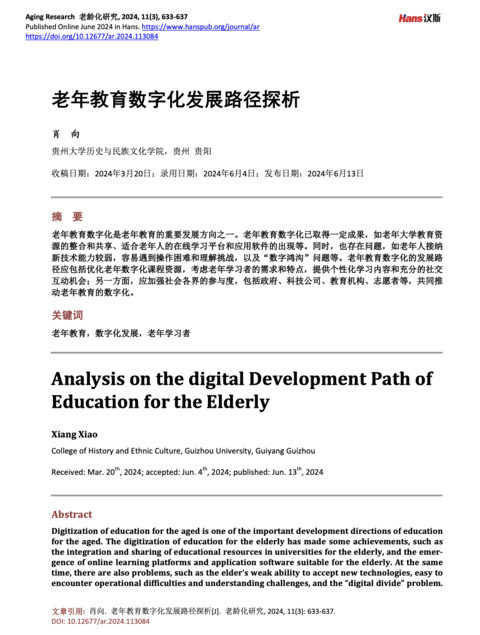 老年教育数字化发展路径探析 (老龄化研究 第11卷 第3期) Год публикации: 2024 Автор: 肖向 Организация-автор: 汉斯出版社 老年教育数字化是老年教育的重要发展方向之一。老年教育数字化已取得一定成果,如老年大学教育资 源的整合和共享、适合老年人的在线学习平台和应用软件的出现等。同时,也存在问题,如老年人接纳 新技术能力较弱,容易遇到操作困难和理解挑战,以及“数字鸿沟”问题等。老年教育数字化的发展路 径应包括优化老年数字化课程资源,考虑老年学习者的需求和特点,提供个性化学习内容和充分的社交 互动机会;另一方面,应加强社会各界的参与度,包括政府、科技公司、教育机构、志愿者等,共同推 动老年教育的数字化。
 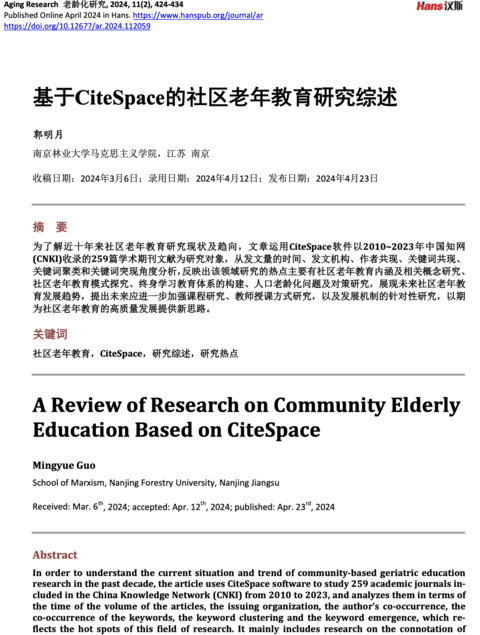 基于CiteSpace的社区老年教育研究综述 (老龄化研究 第11卷 第2期) Год публикации: 2024 Автор: 郭明月 Организация-автор: 汉斯出版社 为了解近十年来社区老年教育研究现状及趋向, 文章运用CiteSpace软件以2010~2023年中国知网 (CNKI)收录的259篇学术期刊文献为研究对象,从发文量的时间、发文机构、作者共现、关键词共现、 关键词聚类和关键词突现角度分析,反映出该领域研究的热点主要有社区老年教育内涵及相关概念研究、 社区老年教育模式探究、终身学习教育体系的构建、人口老龄化问题及对策研究,展现未来社区老年教 育发展趋势,提出未来应进一步加强课程研究、教师授课方式研究,以及发展机制的针对性研究,以期 为社区老年教育的高质量发展提供新思路。
 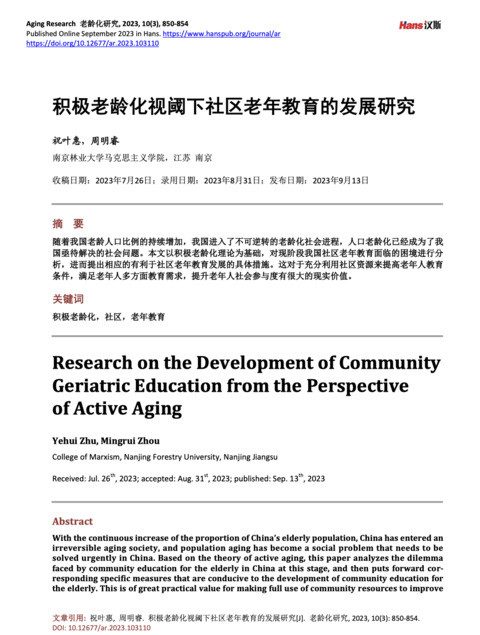 积极老龄化视阈下社区老年教育的发展研究 (老龄化研究 第10卷 第3期) Год публикации: 2023 Автор: 祝叶惠 | 周明睿 Организация-автор: 汉斯出版社 随着我国老龄人口比例的持续增加,我国进入了不可逆转的老龄化社会进程,人口老龄化已经成为了我 国亟待解决的社会问题。本文以积极老龄化理论为基础,对现阶段我国社区老年教育面临的困境进行分 析,进而提出相应的有利于社区老年教育发展的具体措施。这对于充分利用社区资源来提高老年人教育 条件,满足老年人多方面教育需求,提升老年人社会参与度有很大的现实价值。
 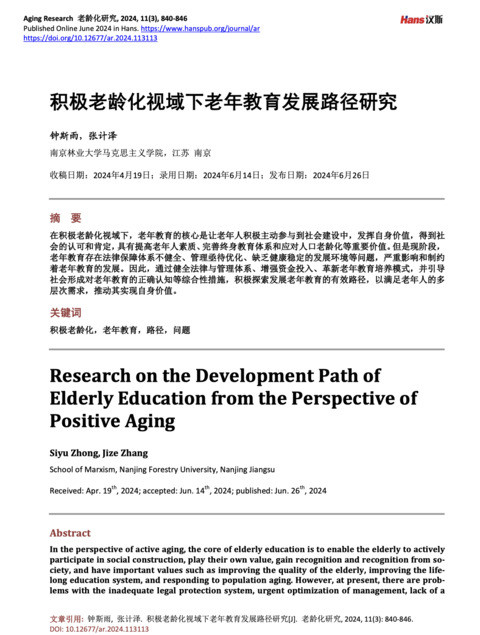 积极老龄化视域下老年教育发展路径研究 (老龄化研究 第11卷 第3期) Год публикации: 2024 Автор: 钟斯雨 | 张计泽 Организация-автор: 汉斯出版社 在积极老龄化视域下,老年教育的核心是让老年人积极主动参与到社会建设中,发挥自身价值,得到社 会的认可和肯定,具有提高老年人素质、完善终身教育体系和应对人口老龄化等重要价值。但是现阶段, 老年教育存在法律保障体系不健全、管理亟待优化、缺乏健康稳定的发展环境等问题,严重影响和制约 着老年教育的发展。因此,通过健全法律与管理体系、增强资金投入、革新老年教育培养模式,并引导 社会形成对老年教育的正确认知等综合性措施,积极探索发展老年教育的有效路径,以满足老年人的多 层次需求,推动其实现自身价值。