
Ресурсы
Изучайте широкий спектр ценных ресурсов ВГГ, чтобы углубить своё понимание и повысить эффективность исследований, просветительской деятельности, преподавания и обучения.
Найдено: 948
 Quiz climat: êtes-vous chaud pour démêler le vrai du faux? Год публикации: 2023 Организация-автор: Le Monde Quelle est la source d’énergie la plus polluante au monde ? De quand date la première conférence sur le climat ? Avec ce test, Le Monde vous invite à faire le point sur le réchauffement climatique et son impact sur la planète. Vous pourrez en savoir plus sur les grands enjeux environnementaux grâce à l'application de culture générale «Mémorable», conçue par les journalistes du Monde pour développer vos savoirs et pour stimuler votre mémoire de manière agréable et efficace. Chaque leçon, consacrée à un thème donné, propose des extraits d’articles tirés de nos archives depuis 1944, des infographies ou des vidéos, suivis de questions. A vous d’y répondre, avant de profiter de corrections immédiates et personnalisées, d’articles d’approfondissement, puis de révisions. what is the world's most polluting energy source? When was the first climate conference held? With this test, Le Monde invites you to take stock of global warming and its impact on the planet. Learn more about major environmental issues with the "Mémorable" general knowledge application, designed by Le Monde's journalists to develop your knowledge and stimulate your memory in a pleasant and effective way. Each lesson, devoted to a given theme, features excerpts from articles in our archives dating back to 1944, infographics or videos, followed by questions. It's up to you to answer them, before benefiting from immediate, personalized corrections, in-depth articles and revision.
  Imagining and Practising Global Citizenship Education Год публикации: 2020 Организация-автор: UNESCO Venice This methodological guide illustrates the ways in which the International Cooperation Centre (ICC) has been promoting and practicing Global Citizenship Education in Italy for more than ten years. The training work developed by the ICC in the field of GCED, presented here in its theoretical articulation and in its practical outlining in some concrete experiences, may offer some reflections in the form of useful recommendations for continuing and strengthening the promotion of GCED.
 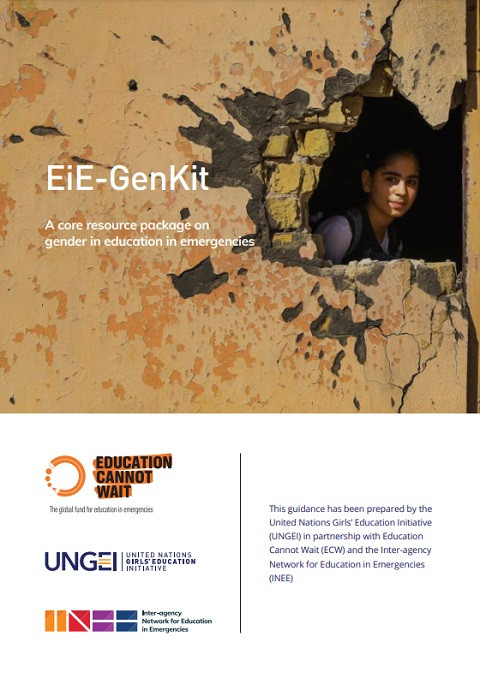 EiE-GenKit: A Core Resource Package on Gender in Education in Emergencies Год публикации: 2021 Организация-автор: Education Cannot Wait (ECW) | Inter-agency Network for Education in Emergencies (INEE) | United Nations Girls' Education Initiative (UNGEI) When gender-responsive, quality education is available to all it has the potential to transform societies and build sustainable peace. A joint initiative from the Inter-agency Network for Education in Emergencies (INEE), Education Cannot Wait (ECW) and the UN Girls’ Education Initiative (UNGEI), the EiE-GenKit is a core resource package for gender in education in emergencies. The EiE-GenKit is the first resource of its kind, providing education practitioners with practical tools to promote gender-responsive programming from crisis to peace and sustainable development.The EiE-GenKit is based on extensive research and consultation with the latest resources, evidence, new tools and good practice available in one easy-to-use package. The EiE-GenKit builds on existing humanitarian processes for a streamlined approach to gender-responsive EiE. The EiE-GenKit offers tools for practical and immediate use including checklists, tipsheets and assessment templates supporting practitioners to ensure that each phase of an EiE intervention is gender-responsive. Bridging the gap between what we know about gender-responsive EiE and the tools we need to make it happen, the EiE-GenKit aims to promote improved gender and education outcomes of learners living in crises.
 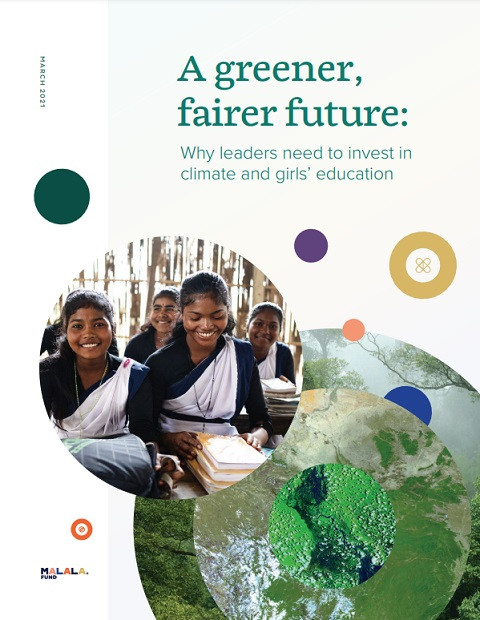 A Greener, Fairer Future: Why Leaders Need to Invest in Climate and Girls’ Education Год публикации: 2021 Автор: Lucia Fry | Philippa Lei Организация-автор: Malala Fund The world is on the brink of a climate catastrophe — and girls are disproportionately bearing the impact. Climate-related events like flooding, droughts and increased exposure to zoonotic diseases amplify the inequalities girls face and further limit their ability to access and complete their education. Malala Fund’s new report, A greener, fairer future: Why leaders need to invest in climate and girls' education, estimates that in 2021 climate-related events will prevent at least four million girls in low- and lower-middle-income countries from completing their education. If current trends continue, by 2025 climate change will be a contributing factor in preventing at least 12.5 million girls from completing their education each year.Yet evidence shows that closing gender gaps in education can help countries better adapt to the effects of climate change and decrease the rate and impact of global warming.“Girls in lower-income countries are the least responsible for the climate crisis, so it’s a travesty that it now threatens their very lifeline to a brighter future: quality education,” said Lucia Fry, Director of Research and Policy at Malala Fund. “Malala Fund wants leaders at COP26 to hear young people’s demands around education. They know that climate action helps girls stay in school, which in turn helps countries tackle the climate crisis. Young people are demanding an education that will prepare them to adapt to the effects of climate change and challenge the root causes of the crisis.”A greener, fairer future outlines the origins of the climate emergency and explains how confronting issues like the legacy of colonialism, racial discrimination and gender inequality through education is key to finding a sustainable solution to the crisis. The paper introduces the Gender-Equal Green Learning Agenda, a new framework to help leaders address the climate crisis through education.In this report, Malala Fund recommends how leaders can take urgent climate action at meetings this year, like COP26. This includes reducing carbon emissions, improving girls’ access to education, helping communities adapt to the realities of climate change and transforming education systems to provide all students with the knowledge, skills and values needed to challenge the social and economic inequalities fuelling the climate crisis.For more about the links between climate change and girls’ education, read the full paper below.
 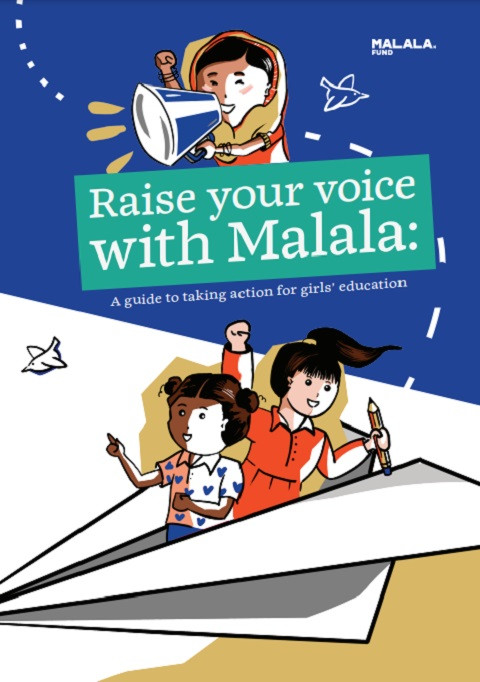 Raise Your Voice With Malala: A Guide to Taking Action for Girls’ Education Год публикации: 2018 Автор: Emily Laurie | Eleanor Gall Организация-автор: Malala Fund This guide gives young activists the tools to raise their voices and make change happen. Girls around the world are standing up in support of their out-of-school sisters and fighting to see every girl complete 12 years of free, safe, quality education. By taking action in their communities, girls can contribute to the peace and prosperity of our entire world. The guide includes real stories about girls around the world working to make sure all girls have the opportunity to go to school.
  Ten Clues for Rethinking Curriculum (In-Progress Reflection; No. 42, 2021) Год публикации: 2021 Автор: Renato Opertti Организация-автор: UNESCO International Bureau of Education (IBE) This discussion document highlights the urgency of rethinking curriculum in light of reinforcing the commitments of the Education 2030 Agenda on learning, disruptive systemic worldwide societal changes, and crucially, the profound transformation of education and education systems post Covid-19. Curriculum is always at the core of giving effect to social aspirations and ideals on the why, what, how, when, and where of teaching, learning, and assessing. We propose a series of 10 interconnected clues to deepen on the systemic and holistic understanding of curriculum as contributing to lay foundations for a better, sustainable and fair future. These clues are: understanding the new generations; combatting factors related to vulnerability; reinforcing understanding between school and families; deepening glo-local education; enhancing the focus on the person; promoting synergies among values; valuing diversity; focusing on education that enhances freedom; moving toward hybrid modes of education; and inspiring affection for educators.
 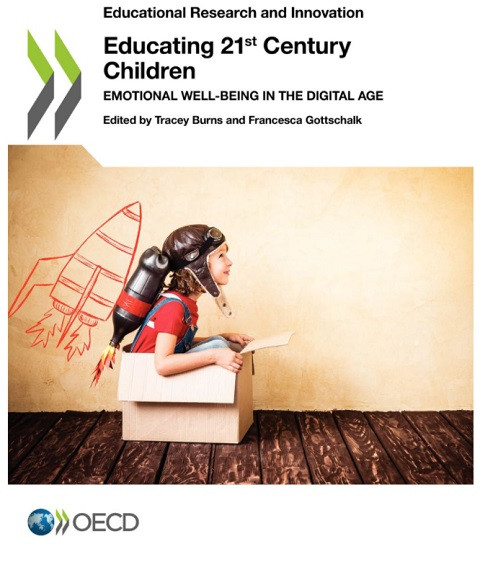 Education 21st Century Children: Emotional Well-being in the Digital Age (Educational Research and Innovation) Год публикации: 2019 Организация-автор: Organisation for Economic Co-operation and Development (OECD) This report examines modern childhood, looking specifically at the intersection between emotional well-being and new technologies. It explores how parenting and friendships have changed in the digital age. It examines children as digital citizens, and how best to take advantage of online opportunities while minimising the risks. The volume ends with a look at how to foster digital literacy and resilience, highlighting the role of partnerships, policy and protection.
 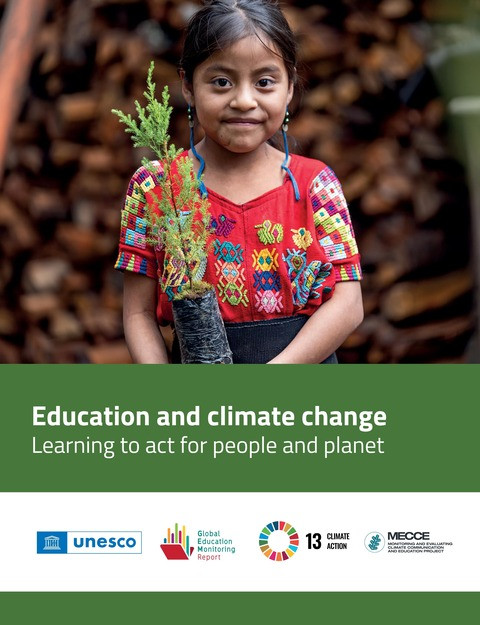 Education and Climate Change: Learning to Act for People and Planet Год публикации: 2024 Организация-автор: Global Education Monitoring Report Team | Monitoring and Evaluating Climate Communication and Education Project (MECCE) | University of Sakatchewan How can education lead to climate change action?Despite strong evidence on the impact of education on other development outcomes and the role it plays in developing professional capacity for sustainable development transitions, education is often absent from other sectors’ strategic, policy, planning and financing considerations. The Global Education Monitoring Report is introducing a new series to advance dialogue on the interrelationship of education with the other Sustainable Development Goals.The first paper in the series focuses on climate change. It starts by reviewing the growing impact of climate change on education before turning to the role of education in climate action. Education has a somewhat underappreciated contribution to developing professional capacities for the transition to a green economy. Formal, non-formal and informal learning are also commonly believed to be playing a critical role in motivating actions on climate change mitigation and adaptation.Yet a positive association between education attainment and unsustainable consumption levels, as well as inconclusiveness of much research on the direct impact of education on climate change adaptation and mitigation actions has in part contributed to education receiving low priority in global and national climate change agendas.This paper argues that climate change education needs to adapt to fulfil its potential. The education paradigm cannot rely solely on knowledge transfer but needs to focus on social and emotional, and action-oriented learning.Much of the research has focused on the impact of education attainment and cognitive learning. More research is therefore needed to assess other drivers through which education can influence behaviours and motivate climate change action. Such research is needed to formulate viable education reform packages that improve the curriculum, strengthen climate-readiness of schools and education systems, engage learners and prepare educators accordingly.
  Educación y cambio climático: aprender a cuidar de las personas y el planeta Год публикации: 2024 Организация-автор: Global Education Monitoring Report Team | Monitoring and Evaluating Climate Communication and Education Project (MECCE) | University of Sakatchewan ¿Cómo puede la educación conducir a la acción contra el cambio climático?A pesar de las sólidas pruebas existentes sobre la repercusión de la educación en el logro de otros objetivos de desarrollo y la función que desempeña en el desarrollo de la capacidad profesional para las transiciones hacia el desarrollo sostenible, la educación suele estar ausente de las consideraciones estratégicas, políticas, de planificación y de financiación de otros sectores.El Informe de seguimiento de la educación en el mundo presenta una nueva serie destinada a fomentar el diálogo sobre la interrelación de la educación con los demás Objetivos de Desarrollo Sostenible. El primer documento de la serie se centra en el cambio climático, y empieza por analizar el creciente impacto del cambio climático en la educación antes de pasar a abordar la función de la educación en la acción climática.La contribución de la educación al desarrollo de capacidades profesionales para la transición a una economía verde está en cierta medida infravalorada. Al mismo tiempo, existe la conciencia de que el aprendizaje, tanto formal como no formal e informal, desempeña una función esencial a la hora de motivar la acción en materia de mitigación del cambio climático y adaptación a sus efectos.Sin embargo, la existencia de una correlación positiva entre el nivel de educación y los niveles de consumo insostenibles, así como la falta de conclusiones de muchas investigaciones sobre la repercusión directa de la educación en la mitigación del cambio climático y la adaptación a sus efectos, han contribuido en parte a que se otorgue escasa prioridad a la educación en las agendas mundiales y nacionales sobre el cambio climático.En este documento se sostiene que es necesario adaptar la educación sobre el cambio climático para que desarrolle todo su potencial. El paradigma educativo no puede basarse únicamente en la transferencia de conocimientos, sino que debe centrarse en el aprendizaje socioemocional y orientado a la acción. Gran parte de la investigación se ha centrado en analizar el logro educativo y los resultados que se alcanzan mediante el aprendizaje cognitivo. Por ello, es necesario seguir investigando para evaluar otros factores mediante los cuales la educación puede influir en los comportamientos y motivar la acción contra el cambio climático. Estas investigaciones son necesarias para formular paquetes de reformas educativas viables que mejoren los planes de estudios, refuercen la preparación de las escuelas y los sistemas educativos para el cambio climático, impliquen a los educandos y preparen a los educadores en consecuencia.
  UNESCO Roadmap for Implementing the Global Action Programme on Education for Sustainable Development Год публикации: 2014 Организация-автор: UNESCO To create a world that is more just, peaceful and sustainable, all individuals and societies must be equipped with and empowered by knowledge, skills and values as well as be instilled with a heightened awareness to drive such change. There is now a growing international recognition of Education for Sustainable Development (ESD) as an integral element of quality education and a key enabler for sustainabledevelopment. Both the Muscat Agreement adopted at the Global Education For All Meeting in 2014 (GEM) and the proposal for Sustainable Development Goals (SDGs) developed by the Open Working Group of the UN General Assembly on SDGs (OWG) include ESD in the proposed targets for the post-2015 agenda.In 2013, the 37th session of the General Conference of UNESCO endorsed the Global Action Programme (GAP) on ESD as the follow-up to the UN Decade of ESD (2005-2014). Building on the achievements of the Decade, the GAP aims to generate and scale up concrete actions in ESD. The present Roadmap communicates the GAP endorsed by UNESCO Member States (37 C/Resolution 12) to decision-makers, stakeholders and actors, and provides suggestions for the implementation of the GAP, as well as details on UNESCO’s role.