
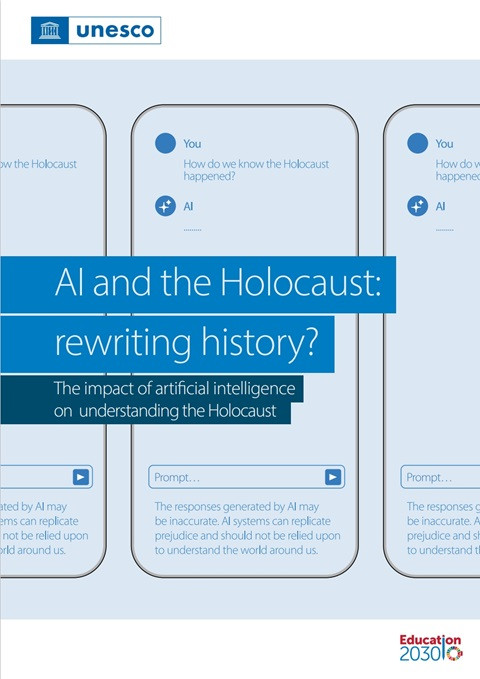
AI and the Holocaust: Rewriting History?; The Impact of Artificial Intelligence on Understanding the Holocaust
The threats associated with AI on safeguarding the record of the Holocaust are manifold, including the potential for manipulation by malicious actors, the introduction of falsehoods or dissemination of biased information, and the gradual erosion of public trust in authentic records. This paper provides a warning of what is at stake for the preservation of historical truth in a digital era increasingly mediated by AI.
It highlights five major concerns:
1. AI automated content may invent facts about the Holocaust
2. Falsifying historical evidence: Deepfake Technology
3. AI models can be manipulated to spread hate speech
4. Algorithmic bias can spread Holocaust denial
5. Oversimplifying history
While there are some benefits to be gained, such as enhanced engagement and interaction opportunities for learners, as well as more efficient data processing capabilities for researchers, to navigate these challenges and capitalize on the benefits, it’s essential for AI designers, policymakers, educators, and researchers to collaborate closely. Only AI systems equipped with robust safeguards and human rights assessments, coupled with an increased focus on developing digital literacy skills, can uphold the integrity of historical truth and ensure the responsible use of artificial intelligence.
相关资源
-
 Digital Empowerment for Lifelong Learning and Transformative Andragogy (DELTA) for Adult Educators: Introduction to the DELTA Framework and Resources
 -
 Bridging the Grey Digital Divide: Enhancing ICT Learning for Older Adults; Research Report
 -
 Addressing Violent Pasts through Education: A Policy Guide
 -
 The Representation of Jews, Judaism and Antisemitism in School Textbooks and Curricula in Europe