
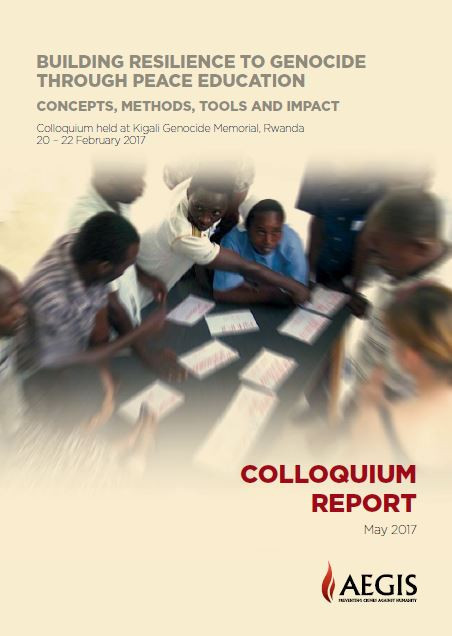
Colloquium Report: Building Resilience to Genocide through Peace Education: Concepts, Methods, Tools and Impact
- المؤلف المؤسسي
- Aegis Trust
- الترتيب
- 94 p.
- لغة المورد
- الإنجليزية
- سنة النشر
- 2017
- الكلمة المفتاحية
- سلامViolenceColloquium reportتربية من اجل السلام
- أنواع الموارد
- الأوراق البحثية/ مقالات المجالات
- مستوى التعليم
- التعليم الابتدائيالتعليم الثانويالتعليم العالي
- المناطق
- إفريقيا
- مكان النشر
- Chicago
A three-day Colloquium in Kigali in February brought together academics and practitioners in and around the field of peace education to share concepts, methods and means of measuring impact, contributing to a stronger evidence base for the effectiveness of peace education. Three interesting takeaways from the Colloquium:
1. Building resilience against genocide requires critical thinking about the process of identity-based violence and its reversal.
2. The content of peace education programmes matters: interactive role-play type activities have been shown to have a longer lasting impact.
3. Unhealed wounds need to be addressed to prevent a repeat of violence; psychosocial support must accompany peace education to reduce anxiety, which can be an obstacle when accessing empathy.
A major achievement resulting from the consortium’s advocacy has been that the Government of Rwanda through the Ministry of Education has integrated Peace and Values education into the school curriculum. In a new phase of work Aegis is now supporting the implementation of the revised national curriculum that has integrated peace and values education (2016-19).
موارد ذات صلة
-
 Study on the Historical Impact of the 1974 Recommendation concerning Education for International Understanding, Cooperation and Peace and Education relating to Human Rights and Fundamental Freedoms
 -
 Addressing Violent Pasts through Education: A Policy Guide
 -
 UNESCO Framework for Culture and Arts Education: Implementation Guidance
 -
 Mainstreaming the General History of Africa into Education Systems: The Curriculum Pathway